(PAUL)
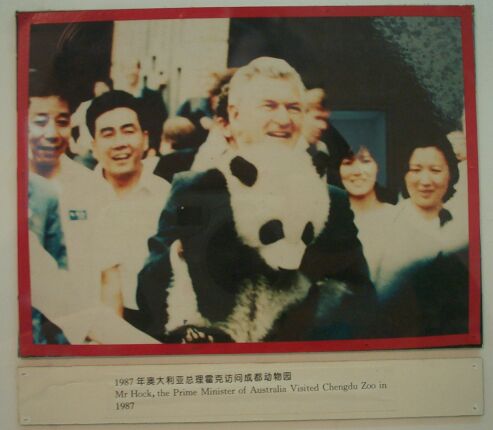
The beginning of May found us in Chengdu, the biggest city in the southwest China. We tried our hand at cycling here, and it took surprisingly little time to get the hang of melding into a river of bicycles and flowing along. (DIMITY) Well according to Paul! I managed to have a run in with a motorised bicycle taxi resulting in a grazed arm and bruised ego. (PAUL) We cycled to the Panda Zoo (otherwise known as the breeding centre), which lived up to my expectations. Lots of Pandas making lots of money for the government while staving off their extinction (in captivity at least). It was a famous place. We visited during the Chinese holidays and there were many tourists, some treating the pandas to dumplings while blowing loud whistles to attract their attention.
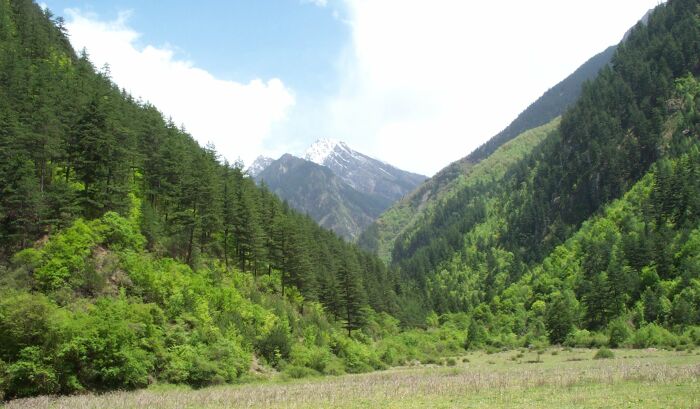
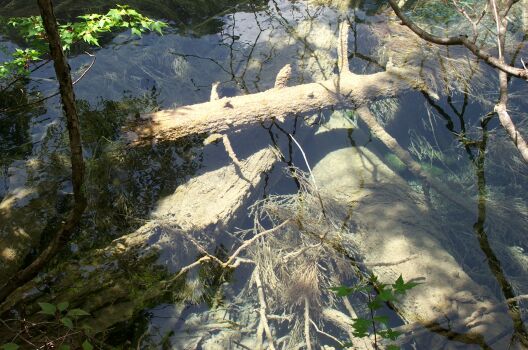
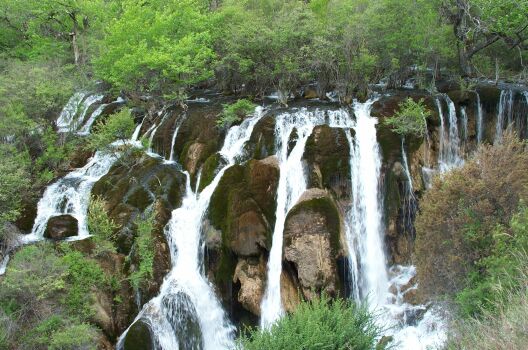
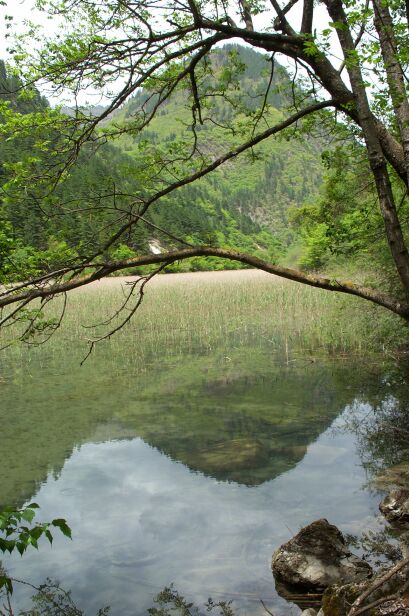
From here we headed north-west, where the Tibetans have not only been liberated of self rule, but also their forested mountains of the trees. Ironically, it was here that at Juihaigou that I found perhaps the most beautiful, forested valley I have ever seen. Water so clear that even when flowing we could always see the bottom of the river and many native fish. Many really amazing calcite formations formaing cascading waterfalls and terracced lakes. It was declared a World Heritage Site in 1992 and in 1997 became part of the Man and Biosphere network (I think because the tradiational Tibetan families still live in the park). But we were not the first to discover it and now for 5km on either side of the entrance to the beautiful valley are about 80 large hotels, most less than 2 years old. The entrance fee for the valley was prohibitively expensive for the locals (more than any Austrailan park it was about $45/person/day (bus ticket included). 100m past the past the park entrance the pristine river turned into into completely silted drain used for carrying dirt away from new hotel construction sites.
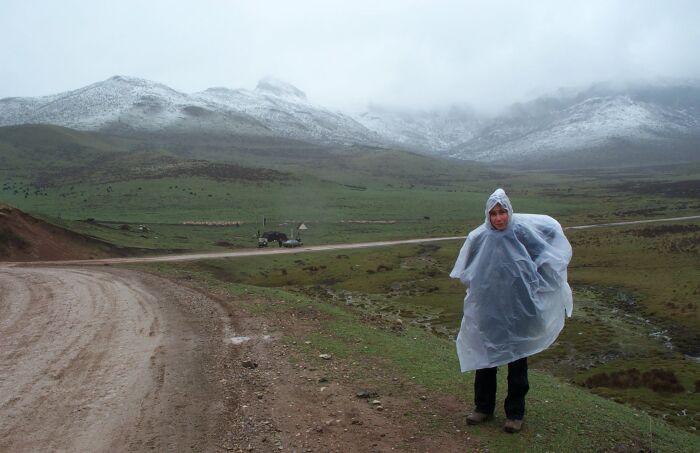
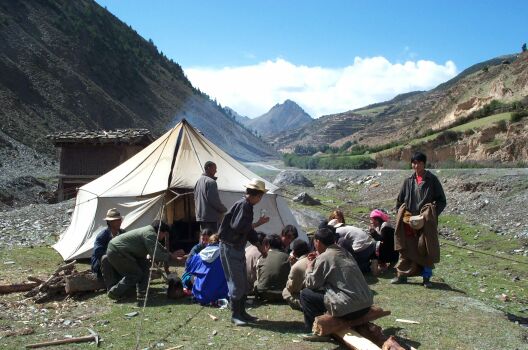
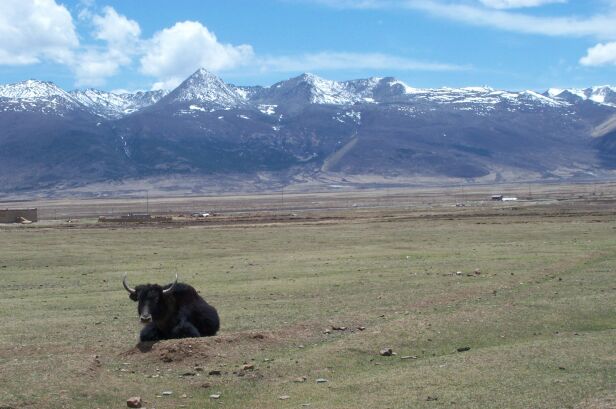
Anyway after this refreshing experience, we headed back up on to the Tibetan Plateu in NW Sichuan and SE Gansu. It was still snowing, and there were still plenty of Yaks. It was mostly beautiful expansive grasslands, only interrupted by old fences originally put up by the government so the land could be "allotted" to the nomadic familites (and therefore they then can pay land tax!). It doesn't seem to have worked though, and the nomads still go wherever they want. We visited some more Lamastries, and took some more photos of Yaks. (DIMITY) Saw lots of Marmots, waking up from their winter hibernation - Paul had great fun chasing them trying to capture them on film. Also around were wolves, although we didn't see any. According to Gunpo our Tibetan guide in Xiahe, there are two animals Tibeans don't like: wolves and moles. The can't do anything about the moles (which dig up their pastures), but the nomads keep very large vicious dogs to deal with the wolves. It also keeps away nosy backpackers as they go for anything foreign and whenever they see strangers they leap at their chains trying to get you! Sometime the chains breaks, and quite a few tourists have been mauled! (PAUL) But if the nomads see you first, and look after the dogs you will inevitably be plied with food in good humor. I can't say that I really enjoyed their staple food (barley flour, yak butter, and tea). There is no mistake from the smell that the yak butter is never refrigerated!
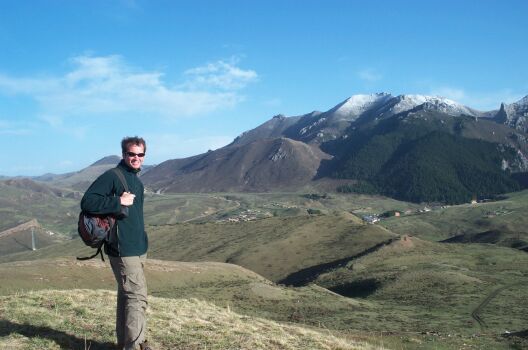
On day we came across a "Sky Burial" site. Tibetans don't bury their dead, but friends lay their bodies out on a tall hill to be eaten by vultures. Afterwards the bones are normally gathered and burnt. There had been a burial that morning. (DIMITY) Paul had tried to find the burial (trudging throught snow to find it!) but was unsuccesful. Later, when the snow had melted we did find the site. It was easily distinguishable by the many bones and scattered clothes and shoes and the remains of the burial that morning. (PAUL) The scenery up on top of the the hill was really nice though!
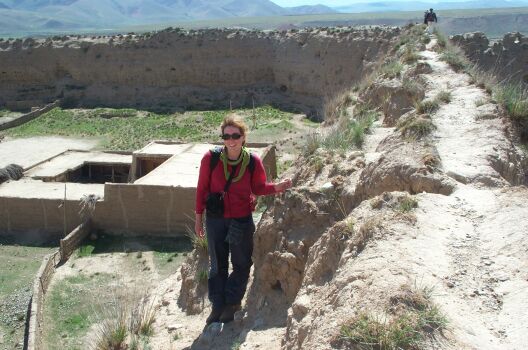
We also came across a mysterious, ancient walled Tibetan city on a very lonely grassland. No-one knows how old it is (2000+?) or who built it. But the earth walls (still completely functional) were about 4m thick and 8m high, and it was in the shape of a crusaders cross. There is still a village inside it, and it didn't look like life had changed at all since the walls had been built. Here Dimity has found inspiration for our future house.
We left the Tibetan region on a bus from Xiahe. One of the passengers was a very gentle and sincere Tibetan monk who has just been prohibited from practising by the local authorities. With the help of another traveller, he was attempting to go to Nepal and on to India so he can continue to practice his faith. We were amazed to bump in to him again on a train (dressed in civies!) in an adjacent province with a Nepalese Visa on his way. We wish him well!
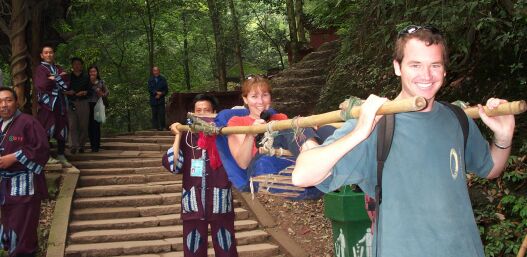
....and now that Dimity has just left, I can finally reveal the style of travel to which she would like to become accustomed!
return to home page