Fat bottomed mutton makes the Uygur world go round (up to 18/6/2002)
After our camel trekking adventure we headed further West to the autonomous province of Xinjiang. Once again China proved to be a land of contrasts, the scenery and people were totally different to what we have experienced before.
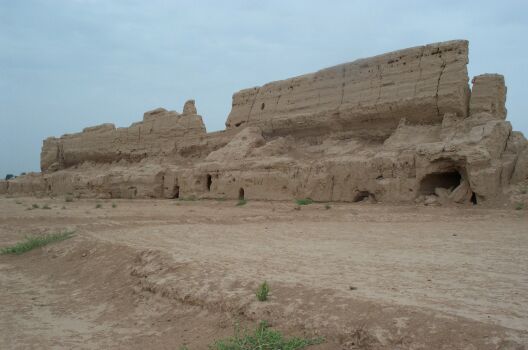
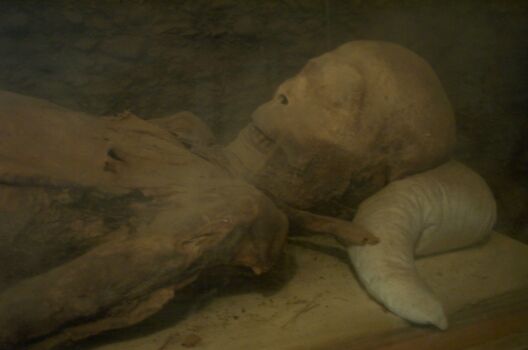
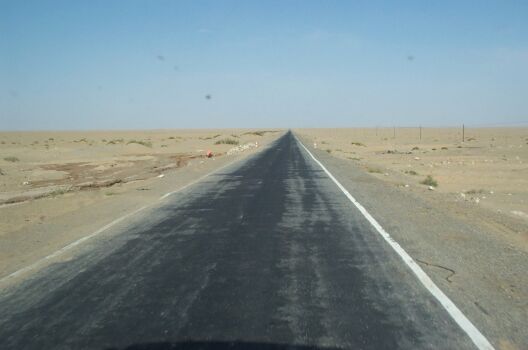
Our first stop was the desert town of Turpan. Here we came across the ruins of our first silk road city, Gaochang. It was here that we also realised that they are not called "ruins" for nothing; most of the city was so flat that it had been used for agriculture. But most of the 12m thick(!), 8m high walls remain. together with a moat. I thought this was a bit of an overkill, but after seeing some of the other cities that guys like Gengis Khan obliterated I could understand the locals fears! We did however see a few of the cities inhabitants as even after 1300 years, their remains were very well preserved by the arid climate. At the local museum we saw other mummies that were up to 4000 years old! It was easy to see the hair and skin color and even facial expressions! Their features were amazingly Euoropean and one guy in particular looked just like a Uni mate of mine! (no names... Kelvin!)
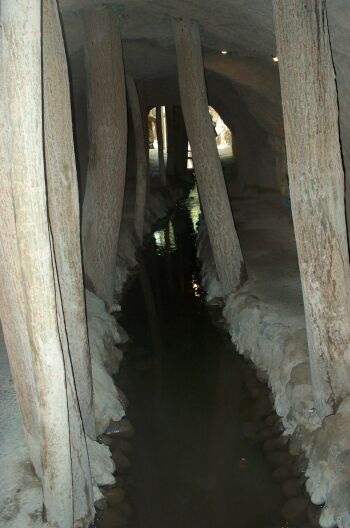
To make Turpan habitable (summer ground temperatures can reach 80 degrees!), the ancient people devised an underground canal system. Canals are dug 8m under the desert sands, and the water can then be obtained from the mountains. A canal is called a Karez, and in the Turpan are there is approximately 5000km of Karez still being used today!
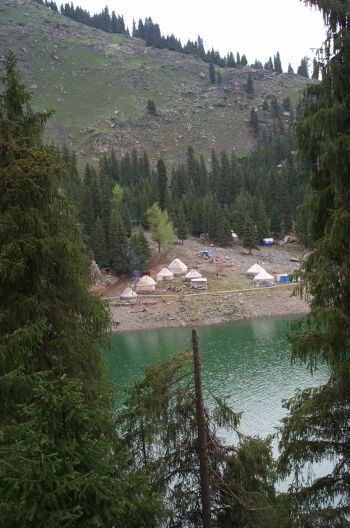
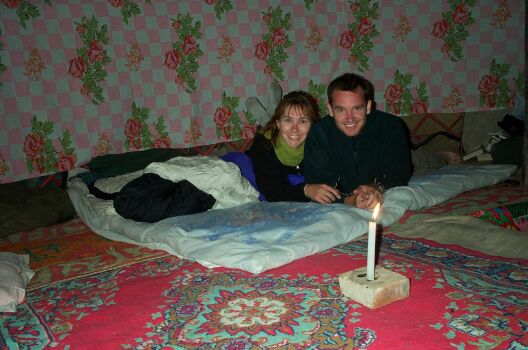
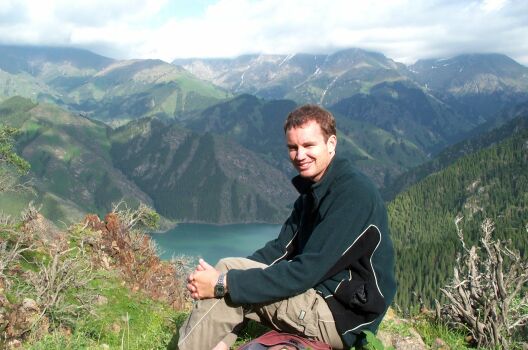
We needed a break from the desert, and we found it in the moutains near Urumqi. There is a beautiful lake here that the chinese have called Heavenly Lake. Like all "scenic spots" an (expensive!) entrance fee is charged. It was interesting to see the chinese appreciation of nature here as the lakeside was dotted with tacky concrete tree stumps! We stayed the night with a Kyrgyz family in their summer yurt. Paul's time was largely spent walking around the moutainside while Dimity recovered from a case of the runs she acquired in Turpan!
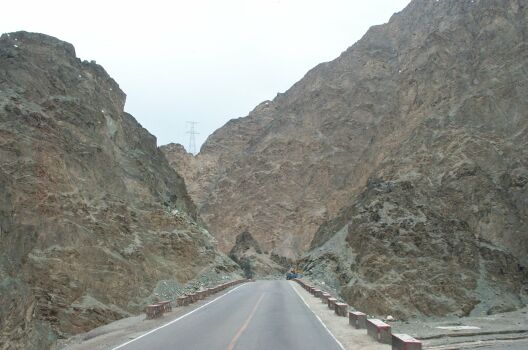
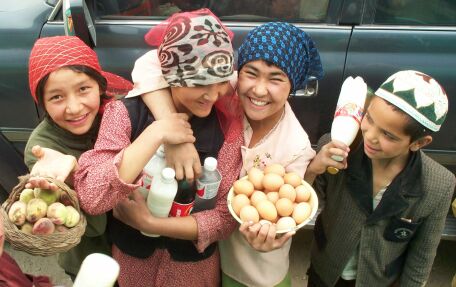
We crossed through the second largest desert in the world (the Taklamakan) to meet up with the main branch of the southern silk road. This area had been effected the least by the massive Chinese (Han) migration that has now made the local Uyghur people a minority in their own lands (like Tibet). They are very friendly, do not stare, and smile warmly when we say "Yahshimu siz" (hello) to them. We were invited to say at one families house. The Chinese police found out about it and collected us, took us to the police staion and got all our details (including phoning our previous hotel to make sure we were telling the truth), and then marched us to a hotel. Our hosts deeply resented this intrusion. The Uygur people take great pride in their hospitality and this type of treatment causes great tension. Since Sept 11th there has been a great crackdown (ie lockups and executions) of local Uugur "separtists". They have been officially sanctioned as "terrorists" by the US in return for Chinas silent support of the "War against Terror" in Afghanistan.
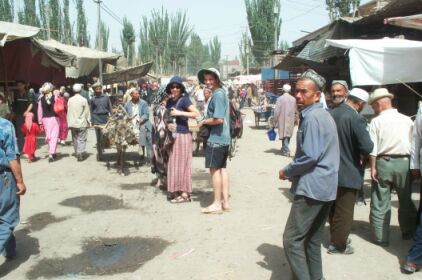
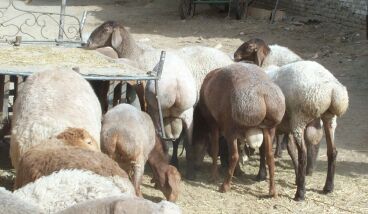
Perhaps the most famous "oasis" of all China is around the ancient crossroad town of Kashgar. We arrived just in time to catch the famous Sunday market. Here it was like being transported back in time, a melting pot of cultures with Kyrgz, Uyghur and Tajik locals selling, bargaining and buying. Barbequing shishkebabs fill the air with a delicious aroma. Perhaps the most interesting part was the livestock market where rows of sheep lined stalls bleating in the hot sun, some doomed to be the next shishkebab at the market cafe. Uyghur and Kyrgz men take bucking, baying donkeys for test drives, belting them around the market. The local sheep have enormous bums (unlike the Australian Muttons!) which are considered to be the best bits on a kebab stick. We must remember to have a cholesterol check-up on our return!
After a few days in Kashgar (and a camping trip to the nearby mountains - see Pauls story), we left China for the unknown of Kyrgyzstan. So far we had not met one backpacker who knew anything about this place, and we had decided to go through the Irkeshtan pass, which had supposedly only just opened since 1949 for foreigners, and only three travellers had gone through it a month before. And just to add the finishing spice, our Chinese visa would expire the day we would try to cross, so if it didn’t work……