
Academy of Jeet Kune Do Fighting Technology
Athens
Greece
Jun Fan Jeet Kune Do Instructor
Vagelis Zorbas
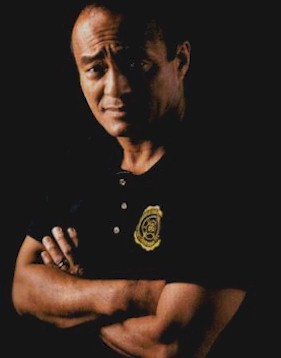
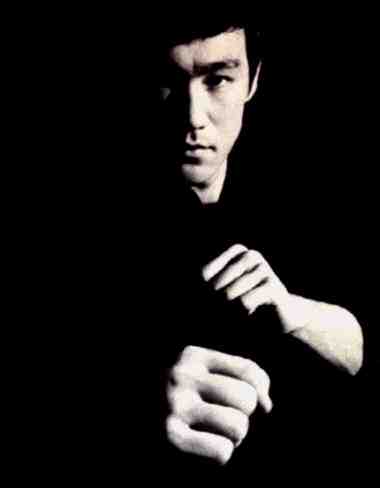


Dan Inosanto Articles
Cross Training by Guro Dan Inosanto
Absorb what is useful by Guro Dan Inosanto
What is Jeet Kune Do? by Guro Dan Inosanto

Cross
Training by Guro Dan Inosanto
 Cross
training is a term that has been long used in the athletic community
Coaches, whether amateur or professional, have long acknowledged the
benefits of exposing their athletes to training methods, concepts and
strategies of sports other than those they are training their teams or
athletes in. From my early school days through my college sports, cross
training was not only accepted, but encouraged. However, this was not the
case in the very traditional and close-minded martial arts community of
the 1950s and '60s. There were few martial artists who dared to look into
arts other than the one they represented. Among those who did see the
value of cross training was Mr. Ed Parker, my Kenpo karate instructor. My
Sifu, Bruce Lee, was another.
Cross
training is a term that has been long used in the athletic community
Coaches, whether amateur or professional, have long acknowledged the
benefits of exposing their athletes to training methods, concepts and
strategies of sports other than those they are training their teams or
athletes in. From my early school days through my college sports, cross
training was not only accepted, but encouraged. However, this was not the
case in the very traditional and close-minded martial arts community of
the 1950s and '60s. There were few martial artists who dared to look into
arts other than the one they represented. Among those who did see the
value of cross training was Mr. Ed Parker, my Kenpo karate instructor. My
Sifu, Bruce Lee, was another.
Decades ahead of his time in his fervent pursuit of martial arts
knowledge, Sifu Bruce Lee literally left "no art unexamined and
researched." Sifu Bruce had the most extensive martial arts library
of anyone I have ever met. Not only did his collection consist of martial
arts books, but also of body building, nutritional and philosophical
publications.
During my training with Sifu Bruce Lee, he was always introducing
me to various books that would help my growth in the martial arts and in
my personal life. One of these books was The
Art of War by Sun Tzu, which contains many principles and
concepts that are still valid today.
In this book, Sun Tzu states, "Some people are intelligent in
knowing themselves, but stupid in knowing their opponents and with others
it's the other way around; neither kind can solve the problem of learning
and applying the laws of war".
If you only know yourself and the system you practice, you are
only 50% prepared. Sifu Lee knew that, to understand and deal with combat,
you must know what other styles and individuals practice and specialize.
When
I first started training with Sifu Bruce, he was in the midst of creating
a "system" of combat that centered around a modified form of
Wing Chun -- a blending of his modifications and ideas on the strategies
of Western boxing, and then using the principles and tactics for Western
fencing. He took kicking from different systems, including Chinese and
non-Chinese systems, then customized it for himself.
He was into investigating every known system that he was exposed
to during that time period. During this time, he even taught me different
sets and forms from a few Chinese systems. He then moved away from
this type of training.
Many
people say I taught him the olisi toyuk (nunchaka), single stick and
double stick. I like to say I shared with him and demonstrated and
practiced with him. We also experimented with light sparring with single
stick, double stick and olisi toyuk. So, in my opinion, he practiced the
Eskrima and Kali on a small scale to research it, and to put elements of
the nunchakas, double stick and single stick in his movies.
You will also read in martial arts publications that Sifu Lee only
used Chinese martial arts. Again, this is incorrect. Techniques
he modified, equipment he used and principles and concepts he utilized
were from many different disciplines and systems.
 strategies, principles,
concepts, tactics, training progressions and training exercises are:
strategies, principles,
concepts, tactics, training progressions and training exercises are:
1. Western boxing
2.
Western fencing
3.
French savate
4.
Japanese judo
5. Japanese jiu-jitsu
6. Western wrestling
7.
Muay Thai elbow and knee
8.
Head bun of Burmese bando
An
uneducated person may not recognize these elements in Sifu Bruce's
personal system because he blended it so well for his personal expression
of his Jeet Kune Do. To me, he is like one of those Smoothie juice drinks
in a health food store. All you can see is the Smoothie and not all the
vitamins, amino acids, or protein powder that might have been mixed into
it. A martial artist may not recognize the Judo and Jiu-Jitsu element
in it because he enters differently using the Western Boxing and Wing Chun
to flow into the throws of Jiu-Jitsu, Judo and Chin Na, and then flowing
into the submission jocks and chokes.
Sifu
Bruce Lee practiced what he preached, living by his own creed:
1. "Jeet Kune Do utilizes all ways and is bound by
none."
2. "Jeet Kune Do is finding the cause of your own
ignorance.
3. "Using No Way as Way" and 'Having no limitation
as limitation."
4. '"Absorb what is useful, reject what is useless and
add what is specifically your own."
It is important that a student in Jeet Kune Do have a good
foundation in the Jun Fan method of Gung Fu before he expands, explores
and "absorbs what is useful" for his own personal system of Jeet
Kune Do.
 After a student has a good understanding of the Jun Fan method, I
feel it is important for the student not to adhere strictly to the
techniques, principles, concepts and strategies of Sifu Bruce Lee.
After a student has a good understanding of the Jun Fan method, I
feel it is important for the student not to adhere strictly to the
techniques, principles, concepts and strategies of Sifu Bruce Lee.
Each student must depart on his own journey to find what is
workable for him in philosophy, technique, tactics, strategies and
principles in the Jun Fan method and then explore other methods that
interest him.
You have often heard people quote Sifu Bruce Lee saying,
"Jeet Kune Do is not the accumulation of knowledge, but hacking away
at the unessential." But do they truly understand what they preach?
For the accumulation of knowledge and hacking away at the unessential is not
a product, but a process. It is a continual process that lasts our
entire lives. We are constantly accumulating and eliminating, then again
accumulating and eliminating. I practice arts other than Jun Fan and Jeet
Kune Do -- such as Silat, Kali, Muay Thai, Savate, Shoot Wrestling, Bando
and Brazilian Jiu-Jitsu -- so I am criticized by people because they say
this is accumulating, and that Jeet Kune Do is an eliminating process. You
practice the entire system because it is part of the curriculum and it
interests you, but you never embrace the entire system; you embrace what
works for you in that system that you are practicing.
In the words of my Brazilian Jiu-Jitsu instructor, Rigan Machado,
"You don't fit into the Jiu-Jitsu; you make the Jiu-Jitsu fit
you." In other words, the entire Brazilian Jiu-Jitsu might not fit
you so you must take the parts of Brazilian Jiu-Jitsu to fit you.
Remember that Bruce Lee was "a finger pointing to the
moon," As he said, "Don't gaze on the finger or you will miss
all the heavenly glory." I like to think that Sifu Bruce was a
really good finger pointing to the moon.
I'd like to close with my poem:
We have all experienced much hardship and strife.
There are many paths through the mountain of life
And some climbs can be felt like a point of a knife
Some paths are short and others are long
Who can say what path is wrong
The beauty of truth is that each path has its own song
and if you listen closely you will find where you belong.
So climb your own path true and strong
But respect all other truths for your way for them could be wrong.
Absorb
what is useful by Guro Dan Inosanto
 Learning
what is useful in the martial arts is not contained within the four walls
of a dojo. dojang, gwoon, studio or academy Learning and absorbing usable
knowledge is not located within the structure of your style or system,
whether it is Chinese, Japanese, Korean, Thai, Indonesian, Okinawan,
Burmese, Filipino, French or whatever. Learning comes from all your
contacts, experiences and all facets of your life. The assimilation of
learning is called knowledge and the proper use of knowledge is called
wisdom.
Learning
what is useful in the martial arts is not contained within the four walls
of a dojo. dojang, gwoon, studio or academy Learning and absorbing usable
knowledge is not located within the structure of your style or system,
whether it is Chinese, Japanese, Korean, Thai, Indonesian, Okinawan,
Burmese, Filipino, French or whatever. Learning comes from all your
contacts, experiences and all facets of your life. The assimilation of
learning is called knowledge and the proper use of knowledge is called
wisdom.
Knowledge in martial arts can come from fields outside the martial arts.
Knowledge can come from your peers, your elders, your juniors, your
teachers, your students and even from your mistakes.
Sometimes in a light
conversation outside of a class room, you can become aware of a concept
that a two-hour classroom lecture didn't reveal to you. Your friends in
different martial arts such as Aikido, Jujitsu, Bando, Penjak Silat,
Savate, street fighting, boxing or wrestling can help your growth if you
empty your cup and taste their tea, rather than trying to convince them
that your tea is better, and let it permeate your mind, body and soul.
Both of your cups will be richer for the experience.
In the early 50's and 60's, most martial arts were
prejudiced against other methods or were too proud to learn another style.
It is a pity, because I feel you can learn from every contact you make. I
believe you owe your allegiance to truth, knowledge and personal growth.
Some people give their alliance to their style or to their instructor. I
feel this is a noble gesture, as long as it doesn't restrict your quest
for total knowledge. I believe you owe your allegiance to personal growth
as well as to a particular style, system or person.
 Amazon. I try to bring instructors from many different styles into my
Academy as guest instructors to help my students grow. No system has it
all. Each system has something to offer and together, they yield a better,
more well-rounded martial artist.
Amazon. I try to bring instructors from many different styles into my
Academy as guest instructors to help my students grow. No system has it
all. Each system has something to offer and together, they yield a better,
more well-rounded martial artist.
I think it is important for
an instructor to remain a student at heart always-to constatnly seek
better ways of training and execution. It is important to be creative and
to experiment and to seek help in areas where you lack expertise. Even a
teacher with a doctor's degree in U.S. history needs to seek help when he
needs information about Southeast Asia.
I consider myself very fortunate to have so many wonderiful guides to help
me grow in this life. My father, my mother, my martial arts instructors,
my schoolteachers and my many friends have all helped in my growth,
self-improvement and development. The goal of martial arts is not for the
destruction of an opponent. but to be used as a tool for self-growth and
self perfection. The practice of a martial art should be a practice of
love-the love for the preservation of life, the love for the preservation
of your body the love for the preservation of your family and friends.
What
is Jeet Kune Do? by Guro Dan Inosanto
People are still trying to define JKD in terms of a distinct style, i.e. Bruce Lee's Gung-Fu, Bruce Lee's Karate, Bruce Lee's Kick-Boxing or Bruce Lee's Street Fighting. To label JKD as Bruce Lee's martial art is to miss completely its meaning; its concepts simply cannot be confined within a system. To understand this, a martial artist must transcend the duality of the "for" and "against" and reach one unity which is without distinction. The understanding of JKD is a direct intuition of this unity. Truth cannot be perceived until we have come to hill understanding of our selves and our potential. According to Lee, knowledge in the martial arts ultimately means self- knowledge.
Jeet Kune Do is not a new style of Karate or Kung Fu. Bruce Lee did not invent a new style, or a composite, or modify any style to set it apart from any existing method. His main concept was to free his followers from clinging to style, pattern or mold.
It must be emphasized that fret Kune Do is merely a name-a mirror in which we see ourselves. There is some sort of progressive approach to its training but, as Si Gung Lee said, "To create a method of fighting is pretty much like putting a pound of water into wrapping paper and shaping it." Structurally, many people tend to mistake JKD for a composite style, because of its efficiency. At any given time, JKD can resemble Thai boxing, or Wing Chun, or wrestling or Karate or any Kung Fu system.
According to Si Gung Lee, the efficiency of style depends upon circumstances and range of distance. The important factor is not technique, but the range of its effectiveness. Just as a grenade is used at 50 yards, a dagger is used in close. A staff for example, would be the wrong weapon to bring into a telephone booth to fight, whereas a knife would be appropriate.
Jeet Kune Do is neither opposed to style, nor is it not opposed to style. We can say it is outside as well as inside of all particular structures. Because JKD makes no claim to being a style, some people conclude that perhaps it is being neutral or simply indifferent. Again, this is not the case, for JKD is at once "this" and "not this."
A good JKD practitioner rests in direct intuition. According to Si Gung Lee, a style should be like a Bible with principles and laws which can never be violated. There will always be a difference with regard to quality of training, physical make up. level of understanding, environmental conditioning and likes and dislikes. According to Si Gung Lee, truth is a "pathless road"; thus JKD is not an organization or an institution of which one can be a member. "Either you understand or you don't, and that is that," he said.
Martial arts, like life itself, arc a constant, non-rhythmic movemen t,
as well as constant change. Flowing with this change is very important.
Finally, a Jeet Kune Do man who says JKD is exclusively JKD is simply
"not with it." He is still "hung up" on his own
self-closing resistance, anchored down to reactionary pattern and,
naturally, is still bound by another modified pattern and can move only
within its limits. He has not digested the simple fact that the truth
exists outside of all molds and patterns. An awareness is never exclusive.
To quote Si Gung Lee, "Jeet Kune Do is just a name, a boat to get one
across the river. Once across, it is to be discarded and not to be carried
on ones back." I feel that students should be taught experiences as
well as technique. In other words, a Karate practitioner who has never
boxed before needs to experience sparring with a boxer. What he learns
from this experience is strictly up to him. According to Si Gang Lee, a
teacher is not the giver of truth; he is merely a guide to the truth and
the student must discover the truth for himself.
t,
as well as constant change. Flowing with this change is very important.
Finally, a Jeet Kune Do man who says JKD is exclusively JKD is simply
"not with it." He is still "hung up" on his own
self-closing resistance, anchored down to reactionary pattern and,
naturally, is still bound by another modified pattern and can move only
within its limits. He has not digested the simple fact that the truth
exists outside of all molds and patterns. An awareness is never exclusive.
To quote Si Gung Lee, "Jeet Kune Do is just a name, a boat to get one
across the river. Once across, it is to be discarded and not to be carried
on ones back." I feel that students should be taught experiences as
well as technique. In other words, a Karate practitioner who has never
boxed before needs to experience sparring with a boxer. What he learns
from this experience is strictly up to him. According to Si Gang Lee, a
teacher is not the giver of truth; he is merely a guide to the truth and
the student must discover the truth for himself.
The total picture Si Gung Lee wanted to present to his pupil was tat, above everything else, he must find his own way He always said, "Your truth is not my truth and my truth is not yours." Si Gung Lee did not have a blueprint, but rather a series of guidelines to lead you to proficiency Using equipment, there was a systematic approach in which you could develop speed, distance, power. timing, coordination, endurance and footwork.
Jeet Kune Do, for Si Gung Lee, was not an end in itself, nor was it merely a by-product; it was a means of self-discovery In other words, it was a prescription for personal growth; it was an investigation of freedom-freedom to act naturally and effectively nor only in combat but in life. In life, it means to absorb what is useful, to reject what is useless and to add specifically what is your own. I believe to better understand JKD you must observe and better yet, experience Judo, Jujitsu, Aikido, Western boxing, some kicking styles. Chinese systems of sensitivity such as Wing Chun, the elements of Kali and Eskrima, with the elements of Pentjak Silat, Thai boxing, French Savate and Bando, and understand the strengths and weaknesses of each. It is nor necessary to study all of these arts, only to understand the high and low points of each, as well as the range, distance and effectiveness of each, it would be impossible to study every style in detail, but if you can get the essence, you can capture the style. Or, as Bruce used to say, "I hope martial artists are more interested in the root of martial arts and not the different decorative branches, flowers or leaves. It is futile in argue as to which single leaf, which designs of branches, or wich attractive flower you like; when you understand the root, you understand all it blossoming."
In other words, there is a distance in which Western boxing is superior to any kicking style, whether it be Korean Karate or Northern Chinese styles of kicking. There is a distance and a time whereby Wing Chun can be superior to Western boxing; likewise where Western boxing is superior to Wing Chun; likewise where Tai-Chi Chuan can be superior to Wing Chun; and likewise where wrestling can offset Tai Chi Chuan.
Neither art is inferior/superior to any other. This is the object of Jeet Kune Do; to be bound by no style and in combat to use no style as style, to use no way as way, to use no system as system. to have no limitation as your limit in achieving your goal. Neither be for a particular style or against one. in other words it just "is" as in the Zen maxim: "In the landscape of spring there is neither better nor worse. The flowering branches grow, some short, some long." Draw from everything with no boundaries to limit you.
The principles of Jeet Kane Do can relate to any interest or vocation in one's life. Martial arts was the field that Bruce Lee was most interested in. However, his technique could be applied to any aspect of life. In addition, the knowledge derived from any one field can help the individual in every other field. In other words, the principles of Jeet Kune Do involve using certain ideas, techniques and approaches to life whenever appropriate.
The principles of JKD reach far beyond martial ans. Other men in pursuit of knowledge and truth have made use of this philosophy.
The notion of change is essential of Jeet Kune Do. The concept advocates learning, experiencing and evolving above all things. Jeet Kune Do will continue to grow as long as one person is using its approach toward discovery. The vitality of JKD will continue long after the first generation, and Jun Fan Gung-Fu-Jeet Kune Do students and instructors have passed on.
What Si Gung Lee's presence, as a symbol, may lead others to aspire to, is what counts. If his influence as a human being who "followed his own path" can help another to discover his or her own path, Si Gung Lee's purpose has been achieved. Perhaps this is Si Gung Bruce Lee's greatest gift to our world. The gift of freshness and an open-minded approach to knowledge, which will never stop.