PIE-CVC-PunctualRoots.htm

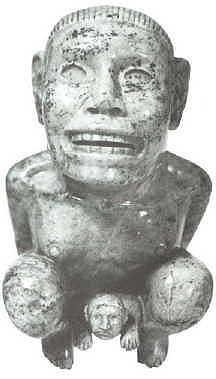
Tlazoltéotl
Roman Marble. circa 100 PE

PIE *CVC Punctual Roots

by Patrick C. Ryan

currently under construction (06/04/2005) Copyright 2005 Patrick C. Ryan

Recently, the question of whether PIE *CVC roots are inherently punctual was raised on a discussion list.

I proposed that any PIE *CVC-root that did not terminate in *-H, *-y, or *-w was inherently punctual; this idea was ridiculed by one of the list participants, who made counts to test this proposition, and announced that the proposition could not be substantiated.

I have now obtained the same reference work from which he was working (Lexikon der indogermanischen Verben, Helmut Rix, Wiesbaden 2001, Dr. Ludwig Reichert Verlag: ISBN 3-89500219-4). The figures I have compiled support my claim resoundingly.


The total number of roots in Rix is, according to our count: 1138.

The total number of *CVC verbal roots that do not terminate in *-H, *-y, or *-w, is, according to our count: 212, or 18.6% of the total number of roots.

Of the counted *CVC verbal roots, 184 form presents by additions to the root in order to obtain a durative meaning; that is 86.7%.

Of the counted *CVC verbal roots, 72 form root aorists; that is 33.9%.

Of the counted *CVC verbal roots, 25 form root presents; that is 11.7%.

On the basis of the figures compiled here, the proposition that any PIE *CVC-root that did not terminate in *-H, *-y, or *-w was inherently punctual, is supported.


The method used to obtain the preceding figures will be detailed below under the heading of each consonant.

To begin with, there are 6 *CVC verbal roots that do not terminate in *-H, *-y, or *-w, listed under

*bh

in Rix 2001 out of a total of 69 roots.

Of these six, the first, *bheg-, ‘receive as a share', forms a root aorist: *bhég-, but a present by thematicization: *bhég-e-.

The second, *bheg-, ‘break (tr.)', forms a root aorist: *bhég-, but the present is formed by a metathesized suffix (*-né-): *bh-né-g-.

The third, *bhegw-, ‘run away, flee', forms a root aorist: *bhégw-, but a present in *bhé:gw-, with unetymological lengthening of the root vowel.

The fourth, *?bhen-, ‘become sick', forms neither aorist nor present.

The fifth, *bher-, ‘carry, bring', forms a root aorist: *bhér-, but a present by reduplication or thematicization: *bhi-bhér- or *bhér-e-.

The sixth, *?bhes-, ‘chew (up)', forms a root aorist: *bhés-, but a present by reduplication: *bhé-bhos-.

Thus, in all six examples, the aorist, when attested, is formed from the root, indicating a punctual meaning for the bare *CVC root.

In all six examples, the present (when formed) is formed by additions to the root, indicating that, in order to obtain a durative meaning, reduplication, lengthened grade, thematicization, or a suffix (*-né-) is necessary.

On the basis of the roots listed under *bh in Rix, the proposition that any PIE *CVC-root that did not terminate in *-H, *-y, or *-w was inherently punctual, is supported.


To begin with, there are 3 *CVC verbal roots that do not terminate in *-H, *-y, or *-w, listed under

*d

in Rix 2001 out of a total of 46 roots.

Of these three, the first, *dek^-, ‘become aware of', forms a root aorist: *dék-, but a present in *dé:k^-, with unetymological lengthening of the root vowel.

The second, *der-, ‘tear apart', forms a root aorist: *dér-, but a present by thematicization: *dér-e-.

The third, *des-, ‘find', has no aorist listed but the present is formed by a suffix: *d^s-sk^é-.

Thus, in all three examples, the aorist, when attested, is formed from the root, indicating a punctual meaning for the bare *CVC root.

In all three examples, the present is formed by additions to the root, indicating that, in order to obtain a durative meaning, lengthened grade, thematicization, or a suffix (*-sk^e-) is necessary.

On the basis of the roots listed under *d in Rix, the proposition that any PIE *CVC-root that did not terminate in *-H, *-y, or *-w was inherently punctual, is supported.


To begin with, there are 3 *CVC verbal roots that do not terminate in *-H, *-y, or *-w, listed under

*dh

in Rix 2001 out of a total of 46 roots.

Of these three, the first, *dhebh-, ‘lessen', forms a root aorist: *dhébh-, but the present is formed by a suffix (*-néu-): *dh^bh-néu-.

The second, *dhegwh-, ‘treat with fire, burn up (tr.)', forms two sigmatic aorists with and without unetymological lengthening of the root vowel: *dhé:gwh-s- and *dhégwh-s- but a present by thematicization: *dhégwh-e-.

In the case of *dhegwh-, which has the aorist *dhé:gwh-s-, the proposed explanation for the aorist with lengthened root vowel is that it is derived from *dhégwh-s-; that the *-s- has been deleted, and the previous vowel compensatorily lengthened. After the vowel was lengthened, the *-s- was again appended by way of overcorrection.

The third, *dher-, ‘make fast, fix', forms a root aorist: *dhér-, but a present by thematicization or reduplication: *?dhér-e-, or *dhi-dhér-.

In two of these three examples, the present is formed by additions to the root, indicating that, in order to obtain a durative meaning, thematicization, reduplication, or a suffix (*-néu-) is necessary.

On the basis of the roots listed under *dh in Rix, the proposition that any PIE *CVC-root that did not terminate in *-H, *-y, or *-w was inherently punctual, is supported with exception noted for *dhegwh-.


To begin with, there are 2 *CVC verbal roots that do not terminate in *-H, *-y, or *-w, listed under

*g^

in Rix 2001 out of a total of 15 roots.

Of these two, the first, *g^ar-, ‘sound, call', forms no aorist but a present by suffix: *g^R-yé-.

The second, *?g^ebh-, ‘eat, chew', forms no aorist but a present in *g^é:bh-, with unetymological lengthening of the root vowel.

In these two examples, the present is formed by additions to the root, indicating that, in order to obtain a durative meaning, lengthened grade, or a suffix (*-yé-) is necessary.

On the basis of the roots listed under *g^ in Rix, the proposition that any PIE *CVC-root that did not terminate in *-H, *-y, or *-w was inherently punctual, is supported.


To begin with, there are 3 *CVC verbal roots that do not terminate in *-H, *-y, or *-w, listed under

*g

in Rix 2001 out of a total of 20 roots.

Of these three, the first, *g(w)eg^h-, ‘plunge into water, wade in', forms no aorist but a present in *g(w)é:g^h-, with unetymological lengthening of the root vowel.

The second, *g(^)el-, ‘break (tr.)', forms no aorist but the present is presumably formed by reduplication: *?g(^)é-g(^)ol-.

The third, *gem-, ‘press, press together, hold on to', forms a root aorist: *gém-, but a present by thematicization: *gém-e-.

Thus, in all three examples, the aorist, when attested, is formed from the root, indicating a punctual meaning for the bare *CVC root.

In all three examples, the present is formed by additions to the root, indicating that, in order to obtain a durative meaning, reduplication, lengthened grade, or thematicization is necessary.

On the basis of the roots listed under *g in Rix, the proposition that any PIE *CVC-root that did not terminate in *-H, *-y, or *-w was inherently punctual, is supported.


To begin with, there are 5 *CVC verbal roots that do not terminate in *-H, *-y, or *-w, listed under

*g^h

in Rix 2001 out of a total of 20 roots.

Of these five, the first, *g^hed-, ‘defecate', forms no aorist but the present is formed by a suffix (*-yé): *?g^h^d-yé-.

The second, *g^hengh-, ‘stride', forms no aorist but a present by thematicization or reduplication: *g^héngh-e- or *g^hé-g^hongh-. N.B.: I regard the final element of this word as an original velar nasal, hence *CVC.

The third, *g^her-, ‘find pleasure, desire', forms a root aorist: *g^hér-, but the present is formed by a suffix: *?g^hér-ye-.

The fourth, *g^her-, ‘take, fetch', forms a root aorist: *g^hér-, but the present is formed by thematicization: *?g^hér-e-.

The fifth, *g^her-, ‘beam, shine, see', forms no aorist nor present.

In four of these five examples, the present is formed by additions to the root, indicating that, in order to obtain a durative meaning, thematicization, reduplication, or a suffix (*-yé/e-) is necessary.

On the basis of the roots listed under *g^h in Rix, the proposition that any PIE *CVC-root that did not terminate in *-H, *-y, or *-w was inherently punctual, is supported.


To begin with, there are 7 *CVC verbal roots that do not terminate in *-H, *-y, or *-w, listed under

*gh

in Rix 2001 out of a total of 27 roots.

Of these seven, the first, *g(^)han-, ‘yawn, gape open', forms a root aorist: *g(^)hán- but the present is formed by a suffix (*-sk^é): *?g(^)hN-sk^é-. N.B. This root should probably be reconstructed as **ghaHn-

The second, *ghebh-, ‘stride', forms no aorist but a present by thematicization: *ghébh-e-.

The third, *ghed-, ‘hold on to', forms a root aorist: *ghéd-, but the present is formed by a suffix with metathesis (*-né-): *?gh^-né-d-.

The fourth, *?ghedh-, ‘meet together, become united', forms no aorist nor present.

The fifth, *?g(w)her-, ‘drip', forms no aorist but a present is formed with reduplication: g(w)hi-g(w)hér-.

The sixth, *?g(w)hes-, ‘eat, devour', forms a root aorist in g(w)hés- but a present is formed with a suffix (*-néu-): g(w)e^-néu-.

The seventh, *g(w)hes-, ‘laugh', forms no aorist but a present is formed with reduplication: g(w)hé-g(w)hos-.

In six of these seven examples, the present is formed by additions to the root, indicating that, in order to obtain a durative meaning, thematicization, reduplication, or a suffix (*-né/éu- or *-sk^é-) is necessary.

On the basis of the roots listed under *gh in Rix, the proposition that any PIE *CVC-root that did not terminate in *-H, *-y, or *-w was inherently punctual, is generously supported.


To begin with, there are 2 *CVC verbal roots that do not terminate in *-H, *-y, or *-w, listed under

*gw

in Rix 2001 out of a total of 15 roots.

Of these two, the first, *gwem-, ‘go (someplace), come', forms a root aorist: *gwém- but the present is formed by two suffixes (*-sk^é and *-yé): *gwM-sk^é- and gwM-y^é-.

The second, ?*gwet-, ‘stride', forms no aorist but a present by thematicization: *gwét-e-.

In both of these two examples, the present is formed by additions to the root, indicating that, in order to obtain a durative meaning, thematicization, reduplication, or a suffix (*-né/éu- or *-sk^é-) is necessary.

On the basis of the roots listed under *gw in Rix, the proposition that any PIE *CVC-root that did not terminate in *-H, *-y, or *-w was inherently punctual, is generously supported.


To begin with, there are 4 *CVC verbal roots that do not terminate in *-H, *-y, or *-w, listed under

*gwh

in Rix 2001 out of a total of 5 roots.

Of these four, the first, *gwhedh-, ‘plead, wish', forms two sigmatic aorists with and without unetymological lengthening of the root vowel: *gwhé:dh-s- and *gwhédh-s- but the present is formed by a suffix (*-yé): ?*gwh-dh-y^é-.

In the case of *gwhedh-, which has the aorist *gwhé:dh-s-, the proposed explanation for the aorist with lengthened root vowel is that it is derived from *gwhédh-s-; that the *-s- has been deleted, and the previous vowel compensatorily lengthened. After the vowel was lengthened, the *-s- was again appended by way of overcorrection.

The second, *gwhel-, ‘devour, graze', forms two sigmatic aorists with and without unetymological lengthening of the root vowel: *gwhé:l-s- and *gwhél-s- but the present is formed by thematicization: ?*gwhél-e-.

In the case of *gwhel-, which has the aorist *gwhé:l-s-, the proposed explanation for the aorist with lengthened root vowel is that it is derived from *gwhél-s-; that the *-s- has been deleted, and the previous vowel compensatorily lengthened. After the vowel was lengthened, the *-s- was again appended by way of overcorrection.

The third, *gwhen-, ‘strike, beat', forms a reduplicated thematicized aorist (but considered a present by some): *gwhé-gwhn-e- but has a root present as well as presents formed by reduplication and a suffix (*-sk^e): *gwhén-, *gwhi-gwhn-é-, and *gwhN-sk^é .

The fourth, *gwher-, ‘become warm', forms a root aorist: *gwhér- but the present is formed by thematicization and suffix (*-néu-): *gwhér-e- and *gwhR-néu-.

In all of these four examples, the present is formed by additions to the root, indicating that, in order to obtain a durative meaning, thematicization, reduplication, or a suffix (*-né/éu- or *-sk^é-) is necessary with the one exception that *gwhen- appears to form a root present *gwhén-, which I believe is a singulative rather than a present per se.

On the basis of the roots listed under *gwh in Rix, the proposition that any PIE *CVC-root that did not terminate in *-H, *-y, or *-w was inherently punctual, is generously supported, with the exception of *gwhen-.


To begin with, there are 30 *CVC verbal roots that do not terminate in *-H, *-y, or *-w, listed under

*H/*H1/*H2/*H3

in Rix 2001 out of a total of 159 roots.

Of these 30, the first, *Hedh-, ‘say', forms neither an aorist nor a present.

The second, *h1ed-, ‘bite, eat', forms a root aorist: *h1éd- but the present is formed by lengthening the root vowel: *h1é:d-.

The third, *h1egwh-, ‘drink', forms no aorist but has a reduplicated present: *h1é-h1ogwh-.

The fourth, ?*Hek(^)-, ‘die', forms neither an aorist nor a present.

The fifth, *h1em-, ‘take', forms a root aorist: *h1ém- but the present is formed by thematicization: *h1ém-e-.

The sixth, *h1ep-, ‘hold on to, grab', forms a root aorist: *h1ép- but the present is formed by suffix (*-yé-): *h1p-yé-.

The seventh, *h1er-, ‘reach somewhere, end up at', forms a root aorist: *h1ér- but the present is formed by two suffixes (*-néu- ans -sk^e-): *h1R-néu- and *h1R-sk^é-.

The eighth, *h1es-, ‘be present, be', forms no aorist but has a root present as well as a present formed by a suffix (*-sk^e): *h1és- and *h1s-sk^é- .

The ninth, *h1es-, ‘throw, shoot', forms a root aorist: *h1és- but forms a present by a suffix (*-yé): *h1s-y^é- .

The tenth, *h2ed-, ‘dry out', forms no aorist but forms a present by a suffix (*-yé): *h2d-y^é- .

The eleventh, *h2eg^-, ‘say', forms a root aorist, *h2ég^-, but forms a present by a suffix (*-yé-): h2g^-yé-.

The twelfth, *h2egh-, ‘fall into fear, be troubled', forms no aorist but forms presents with thematicization and by a suffix (*-néu): *h2égh-e- and *h2gh-n^éu- .

The thirteenth, *h2ek^-, ‘be, make, become sharp', forms neither aorist nor present.

The fourteenth, *H2el-, ‘nourish, raise', forms two sigmatic aorists with and without unetymological lengthening of the root vowel: ?*H2é:l-s- and ?*H2él-s- but the present is formed by thematicization: *H2él-e-.

In the case of *H2el-, which has the aorist *H2é:l-s-, the proposed explanation for the aorist with lengthened root vowel is that it is derived from *H2él-s-; that the *-s- has been deleted, and the previous vowel compensatorily lengthened. After the vowel was lengthened, the *-s- was again appended by way of overcorrection.

The fifteenth, *h2en-, ‘bale', forms neither aorist nor present.

The sixteenth, *h2enk^-, ‘distribute', forms neither aorist nor present.

The seventeenth, *h2enk-, ‘bend', forms neither aorist nor present.

The eighteenth, *h1ep-, ‘fit, accommodate', forms no aorist but has a root present: *h1ép-. Rix makes the notation "Stat" for stative.

The nineteenth, *h2er-, ‘fit (together)', forms a root aorist, *h2ér-, but forms a present by a suffix (*-néu-): h2R-néu-.

The twentieth, *h2er-, ‘take, acquire', forms a root aorist, *h2ér-, but forms a present by a suffix (*-néu-): h2R-néu-.

The twenty-first, *h2er-, ‘speak with gravity, loudly', forms no aorist but has a root present: *h2ér-. I presume this is also a stative, perhaps originally ‘resound'.

The twenty-second, *h2es-, ‘become satisfied', forms a root aorist: *h2és-. Rix notes this may be a present but I presume this is also a stative, perhaps originally ‘be satisfied'.

The twenty-third, *h2et-, ‘go, wander', forms no aorist but has a present formed by thematicization: *h2ét(H)-e-.

The twenty-fourth, *h2et-, ‘make a hole, puncture', forms a root aorist, *h2ét-, but forms presents by two suffixes (*-ye- and -sk^é-): h2ét-ye- and h2t-sk^é-.

The twenty-fifth, *h3ed-, ‘begin to smell (intr.)', forms no aorist but forms a root present: *h3éd-. I presume this is also a stative, perhaps originally simply ‘smell (intr.)'.

The twenty-sixth, *h3ed-, ‘begin to hate', forms neither aorist nor present.

The twenty-seventh, *h3ekw-, ‘fasten eyes on, catch sight of', forms no aorist but forms a present with a suffix (*-yé-): *h3kw-yé-.

The twenty-eighth, *h3ep-, ‘produce', forms two sigmatic aorists with and without unetymological lengthening of the root vowel: *H3é:p-s- and *H3ép-s- but the present is formed by a suffix (*-néu): *H3p-néu-.

In the case of *H3ep-, which has the aorist *H3é:p-s-, the proposed explanation for the aorist with lengthened root vowel is that it is derived from *H3ép-s-; that the *-s- has been deleted, and the previous vowel compensatorily lengthened. After the vowel was lengthened, the *-s- was again appended by way of overcorrection.

The twenty-ninth, *h3ep-, ‘desire, choose', forms neither aorist nor present.

The thirtieth, *h3er-, ‘set one's self into motion', forms a root aorist, *h3ér-, but forms presents by a suffix (*-néu-) and reduplication: h3R-néu- and h3i-h3ér-.

In all of these 26 examples, the present is formed by additions to the root, indicating that, in order to obtain a durative meaning, thematicization, reduplication, or a suffix (*--né/éu-, -yé-, or *--sk^é-) is necessary with the exception that *h1es- appears to form a root present *h1és-, which I believe is a stative rather than a present per se. In addition, *h2ep-, *h2er-, *h2es-, and h3ed- appear to form root presents *h2ép-, *h2ér-, *h2és-, and h3éd- which I believe are statives rather than presents per se.

On the basis of the roots listed under *H/*H1/*H2/*H3 in Rix, the proposition that any PIE *CVC-root that did not terminate in *-H, *-y, or *-w was inherently punctual, is generously supported.


To begin with, there are 5 *CVC verbal roots that do not terminate in *-H, *-y, or *-w, listed under

*y

in Rix 2001 out of a total of 14 roots.

Of these 5, the first, *yebh-, ‘enter into, penetrate into', forms two sigmatic aorists with and without unetymological lengthening of the root vowel: ?*yé:bh-s- and ?*yébh-s- but forms a root present: ?*yébh-.

In the case of *yebh-, which has the aorist *yé:bh-s-, the proposed explanation for the aorist with lengthened root vowel is that it is derived from *yébh-s-; that the *-s- has been deleted, and the previous vowel compensatorily lengthened. After the vowel was lengthened, the *-s- was again appended by way of overcorrection.

The second, *yek-, ‘speak', forms no aorist but forms a present by thematicization: *yék-e-.

The third, *yem-, ‘stretch out', forms a root aorist, *yém- but forms a present with a suffix (*-sk^e-): *yM-sk^é-.

The fourth, *yes-, ‘boil, foam', forms two sigmatic aorists with and without unetymological lengthening of the root vowel: *yé:s-s- and *yés-s- but forms a present by reduplication and thematicization: ?*yé-yos- and *yés-e-.

In the case of *yes-, which has the aorist *yé:s-s-, the proposed explanation for the aorist with lengthened root vowel is that it is derived from *yés-s-; that the *-s- has been deleted, and the previous vowel compensatorily lengthened. After the vowel was lengthened, the *-s- was again appended by way of overcorrection.

The fifth, *yet-, ‘place one's self (firmly)', forms a root aorist, *yét- but forms a present by thematicization: *yét-e-.

In four of these five examples, the present is formed by additions to the root, indicating that, in order to obtain a durative meaning, thematicization or reduplication, is necessary with the one exception that *yebh- appears to form a root present *yébh-, which I believe is a stative rather than a present per se, meaning ‘be connected (sexually)'.

On the basis of the roots listed under *y in Rix, the proposition that any PIE *CVC-root that did not terminate in *-H, *-y, or *-w was inherently punctual, is generously supported, with the exception of *yebh-.


To begin with, there are 7 *CVC verbal roots that do not terminate in *-H, *-y, or *-w, listed under

*k^

in Rix 2001 out of a total of 46 roots.

Of these seven, the first, *k^ek(w)-, ‘create something, master', forms a root aorist, *k^ek(w)- but forms presents with two suffixes (*-néu- and *-yé-): ?k^ek(w)-néu- and ?k^ek(w)-yé-.

The second, *k^el-, ‘hide', forms a root aorist, <*k^él- but forms a present by thematicization: *k^él-e-.

The third, *k^el-, ‘become warm', forms neither aorist nor present.

The fourth, *k^en-, ‘climb', forms a root aorist, *k^én- but forms a present by a suffix (*-néu-): *k^N-néu-.

The fifth, *k^enk-, ‘be in balance, hang (intr.)', forms no aorist but forms two presents by thematicization and reduplication: ?*k^énk-e- and ?*k^é-k^onk-.

The sixth, *k^ep-, ‘curse', forms two sigmatic aorists with and without unetymological lengthening of the root vowel: *k^é:p-s- and *k^ép-s- but forms a present by thematicization: *k^ép-e-.

In the case of *k^ep-, which has the aorist *k^é:p-s-, the proposed explanation for the aorist with lengthened root vowel is that it is derived from *k^ep-s-; that the *-s- has been deleted, and the previous vowel compensatorily lengthened. After the vowel was lengthened, the *-s- was again appended by way of overcorrection.

The seventh, *k^es-, ‘cut (off)', forms a root aorist, ?*k^és- but forms a present by lengthening of the root vowel: k^e:s-.

In all of these 7 examples, the present is formed by additions to the root, indicating that, in order to obtain a durative meaning, suffixes (*-yé- and *-néu-), thematicization, reduplication, or lengthening of the root vowel, is necessary.

On the basis of the roots listed under *k^ in Rix, the proposition that any PIE *CVC-root that did not terminate in *-H, *-y, or *-w was inherently punctual, is generously supported.


To begin with, there are 6 *CVC verbal roots that do not terminate in *-H, *-y, or *-w, listed under

*k

in Rix 2001 out of a total of 84 roots.

Of these six, the first, ?*k(w)ek(w)-, ‘grab towards, reach', forms no aorist but forms a present with thematicization: *k(w)ék(w)-e-.

The second, *kel-, ‘drive', forms two sigmatic aorists with and without unetymological lengthening of the root vowel: *ké:l-s- and *kél-s- but forms a root present and a present by a suffix (*-dhe-): *kél- and *kél-dhe-.

In the case of *kel-, which has the aorist *ké:l-s-, the proposed explanation for the aorist with lengthened root vowel is that it is derived from *kel-s-; that the *-s- has been deleted, and the previous vowel compensatorily lengthened. After the vowel was lengthened, the *-s- was again appended by way of overcorrection.

The third, *kem-, ‘press', forms no aorist but forms a present by stress-accented thematicization: ?*kM-é-.

The fourth, *ken-, ‘come out of, begin', forms a root aorist, *kén- but forms a present by stress-accented thematicization: ?*kN-é-.

The fifth, *kes-, ‘put in order', forms no aorist but forms a root present and a present by reduplication: *kés- and ?*ké-kos-. I presume that *kés- is a stative, meaning ‘be in order'.

The sixth, ?*k(w)et-, ‘escape', forms no aorist but forms a present by thematicization: *k(w)ét-e-.

In all of these 6 examples, the present is formed by additions to the root, indicating that, in order to obtain a durative meaning, suffixes (*-dhe-), (stress-accented) thematicization, or reduplication, is necessary.

On the basis of the roots listed under *k in Rix, the proposition that any PIE *CVC-root that did not terminate in *-H, *-y, or *-w was inherently punctual, is generously supported with the exception of *kel- and *kes-.


To begin with, there are 3 *CVC verbal roots that do not terminate in *-H, *-y, or *-w, listed under

*kw

in Rix 2001 out of a total of 16 roots.

Of these three, the first, *kwek^-, ‘see, catch sight of', forms a root aorist, *kwék^-, but forms a present with lengthened root vowel: ?*kwé:k^-.

The second, *kwem-, ‘swallow, suck in', forms a root aorist, *kwém-, but forms a present with lengthened root vowel: ?*kwé:m-.

The third, *kwer-, ‘cut (off), incise', forms a root aorist, *kwér- but forms presents with two suffixes (*-néu- and *-sk^é-): kwR-néu- and ?kwR-sk^é-.

In all of these 3 examples, the present is formed by additions to the root, indicating that, in order to obtain a durative meaning, suffixes (*-néu- and *sk^e-), or lengthening the root vowel, is necessary.

On the basis of the roots listed under *k>sup>w in Rix, the proposition that any PIE *CVC-root that did not terminate in *-H, *-y, or *-w was inherently punctual, is generously supported.


To begin with, there are 8 *CVC verbal roots that do not terminate in *-H, *-y, or *-w, listed under

*l

in Rix 2001 out of a total of 46 roots.

Of these eight, the first, ?*las-, ‘be unrestrained, avid', forms no aorist but forms a present with reduplication: *li-lás-.

The second, *leg^, ‘collect, harvest', forms two sigmatic aorists with and without unetymological lengthening of the root vowel: *lég^-s- and *lég^-s- but forms a present by thematicization: *lég^-e-.

In the case of *leg^-, which has the aorist *lé:g^-s-, the proposed explanation for the aorist with lengthened root vowel is that it is derived from *leg^-s-; that the *-s- has been deleted, and the previous vowel compensatorily lengthened. After the vowel was lengthened, the *-s- was again appended by way of overcorrection.

The third, *leg(^)-, ‘drip', forms no aorist but forms a present by thematicization: ?*lég(^)-e-.

The fourth, *legh-, ‘lay one's self down', forms a root aorist, *légh- but forms a present by a suffix (*né-) and thematicization: ?*L-né-gh-and *légh-e-.

The fifth, *lek-, ‘move the limbs', forms no aorist but forms a present by a suffix (*-ye-): ?*lék-ye-.

The sixth, ?*lenk-, ‘bend', forms two sigmatic aorists with and without unetymological lengthening of the root vowel: *lé:nk-s- and *lénk-s- but forms a present by thematicization: *lénk-e-.

In the case of *lenk-, which has the aorist *lé:nk-s-, the proposed explanation for the aorist with lengthened root vowel is that it is derived from *lenk-s-; that the *-s- has been deleted, and the previous vowel compensatorily lengthened. After the vowel was lengthened, the *-s- was again appended by way of overcorrection.

The seventh, *lep-, ‘peel off', forms two sigmatic aorists with and without unetymological lengthening of the root vowel: *lé:p-s- and *lép-s- but forms a present by thematicization: *lép-e-.

In the case of *lep-, which has the aorist *lé:p-s-, the proposed explanation for the aorist with lengthened root vowel is that it is derived from *lep-s-; that the *-s- has been deleted, and the previous vowel compensatorily lengthened. After the vowel was lengthened, the *-s- was again appended by way of overcorrection.

The eighth, *les-, ‘collect, harvest', forms no aorist but forms a root present: *lés-. I presume that *le:s- is a stative, meaning ‘be collected'.

In seven of these eight examples, the present is formed by additions to the root, indicating that, in order to obtain a durative meaning, suffixes (*-ye-), thematicization, or reduplication, is necessary.

On the basis of the roots listed under *l in Rix, the proposition that any PIE *CVC-root that did not terminate in *-H, *-y, or *-w was inherently punctual, is generously supported with the exception of *les.


To begin with, there are 10 *CVC verbal roots that do not terminate in *-H, *-y, or *-w, listed under

*m

in Rix 2001 out of a total of 47 roots.

Of these ten, the first, ?*med-, ‘measure, be concerned for maintenance, worry about', forms two sigmatic aorists with and without unetymological lengthening of the root vowel: *méd-s- and *méd-s- but forms a present by lengthening of the root vowel: *mé:d-.

In the case of *med-, which has the aorist *mé:d-s-, the proposed explanation for the aorist with lengthened root vowel is that it is derived from *med-s-; that the *-s- has been deleted, and the previous vowel compensatorily lengthened. After the vowel was lengthened, the *-s- was again appended by way of overcorrection.

The second, *med-, ‘become full, sated', forms no aorist but forms two presents by by a suffix (*-né-) and thematicization: ?*m-né-d- and *méd-e-.

The third, *men-, ‘hold a thought', forms a root aorist, *mén-, but forms three presents by suffixes (*-néu-, *-yé-, and *-sk^e-): *mN-néu-, *mN-yé-, and *mN-sk^é-.

The fourth, *men-, ‘stay, wait', forms two sigmatic aorists with and without unetymological lengthening of the root vowel: *mé:n-s- and *mén-s- but forms three presents by reduplication, thematicization, and by a suffix (*-sk^e-): *mi-mén-, ?*mén-e-, and *mN-sk^é-.

In the case of *men-, which has the aorist *mé:n-s-, the proposed explanation for the aorist with lengthened root vowel is that it is derived from *men-s-; that the *-s- has been deleted, and the previous vowel compensatorily lengthened. After the vowel was lengthened, the *-s- was again appended by way of overcorrection.

The fifth, *men-, ‘reach upwards', forms no aorist nor present.

The sixth, *menk-, ‘press, knead', forms no aorist but forms a present by a suffix (*-yé-): *mNk-yé-.

The seventh, *mer-, ‘disappear, die', forms a root aorist, *mér-, but forms a present by a suffix (*yé-): *mR-yé-.

The eighth, *mes-, ‘stretch out the arm', forms no aorist but forms a present with suffix (*-yé-): *Ms-yé-.

The ninth, *met-, ‘mow', forms no aorist but forms a present by thematicization: ?*mét-e-.

The tenth, *met-, ‘measure off', forms no aorist but forms a present by thematicization: *mét-e-.

In nine of these ten examples, the present is formed by additions to the root, indicating that, in order to obtain a durative meaning, suffixes (*-yé-, *-né-, *-néu-, *-sk^e-), thematicization, or reduplication, is necessary.

On the basis of the roots listed under *m in Rix, the proposition that any PIE *CVC-root that did not terminate in *-H, *-y, or *-w was inherently punctual, is generously supported .


To begin with, there are 7 *CVC verbal roots that do not terminate in *-H, *-y, or *-w, listed under

*n

in Rix 2001 out of a total of 18 roots.

Of these seven, the first, ?*nebh-, ‘become wet, become cloudy', forms no aorist but forms a present with thematicization: *nébh-e-. The second, ?*nebh-, ‘burst, break apart', forms no aorist but forms a present by thematicization: *nébh-e-.

The third, *ned-, ‘sound, hum', forms no aorist but forms a present with thematicization: *néd-e-.

The fourth, *negw-, ‘become dark, softly shine', forms no aorist but forms a root present: *négw-. I presume this is a stative, meaning ‘be dark'.

The fifth, *nem-, ‘distribute', forms two sigmatic aorists with and without unetymological lengthening of the root vowel: ?*né:m-s- and ?*ném-s- but forms a present by thematicization : *ném-e-.

In the case of *nem-, which has the aorist *né:m-s-, the proposed explanation for the aorist with lengthened root vowel is that it is derived from *ném-s-; that the *-s- has been deleted, and the previous vowel compensatorily lengthened. After the vowel was lengthened, the *-s- was again appended by way of overcorrection.

The sixth, *nem-, ‘incline one's self', forms two sigmatic aorists with and without unetymological lengthening of the root vowel: *né:m-s- and *ném-s- but forms a present by thematicization : *ném-e-.

In the case of *nem-, which has the aorist *né:m-s-, the proposed explanation for the aorist with lengthened root vowel is that it is derived from *nem-s-; that the *-s- has been deleted, and the previous vowel compensatorily lengthened. After the vowel was lengthened, the *-s- was again appended by way of overcorrection.


The seventh, *nes-, ‘get away, return home uninjured', forms a root aorist, *nés-, but forms two presents by reduplication and thematicization: *ni-nés- and *nés-e-.

In six of these seven examples, the present is formed by additions to the root, indicating that, in order to obtain a durative meaning, thematicization, or reduplication, is necessary.

On the basis of the roots listed under *n in Rix, the proposition that any PIE *CVC-root that did not terminate in *-H, *-y, or *-w was inherently punctual, is generously supported , with the exception of *negw-.


To begin with, there are 10 *CVC verbal roots that do not terminate in *-H, *-y, or *-w, listed under

*p

in Rix 2001 out of a total of 70 roots.

Of these ten, the first, *ped-, ‘step, fall, sink', forms a root aorist but forms two presents with reduplication and a suffix (*-yé-): *pi-péd- and *ped-yé-. The second, *pek^-, ‘ruffle (hair or wool), tousle', forms two sigmatic aorists with and without unetymological lengthening of the root vowel: ?*pé:k^-s- and ?*pék^-s- but forms a present by thematicization and a suffix (*-te-): *pék^-e- and *pék^-te-.

In the case of *pek^-, which has the aorist *pé:k^-s-, the proposed explanation for the aorist with lengthened root vowel is that it is derived from *pék^-s-; that the *-s- has been deleted, and the previous vowel compensatorily lengthened. After the vowel was lengthened, the *-s- was again appended by way of overcorrection.

The third, *pek^-, ‘rejoice', forms no aorist but forms a present with thematicization: *pék^-e-.

The fourth, *pekw-, ‘ripen, make done', forms a root aorist, ?*pékw-, but forms a present with thematicization and by a suffix (*-yé-): *pékw--e and *pekw--yé.

The fifth, *pekw-, ‘trust', forms no aorist but forms a root present: *pékw-. I presume this is a stative, meaning ‘held in trust'.

The sixth, ?pel-, ‘flare up', forms no aorist nor present.

The seventh, *pen-, ‘feed, nourish', forms no aorist but forms a present by thematicization: *pén-e-.

The eighth, *per-, ‘come through, cross over', forms a root aorist, *pér-, but forms two presents with reduplication and another with a suffix (*-yé-): *pé-por-, *pi-pér-, and *per-yé.

The ninth, *per-, ‘make alike, equalize', forms no aorist but forms a present with a suffix (*-néu-): *pR-néu-.

The tenth, *per-, ‘hit', forms a root aorist, *pér-, but forms a present with thematicization: *pér-e-.

In nine of these ten examples, the present is formed by additions to the root, indicating that, in order to obtain a durative meaning, a suffix (*-néu-, *-te-, *-yé-), thematicization, or reduplication, is necessary.

On the basis of the roots listed under *p in Rix, the proposition that any PIE *CVC-root that did not terminate in *-H, *-y, or *-w was inherently punctual, is generously supported, with the exception of *pékw-.


To begin with, there are 9 *CVC verbal roots that do not terminate in *-H, *-y, or *-w, listed under

*r

in Rix 2001 out of a total of 37 roots.

Of these nine, the first, *rebh-, ‘move one's self (powerfully)', forms no aorist but forms two presents with thematicization and a suffix (*-yé-): ?*rébh-e- and *Rbh-yé-.

The second, ?*Red-, ‘scrape, scratch', forms no aorist but forms a present by thematicization and a suffix (*né-): *Réd-e- and ?*R-né-d-.

The third, ?*redh-, ‘appear, arise', forms no aorist nor present.

The fourth, ?*reg^-, ‘flow, drip', forms no aorist but forms a present with thematicization: *rég^-e.

The fifth, *regh, ‘set one's self up', forms a root aorist, ?*régh-, but forms a present with a suffix (*-sk^e-): *Rgh-sk^e-.

The sixth, rek-, ‘put in order, lay down, determine', forms a root aorist, *rék-, but forms a present with thematicization: *rék-e-.

The seventh, ?*renk-, ‘harvest, collection', forms no aorist but forms a present by thematicization: *rénk-e-.

The eighth, *(h1)rep-, ‘seize, pluck', forms a root aorist, ?*rép-, but forms a present with lengthened root vowel and another with a suffix (*-yé-): ?*ré:p- and ?*Rp-yé.

The ninth, *ret-, ‘run', forms no aorist but forms a present with thematicization: *rét-e-.

In seven of these nine examples, the present is formed by additions to the root, indicating that, in order to obtain a durative meaning a suffix (*-yé-, *né-, *-sk^e-), a lengthened root vowel, or thematicization, is necessary.

On the basis of the roots listed under *r in Rix, the proposition that any PIE *CVC-root that did not terminate in *-H, *-y, or *-w was inherently punctual, is generously supported, with the exception of *pékw-.


To begin with, there are 46 *CVC verbal roots that do not terminate in *-H, *-y, or *-w, listed under

*s

in Rix 2001 out of a total of 174 roots.

Of these forty-six, the first, ?*(s)bheng-, ‘illuminate, gleam', forms no aorist but forms a present with thematicization : *(s)bhéng-e-. The second, *sed-, ‘set one's self', forms a root aorist, *séd- but forms two presents by a lengthened root vowel and thematizied reduplication: ?*sé:d- and *si-sd-é-.

The third, *seg^h-, ‘overpower, get a grip on', forms a root aorist, *ség^h-, and two presents by reduplication and thematiciziation: *si-ség^h- and *ség^h-e-.

The fourth, *seg-, ‘lift, hang up', forms a root aorist but forms a present with thematicization and suffix (*-né-): *ség-e and *s-né-g-.

The fifth, *seg(^)-, ‘salve', forms no aorist but forms a present with a suffix (*-y^e-): *sg(^)-yé-.

The sixth, sek-, ‘leak, dry out (intr.)', forms a root aorist, *sék-, but forms a present with reduplication and a suffix: ?*sé-sok- and *s-né-k-.

The seventh, *sekw-, ‘connect one's self with', forms a root aorist, *sékw- but forms a present by thematicization and reduplication: *sékw-e- and ?*sé-sokw-.

The eighth, *sekw-, ‘say', forms a root aorist, *sékw-, but forms a present with thematicization and another with reduplication: *sékw-e- and *si-sékw-.

The ninth, *sel-, ‘tear away, jump', forms a root aorist, *sél-, but forms a present with reduplication and a suffix (*-yé-): *si-sél- and *sL-yé-.

The tenth, *sel-, ‘dwell, stay at', forms no aorist nor present.

The eleventh, *sel-, ‘sneak', forms forms two sigmatic aorists with and without unetymological lengthening of the root vowel: ?*sé:l-s- and ?*sél-s- but forms a present by thematicization: *sél-e-.

In the case of *sel-, which has the aorist *sé:l-s-, the proposed explanation for the aorist with lengthened root vowel is that it is derived from *sél-s-; that the *-s- has been deleted, and the previous vowel compensatorily lengthened. After the vowel was lengthened, the *-s- was again appended by way of overcorrection.

The twelfth, *sep-, ‘treat (properly), hold (in honor)', forms no aorist but forms a root present: *sép-. I presume this is a stative, meaning ‘venerated'.

The thirteenth, *ser-, ‘pay attention to, protect', forms no aorist but forms a present with suffix (*-u-), ?*sér-u- and a root present: *sér-. I presume this is a stative, meaning ‘venerated'.

The fourteenth, *ser-, ‘line up in a row, fasten', forms two sigmatic aorists with and without unetymological lengthening of the root vowel: *sé:r-s- and *sér-s- but forms a root present: *sér-. I presume this is a stative, meaning ‘fastened'.

In the case of *ser-, which has the aorist *sé:r-s-, the proposed explanation for the aorist with lengthened root vowel is that it is derived from *sér-s-; that the *-s- has been deleted, and the previous vowel compensatorily lengthened. After the vowel was lengthened, the *-s- was again appended by way of overcorrection.

The fifteenth, *ser-, ‘take, grab', forms no aorist but forms a present with suffix (*-yé-): *sR-yé-.

The sixteenth, *ses-, ‘rest, sleep', forms two sigmatic aorists with and without unetymological lengthening of the root vowel: *sé:s-s- and *sés-s- but forms a present with suffix (*-néu-), *ses-néu-, and a root present: *sés-. I presume this is a stative, meaning ‘asleep'.

In the case of *ses-, which has the aorist *sé:s-s-, the proposed explanation for the aorist with lengthened root vowel is that it is derived from *sés-s-; that the *-s- has been deleted, and the previous vowel compensatorily lengthened. After the vowel was lengthened, the *-s- was again appended by way of overcorrection.

The seventeenth, ?*sk^ed-, ‘cover', forms no aorist nor present.

The eighteenth, *skabh-, ‘scratch, scrape', forms two sigmatic aorists with and without unetymological lengthening of the root vowel: ?*ská:bh-s- and ?*skábh-s- but forms a present with thematicization: *skábh-e-.

In the case of *skabh-, which has the aorist *ská:bh-s-, the proposed explanation for the aorist with lengthened root vowel is that it is derived from *skábh-s-; that the *-s- has been deleted, and the previous vowel compensatorily lengthened. After the vowel was lengthened, the *-s- was again appended by way of overcorrection.

The nineteenth, *skek-, ‘move one's self quickly, jump', forms no aorist but forms a present with thematicization: *skék-e-.

The twentieth, *(s)kel-, ‘become obligated', forms no aorist but forms a present with thematicization: *(s)kél-e-.

The twenty-first, *(s)kel-, ‘split', forms no aorist but forms a present with a suffix (*-yé-): *(s)kL-yé-.

The twenty-second, *(s)keng(^)-, ‘limp', forms no aorist but forms a present with a suffix (*-yé-): *(s)kNg(^)-yé- and with thematicization: *(s)kéng(^)-e-.

The twenty-third, *(s)kep-, ‘hack, hew', forms no aorist but forms a present with reduplication: *(s)ké-kop-e-.

The twenty-fourth, *(s)kep-, ‘hack, hew', forms no aorist but forms a present with thematicization: ?*skép-e-.

The twenty-fifth, *(s)k(^)er-, ‘jump, be swinging', forms no aorist but forms a root present: ?*sk(^)ér-. I presume this is a stative, meaning ‘swinging'.

The twenty-sixth, *(s)ker-, ‘sheer, scratch, cut off', forms two sigmatic aorists with and without unetymological lengthening of the root vowel: ?*(s)ké:r-s- and ?*(s)kér-s- but forms a root present: *(s)kér-. I presume this is a stative, meaning ‘bare'.

In the case of *(s)ker-, which has the aorist *ské:r-s-, the proposed explanation for the aorist with lengthened root vowel is that it is derived from *skér-s-; that the *-s- has been deleted, and the previous vowel compensatorily lengthened. After the vowel was lengthened, the *-s- was again appended by way of overcorrection.

The twenty-seventh, *slak-, ‘beat', forms no aorist but forms a present with thematicization: ?*slák-e-.

The twenty-eighth, *sleg(^)-, ‘grow weak', forms no aorist but forms a present with a suffix (*-né-): ?*sL-né-g(^)-.

The twenty-ninth, *(s)mer-, ‘think of, remember', forms a root aorist, ?*smér-, but forms a present with reduplication and thematicization: *si-smér- and *smér-e-.

The thirtieth, *smer-, ‘receive a share', forms no aorist but forms a present with a suffix (*-ye-): ?*smér-ye-.

The thirty-first, ?*snedh-, ‘cut', forms no aorist but forms a root present: *snédh-. I presume this is a stative, meaning ‘cut'.

The thirty-second, *spek^-, ‘look at, look to, spy', forms two sigmatic aorists with and without unetymological lengthening of the root vowel: ?*spé:k^-s- and ?*spék^-s- but forms two presents with suffixes (*-néu- and *-yé-), *spek^-néu- and *spék^-ye-, and with reduplication: ?*spi-spék^-.

In the case of *spek^-, which has the aorist *spé:k^-s-, the proposed explanation for the aorist with lengthened root vowel is that it is derived from *spék^-s-; that the *-s- has been deleted, and the previous vowel compensatorily lengthened. After the vowel was lengthened, the *-s- was again appended by way of overcorrection.

The thirty-third, *sper-, ‘free, rescue', forms a root aorist, *spér-, but forms a present with a suffix (*-néu-): *spR-néu-.

The thirty-fourth, *(s)per-, ‘fly', forms two sigmatic aorists with and without unetymological lengthening of the root vowel: ?*(s)pé:r-s- and ?*(s)pér-s- but forms a present with thematicization: ?*(s)pér-e-.

In the case of *(s)per-, which has the aorist *(s)pé:r-s-, the proposed explanation for the aorist with lengthened root vowel is that it is derived from *(s)pér-s-; that the *-s- has been deleted, and the previous vowel compensatorily lengthened. After the vowel was lengthened, the *-s- was again appended by way of overcorrection.

The thirty-fifth, *sper-, ‘strew', forms two sigmatic aorists with and without unetymological lengthening of the root vowel: ?*spé:r-s- and ?*spér-s- but forms a present with suffix (*-néu-) and a root present: ?*spR-néu- and ?*(s)pér-. I presume the latter is a stative, meaning ‘strewn'.

In the case of *sper-, which has the aorist *spé:r-s-, the proposed explanation for the aorist with lengthened root vowel is that it is derived from *spér-s-; that the *-s- has been deleted, and the previous vowel compensatorily lengthened. After the vowel was lengthened, the *-s- was again appended by way of overcorrection.

The thirty-sixth, *srebh-, ‘drink noisily', forms a root aorist, *srébh-, but forms no present.

The thirty-seventh, *(s)reg(^)-, ‘color', forms two sigmatic aorists with and without unetymological lengthening of the root vowel: ?*(s)ré:g(^)-s- and ?*(s)rég(^)-s- but forms a present with suffix (*-ye-): ?*(s)rég^-ye-.

In the case of *(s)reg(^)-, which has the aorist *(s)ré:g(^)-s-, the proposed explanation for the aorist with lengthened root vowel is that it is derived from *(s)rég(^)-s-; that the *-s- has been deleted, and the previous vowel compensatorily lengthened. After the vowel was lengthened, the *-s- was again appended by way of overcorrection.

The thirty-eighth, *stebh-, ‘become rigid', forms no aorist but forms a present with a suffix (*-né-): ?*st-né-bh-.

The thirty-ninth, *(s)teg-, ‘cover, cover up', two sigmatic aorists with and without unetymological lengthening of the root vowel: ?*(s)té:g-s- and ?*(s)tég-s- but forms a present with thematicization: ?*(s)tég-e-.

In the case of *(s)teg-, which has the aorist *(s)té:g-s-, the proposed explanation for the aorist with lengthened root vowel is that it is derived from *(s)tég-s-; that the *-s- has been deleted, and the previous vowel compensatorily lengthened. After the vowel was lengthened, the *-s- was again appended by way of overcorrection.

The fortieth, ?*stegh-, ‘stick', forms no aorist but forms a present with a suffix (*-né-): ?*st-né-gh-.

The forty-first, *(s)tegwh-, ‘wreathe', forms two sigmatic aorists with and without unetymological lengthening of the root vowel: ?*(s)té:gwh-s- and ?*(s)tégwh-s- but forms a present with thematicization: *(s)tégwh-e-.

In the case of *(s)tegwh-, which has the aorist *(s)té:gwh-s-, the proposed explanation for the aorist with lengthened root vowel is that it is derived from *(s)tégwh-s-; that the *-s- has been deleted, and the previous vowel compensatorily lengthened. After the vowel was lengthened, the *-s- was again appended by way of overcorrection.

The forty-second, *stel-, ‘put down, make ready', forms two sigmatic aorists with and without unetymological lengthening of the root vowel: ?*sté:l-s- and ?*stél-s- but forms a present with a suffix (*-ye-): ?*stél-ye-.

In the case of *stel-, which has the aorist *sté:l-s-, the proposed explanation for the aorist with lengthened root vowel is that it is derived from *stél-s-; that the *-s- has been deleted, and the previous vowel compensatorily lengthened. After the vowel was lengthened, the *-s- was again appended by way of overcorrection.

The forty-third, *sten-, ‘groan', forms no aorist but forms a present with thematicization: ?*stén-e-.

The forty-fourth, *ster-, ‘bring down', forms a root aorist, *stér-, but forms a present with a suffix (*-néu-): *stR-néu-.

The forty-fifth, *sweng-, ‘put arms around', forms no aorist but forms a present with stress-accented thematicization: *swNg-é-.

The forty-sixth, *swep-, ‘fall asleep' (better: ‘prepare to go to sleep', ‘strew sleeping materials'), forms a root aorist, *swép- but forms two presents with suffixes (*-sk^é- and *yé-): ?*sup-ské- and *sup-yé-.

In 39 of these 46 examples, the present is formed by additions to the root, indicating that, in order to obtain a durative meaning a suffix (*-yé-, *-ye-, *né-, *-néu-, *-u-), a lengthened root vowel, thematicization, stress-accented thematicization, or reduplication, is necessary.

On the basis of the roots listed under *s in Rix, the proposition that any PIE *CVC-root that did not terminate in *-H, *-y, or *-w was inherently punctual, is generously supported, with the exception of *sep-, *ser-, *ses-, *(s)k(^)er-, *(s)ker-, *snedh-, and *sper-.


To begin with, there are 14 *CVC verbal roots that do not terminate in *-H, *-y, or *-w, listed under

*t

and *th in Rix 2001 out of a total of 78 roots.

Of these fourteen, the first, ?*tag-, ‘put in order, arrange, set up', forms no aorist but forms a present with suffix (*-yé-): ?*tag-yé-.

The second, ?*teg-, ‘swear', forms no aorist but forms a present by a suffix (*né-): *t-né-g-.

The third, *tek^-, ‘engender, bear', forms a root aorist, *ték-, and a present by reduplication: *ti-tk^-é-.

The fourth, *tek-, ‘stretch out the hand, receive, demand', forms a root aorist, ?*ték-, but forms a present with suffix (*-yé-): *tek-yé.

The fifth, *tek-, ‘weave, fletch', forms no aorist but forms a present with thematicization: *ték-e-.

The sixth, tekw-, ‘run, flow', forms two sigmatic aorists with and without unetymological lengthening of the root vowel: *té:kw-s- and *tékw-s- but forms a root present: *tékw-. I presume this is a stative, meaning ‘flowing'.

In the case of *tekw-, which has the aorist *té:kw-s-, the proposed explanation for the aorist with lengthened root vowel is that it is derived from *tékw-s-; that the *-s- has been deleted, and the previous vowel compensatorily lengthened. After the vowel was lengthened, the *-s- was again appended by way of overcorrection.

The seventh, *tem-, ‘reach', forms a root aorist, ?*tém-, a reduplicated thematicized aorist, *té-tm-e- but forms a present by thematicization: *tém-e-.

The eighth, *ten-, ‘reach across, stretch', forms a root aorist, ?*tén-, but forms a present with suffix (*-néu-) and by reduplication: ?*tN-néu- and ?*ti-tén-.

The ninth, *teng(^)-, ‘wet, dampen', forms two sigmatic aorists with and without unetymological lengthening of the root vowel: *té:ng(^)-s- and *téng(^)-s- but forms a present with thematicization: *téng(^)-e-.

In the case of *teng(^)-, which has the aorist *té:ng(^)-s-, the proposed explanation for the aorist with lengthened root vowel is that it is derived from *téng(^)-s-; that the *-s- has been deleted, and the previous vowel compensatorily lengthened. After the vowel was lengthened, the *-s- was again appended by way of overcorrection.

The tenth, *teng(^)-, ‘occur to, seem (impersonal)', forms no aorist but forms a present with suffix (*-yé-): ?*tNg(^)-yé-.

The eleventh, *tep-, ‘be warm, be hot', forms two sigmatic aorists with and without unetymological lengthening of the root vowel: *té:p-s- and *tép-s- but forms a present with thematicization and with a suffix (*-sk^e-): *tép-e- and *tep-sk^é-.

In the case of *tep-, which has the aorist *té:p-s-, the proposed explanation for the aorist with lengthened root vowel is that it is derived from *tép-s-; that the *-s- has been deleted, and the previous vowel compensatorily lengthened. After the vowel was lengthened, the *-s- was again appended by way of overcorrection.

The twelfth, *tep-, ‘smear on, stick to', forms no aorist but forms a present with thematicization: ?*tép-e-.

The thirteenth, *ter-, ‘speak', forms a root aorist, *tér-, but forms a root present: *tér-. I presume this is a stative, meaning ‘speaking'.

The fourteenth, *thengh-, ‘pull', forms a root aorist, ?*théngh-, but forms a present with suffix (*-yé-), ?*thNgh-yé, and with lengthened root vowel: ?*thé:ngh-. I presume this is a stative, meaning ‘drawn'.

In 12 of these 14 examples, the present is formed by additions to the root, indicating that, in order to obtain a durative meaning a suffix (*-yé-, *né-, *-néu-, *-sk^e-), lengthened root vowel, reduplication, or thematicization, is necessary.

On the basis of the roots listed under *t in Rix, the proposition that any PIE *CVC-root that did not terminate in *-H, *-y, or *-w was inherently punctual, is generously supported, with the exception of *tekw- and *ter-.


To begin with, there are 22 *CVC verbal roots that do not terminate in *-H, *-y, or *-w, listed under

*w

in Rix 2001 out of a total of 86 roots.

Of these twenty-two, the first, *webh-, ‘wrap around, weave', forms a root aorist, *wébh-, but forms two presents with suffixes (*-yé- and *né-) and with thematicization: ?*ubh-yé- and *u-né-bh- and ?*wébh-e-..

The second, *wed-, ‘spill out', forms no aorist but forms a present by a suffix (*né-): *u-né-d-.

The third, *wedh-, ‘lead', forms two sigmatic aorists with and without unetymological lengthening of the root vowel: *wé:dh-s- and *wédh-s- but forms a present with thematicization: *wédh-e-.

In the case of *wedh-, which has the aorist *wé:dh-s-, the proposed explanation for the aorist with lengthened root vowel is that it is derived from *wédh-s-; that the *-s- has been deleted, and the previous vowel compensatorily lengthened. After the vowel was lengthened, the *-s- was again appended by way of overcorrection.

The fourth, *weg^-, ‘healthy, lively, become strong', forms no aorist nor present.

The fifth, *weg^h-, ‘flutter, drive', forms two sigmatic aorists with and without unetymological lengthening of the root vowel: *wé:g^h-s- and *wég^h-s- but forms a present with thematicization: *wég^h-e-; with thematicized reduplication: *wi-wg^h-é-; with a suffix (*-sk^é-): *ug^h-sk^é-, and a root present: ?*wég^h-. I presume this is a stative, meaning ‘unsteadily in motion'.

In the case of *weg^h-, which has the aorist *wé:g^h-s-, the proposed explanation for the aorist with lengthened root vowel is that it is derived from *wég^h-s-; that the *-s- has been deleted, and the previous vowel compensatorily lengthened. After the vowel was lengthened, the *-s- was again appended by way of overcorrection.

The sixth, ?weg-, ‘weave, knot', forms no aorist but forms a present with suffix (*-ye-): *wég-ye-.

The seventh, *wegw-, ‘dampen', forms no aorist but forms a root present: *wégw-. I presume this is a stative, meaning ‘damp'.

The eighth, *wek^-, ‘wish', forms no aorist but forms a present with a lengthened root vowel, by reduplication, and a root present: *we:k^-, *wé-wok^-, and *wék^-. I presume this is a stative, meaning ‘desirous'.

The ninth, *wekw-, ‘say', forms a root aorist, *wékw-, and a thematicized reduplicated aorist, *wé-ukw-e-; and a reduplicated present, *we-wókw-.

The tenth, *wel-, ‘enclose', forms a root aorist, ?*wél-, but forms a present with suffix (*-néu-): *wL-néu-.

The eleventh, *wel-, ‘turn, roll', forms a root aorist, *wél-, but forms two presents with suffixes (*-u- and *néu-) and by thematicized reduplication: *wél-u-, *wL-néu-, and ?*wi-wl-é-.

The twelfth, *wel-, ‘see, be aware of', forms no aorist but forms a present with thematicization: ?*wél-e-.

The thirteenth, *wen-, ‘overpower, win', forms a root aorist, *wén-, but forms a present by suffix (*-néu-): *wN-néu-.

The fourteenth, ?*weng-, ‘crimp, crumple', forms no aorist but forms a present by suffix (*-ye-): ?*wéng-ye-.

The fourteenth, ?*wenk-, ‘crumple, bend itself', forms no aorist but forms two presents by suffix (*-yé-) and by thematicization: *wNk-yé- and *wénk-e-.

The fifteenth, ?*wep-, ‘strew', forms two sigmatic aorists with and without unetymological lengthening of the root vowel: *wé:p-s- and *wép-s- but forms a present with thematicization: *wép-e-.

In the case of *wep-, which has the aorist *wé:p-s-, the proposed explanation for the aorist with lengthened root vowel is that it is derived from *wép-s-; that the *-s- has been deleted, and the previous vowel compensatorily lengthened. After the vowel was lengthened, the *-s- was again appended by way of overcorrection.

The sixteenth, *wer-, ‘hold up, ward off', forms a root aorist, ?*wér-, but forms two presents by suffixes (*-u- and *-néu-): *wér-u- and *wR-néu-.

The seventeenth, ?*wer-, ‘run', forms no aorist but forms a root present: ?*wér-. I presume this is a stative, meaning ‘racing'.

The eighteenth, *wer-, ‘observe, be aware of', forms no aorist but forms a present by suffix (*-sk^é-): ?*wR-sk^é-.

The nineteenth, *wes-, ‘have on (clothing), be clothed with', forms two sigmatic aorists with and without unetymological lengthening of the root vowel: *wé:s-s- and *wés-s- but forms a root present: *wés-. I presume this is a stative (Rix marks it "Stat."), meaning ‘clothed'

In the case of *wes-, which has the aorist *wé:s-s-, the proposed explanation for the aorist with lengthened root vowel is that it is derived from *wés-s-; that the *-s- has been deleted, and the previous vowel compensatorily lengthened. After the vowel was lengthened, the *-s- was again appended by way of overcorrection.

The twentieth, *wes-, ‘buy, sell', forms a root aorist, ?*wés-, but forms no present.

The twenty-first, *wes-, ‘graze, pasture, devour, eat', forms no aorist but forms a present by lengthened root vowel: ?*wé:s-.

The twenty-second, *wet-, ‘be entrusted with', forms an aorist by thematicized reduplication, *wé-wt-e-, but forms a present by thematicization: ?*wét-e-.

In 17 of these 22 examples, the present is formed by additions to the root, indicating that, in order to obtain a durative meaning a suffix (*-ye-, *-yé-, *né-, *-néu-, *-sk^e-, *-u-), reduplication, thematicized reduplication, lengthening the root vowel, or thematicization, is necessary.

On the basis of the roots listed under *w in Rix, the proposition that any PIE *CVC-root that did not terminate in *-H, *-y, or *-w was inherently punctual, is generously supported, with the exception of *wegw-, *wer-, and *wes-.


One can only assume that the statistics offered by my critic were related to some other question not at hand.


There will be some who will object to the criteria for my selection of *CVC roots. In most cases, I have not included *CaC roots because I believe that they include a non-apparent laryngeal. In a few cases, e.g. *las-, I believe the vowel *a was lengthened by the influence of the previous consonant.

In some cases, I have included roots of the forms *CVng and *CVnk. I believe that pre-PIE had velar nasals, and these are therefore really *CVC roots. I have also included from *sCVC forms where I believe I can identify the *CVC component. In a study of this kind, there is a certain amount of arbitrariness in selection of the roots to be included. Since I have made my choices explicit, it will be easy for anyone who chooses differently to modify the results in keeping with their choices without having to redo the study completely. In the summary paragraph after each consonant that begins:

‘In (x) of these (y) examples, the present is formed by additions to the root. . .'

if only a "root present" is formed, it will be deducted in x from y; since I believe the "root presents" are actually statives, if a present of a different kind is formed for a word which has a "root present", that item is not deducted in x from y.


the latest revision of this document can be found at
HTTP://www.oocities.org/proto-language/PIE-CVC-Punctual Roots.htm

Patrick C. Ryan * 9115 West 34th Street - Little Rock, AR 72204-4441 * (501)227-9947
PROTO-LANGUAGE@msn.com