
A number of Union regiments were raised in the mountains of East Kentucky to defend against a succession of Confederate threats throughout the latter half of the war, namely the 45th, 14th, and the Sandy Valley Battalion of the First Capitol Guards, among others. Some of these units were raised for temporary duty to guard against a number of imminent and specific threats by the Rebels in the region. However, there was only one three-year regiment which served its entire tour of duty in the mountains of East Kentucky: the 39th Kentucky Mounted Infantry.
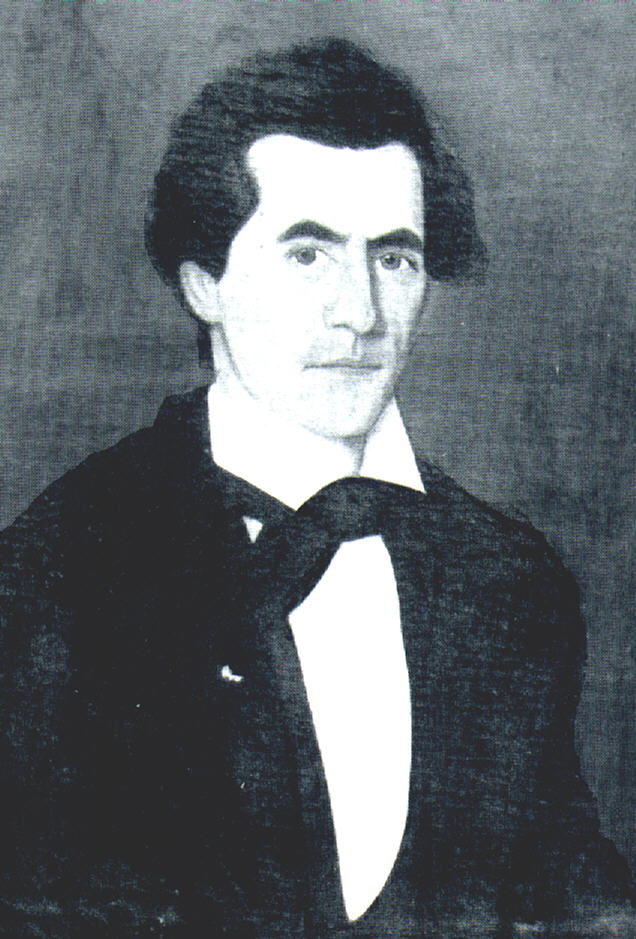
The 39th began its service in the fall of 1862. John Dils, Jr., born in Parkersburg, WV, but settled in Piketon (Pikeville), Pike County, KY, was forced by events, in his own words, to reluctantly accept a commission in the Union Army. Closer to the truth, Dils had suffered greatly at the hands of local Rebel cavalry, and he had much at stake in accepting this command. In early August of 1862, his store was sacked and his daughter threatened with a sword at her throat. The culprits were mixed elements of what were, or later became, companies of the 3rd and 4th Virginia State Line under Menifee, Moore, and Witcher. Family history also states that the Colonel received his commission through the intercession of President Lincoln.
Driven from Piketon, Dils began assembling his regiment at (Old) Peach Orchard in Lawrence County in August or September of ‘62. Over the next four months, nearly one thousand men would make their way to the mining settlement on the Sandy River to join with the Colonel in attempting to drive the Rebels from the Big Sandy Valley. Their motives varied from one to the next. Certainly, as is argued by most Rebel sympathizers, some men joined the Union Army for the money, but many were concerned with their families at home who were being starved out by foragers and thieves. Their pay usually went home to feed their wives and children. However, there were others who joined for very different reasons. There are stories related in some lines of my family that talk about the murder of Eligah Baker, my Great great great great grandfather. He was hanged by Rebel deserters, as the story goes, and he was found dead by his wife. Three of his sons were already fighting with the Virginia State Line (they could not have been on the Piketon raid or Colonel Dils would have recognized them and strung them up), but they went over to the other side just after Christmas of 1862, and joined Company H. The oral traditions further state that the Bakers hunted down the murderers of their father under the auspices of the Federal Government, and that those same malefactors lie in shallow and unmarked graves all over the north end of Buchanan County, Virginia, and the surrounding counties. If there was one prime motivation in joining the Federal Army, for the soldier who joined the 39th, it would have to be the protection of his family from raiders and thieves.
The 39th had been involved in some skirmishing with the Rebels from September through December of ‘62. As of December, the regiment was still using the motley assortment of guns that were brought into camp by the new recruits, bolstered by a small lot of “Lincoln Guns.” On December 4th, a detachment of the 39th, including elements of Company H, was scattered and defeated at Wireman’s Shoals, Floyd County, Kentucky, in what has become known as “The Johnson County Boat Fight.” A Rebel cavalry detachment, numbering between four hundred- and six hundred-strong, surprised the Federal soldiers and captured a large number of guns, uniforms, and ammunition, all destined for the 39th at Peach Orchard. Two Union soldiers were killed. Rebel casualties were never accurately named, but it is believed that they suffered more dead and wounded than the 39th. Colonel Dils was himself injured in the skirmish at Bull Mountain, against the same Rebel cavalry, near Prestonsburg, on the next night.
On February 16, 1863, the 39th was officially mustered into the United States Army. As mentioned above, the regiment had been fighting the Rebels since the fall of the previous year, without Federal support. In late March, the 39th was probably inside the breastworks at Louisa when Marshall threatened that town and then inexplicably broke off and disappeared overnight. Through the summer, the 39th was involved in dozens of small-scale actions against the Rebels in all of the counties bordering the Virginias down to Pound Gap and as far north as the Ohio River. In October, the 39th and the 14th attacked and defeated Colonel Prentice’s cavalry in Magoffin County. Colonel Dils and the 39th were also involved in some sharp skirmishing at Pound Gap in December.
And then, in a cloud of controversy still not resolved to this day, Colonel Dils was summarily dismissed from the service of the U.S. Army. Without trial or the benefit of a board of review by his peers, John Dils, Jr., was removed from command of the regiment by Presidential Order. After the incident, Dils involved himself in a campaign to clear his name and regain command of the regiment he had armed and clothed from his own fortune. He was never successful. Unconfirmed reports state that he was partially cleared and given command of a militia unit with which he wrought his vengeance in destruction upon his Confederate adversaries. The author is of the opinion that the charges and the Colonel’s subsequent dismissal were not justified, judging by the available records.
Command of the regiment was given to David A. Mims in the wake of John Dils’ dismissal. On January 9th, 1864, a detachment of about 75 men from the 39th were encamped near Turman’s Ferry on a bitter cold night when they were attacked by Confederate cavalry under Colonel Ferguson. The Rebels actually rode across the ice to attack the Federal soldiers hunkered down to keep from freezing to death. This detachment was also badly scattered and a number of the men suffered from severe frostbite after spending the night in the hills. A month later, the 14th and the 39th would capture Colonel Ferguson and part of his command at Laurel Creek, WV.
On April 14th, 1864, the 39th and the 14th were involved in the skirmish at Half Mountain in Magoffin County. This battle is also known as “Licking Meadows.” In a complete rout, Colonel George Gallup of the 14th reported fifty prisoners, twenty-five Rebel dead, 100 horses captured, 200 stand of arms captured, and Colonel Clay mortally wounded (shot through the eye . . . he would actually survive, though blinded).
In June of 1864, John Hunt Morgan entered Kentucky for the last time. On the 8th, he was in Mount Sterling, where the bank there was robbed of $70,000. The next day, after an arduous march still longer and faster than almost any march in the history of the U.S. Army, the 39th, as part of Stephen G. Burbridge’s mounted force, arrived at Mt. Sterling and defeated a detachment of Morgan’s forces under Martin and Giltner. Three days later, Burbridge’s forces rained down like hellfire and brimstone on the overconfident and over-tired troopers of Morgan’s command at Cynthiana, Kentucky. Morgan was driven from the state, never to return. He would be killed under less-than-honorable circumstances in Greenville, Tennessee, not long after the fiasco of his Last Raid.
There are some who believe that Morgan’s Last Raid was supposed to be timed to coincide with a general uprising coordinated by Captain Thomas Hines of Kentucky in the states of the Old Northwest: Ohio, Illinois, and Indiana, as well as Kentucky. However, the aligned groups known collectively as the “Copperheads” apparently got “cold feet,” if you’ll excuse the pun, for when it came time to rise up according to plan in June of ‘64, the Copperheads remained safely concealed while Morgan’s men died in droves. If this point of view is correct, then the Second Battle of Cynthiana may well be much more important than has previously been conceived. Had the Copperheads the wherewithal to rise up and do battle with Union troops in the North while Morgan was cutting them to pieces on the battlefields of his beloved Kentucky, the Lincoln Government may well have had to sue for peace. The 39th fought with distinction during this campaign and saw its age-old nemesis, the 10th Kentucky Cavalry, across the field of battle at Cynthiana. Burbridge’s forces were all too effective against a seriously depleted Rebel command, and the Confederates were never able to seriously threaten the Bluegrass State in any large numbers for the rest of the war.
In August of 1864, the 39th was bivouacked at Louisa, Kentucky, when the 109th U.S. Colored Infantry marched into town. Inexplicably, the 39th opened fire on the black troops, killing as many as fifteen. Within the next two weeks, over one-hundred thirty men from the regiment would desert and many would join the Rebels. The 39th was not the only regiment to suffer from these mass desertions at this point in time; among others, the Sandy Valley Battalion of the First Capitol Guards also suffered from large-scale desertions. This event clearly refutes the idea that all Union soldiers were in favor of emancipation and proves that, in the ranks of the Federal Army, the cause of abolition was not necessarily the prime motivation for the average soldier. Interestingly, when the Emancipation Proclamation was issued publicly in January of 1863, the 39th’s soldiers were hardly affected, though the 14th Kentucky Infantry, based at the time in Louisa, did suffer from a number of resignations among their officer corps in protest of Lincoln’s proclamation.
On October 2nd, 1864, the 39th was with Burbridge again as he moved toward Saltville. Captain David Auxier, of the prominent Johnson County family, was mortally wounded during the fighting for the saltworks. He was carried from the field where his brother saw him briefly and then fled to avoid capture. The 39th’s casualties were small at this terrible battle, perhaps due to the depleted strength of the regiment. The regiment was also involved in Stoneman’s Expedition into Southwest Virginia in December, though a significant number of the 39th’s veterans refused to leave the region and therefore leave their families open to the depredations of the guerrillas and bushwhackers. Combined with the August desertions and the frequency of “French leave” favored by these mountain Unionists, the 39th has often been referred to as the “deserters’ regiment.”
No major actions were fought in the mountains during 1865, but the 39th was constantly involved in containing bushwhackers and guerrillas through August of that year. Late in April, the regiment was ordered to get behind a large formation of Rebels who were surrendering at Mt. Sterling, just in case they had a last-minute change of heart. In July, the 39th was ordered to sweep the area east of the Big Sandy Valley for guerrillas. On September 15th, 1865, the regiment was mustered out of the service of the United States Army at Louisville.
After the war, the region went strongly Democratic, which disenfranchised most of those whom had given service to the Union. Many of the 39th’s veterans went west, settling in Minnesota. Following the war, the last commander of the regiment, Stephen Ferguson, though a doctor, suffered a series of financial losses from which he never recovered. It is possible that his service was not forgotten by his former Rebel neighbors and that local sentiment was against him (the region went strongly Democratic after the war). Also, at one time there was a G.A.R. post in Pikeville, but any living memory of it has long since passed.
The veterans of the 39th came from five different states: Kentucky, Virginia, West Virginia (not made an independent state until 1863), Tennessee, and North Carolina. Many of the Tennesseans and North Carolinians were refugees from Unionist neighborhoods in those states. The majority of the 39th’s soldiers came from the counties bordering the Sandy and Tug Rivers: Lawrence, Johnson, Floyd, and Pike Counties in Kentucky; Mingo, McDowell, and Wayne Counties in West Virginia; and Buchanan, Dickenson, and Wise Counties in Virginia. Company A was formed almost exclusively of Johnson Countians. Company H had a large number of Buchanan Countians. Also, a number of the 39th’s officers were originally drawn from the ranks of the 14th Kentucky Infantry.
Until recently, the 39th Kentucky Mounted Infantry was almost forgotten. No regimental history was ever written about the regiment or its veterans and memory of their service slowly faded away with each who was laid to rest in the dark and bloody ground of the Appalachian Mountains. Since I began my research on the regiment a couple of years ago, I have discovered that there is considerable interest in this unit, especially among descendants of the veterans. If you live in the Big Sandy Valley region of East Kentucky, there is a good chance that at least one of your ancestors served in the 39th. And while their service in the cause of the preservation of the Union may not be as distinguished as that of the 20th Maine, the regiment did effectively and almost single-handedly protect the region from the bands of roaming thieves and murderers which plagued the mountains during that sad period.
For more information on the 39th Kentucky Mounted Infantry, you can go to our website: