

 This page is dedicated to my adopted POW/MIA. I incourage everyone to support this great program, the links can be found at the bottom on this page. If we all would write our congressmen then we could Bring our Boys back home.
Read on to learn the story of Daniel Davis he's from my Hometown and an Air Dog too, I thought we learned in Basic never to leave a man behind. This guy was only 26,captured eight days after his Birthday.
Name: Daniel Richard Davis
Rank/Branch: O2/US Air Force
Unit: 56th Special Operations Wing, Udorn AF TH (RAVENS)
Date of Birth: 10 August 1943
Home City of Record: Atlanta GA
Date of Loss: 18 August 1969
Country of Loss: Laos
Loss Coordinates: 193500N 1032600E (UG357659)
Status (in 1973): Missing in Action
Category: 4
Aircraft/Vehicle/Ground: O1A
Other Personnel in Incident: (none missing)
Source: Compiled by Homecoming II Project 01 April 1990 with the assistance
of one or more of the following: raw data from U.S. Government agency sources,
correspondence with POW/MIA families, published sources, interviews.
REMARKS:
SYNOPSIS: The Steve Canyon program was a highly classified FAC (forward air
control) operation covering the military regions of Laos. U.S. military
operations in Laos were severely restricted during the Vietnam War era
because
Laos had been declared neutral by the Geneva Accords.
The non-communist forces in Laos, however, had a critical need for military
support in order to defend territory used by Lao and North Vietnamese
communist forces. The U.S., in conjunction with non-communist forces in Laos, devised a
system whereby U.S. military personnel could be "in the black" or
"sheep-dipped"
(clandestine; mustered out of the military to perform military duties as a
civilian) to operate in Laos under supervision of the U.S. Ambassador to
Laos.
RAVEN was the radio call sign which identified the flyers of the Steve Canyon
Program. Men recruited for the program were rated Air Force officers with at
least six months experience in Vietnam. They tended to be the very best of
pilots, but by definition, this meant that they were also mavericks, and
considered a bit wild by the mainstream military establishment.
The Ravens came under the formal command of CINCPAC and the 7/13th Air Force
56th Special Operations Wing at Nakhon Phanom, but their pay records were
maintained at Udorn with Detachment 1. Officially, they were on loan to the
U.S.
Air Attache at Vientiane. Unofficially, they were sent to outposts like Long
Tieng, where their field commanders were the CIA, the Meo (Hmong) Generals,
and the U.S. Ambassador. Once on duty, they flew FAC missions which controlled
all
U.S. air strikes over Laos.
All tactical strike aircraft had to be under the control of a FAC, who was
intimately familiar with the locale, the populous, and the tactical
situation.
The FAC would find the target, order up U.S. fighter/bombers from an airborne
command and control center, mark the target accurately with white phosphorus
(Willy Pete) rockets, and control the operation throughout the time the
planes
remained on station. After the fighters had departed, the FAC stayed over the
target to make a bomb damage assessment (BDA).
The FAC also had to ensure that there were no attacks on civilians, a complex
problem in a war where there were no front lines and any hamlet could
suddenly
become part of the combat zone. A FAC needed a fighter pilot's mentality, but
but was obliged to fly slow and low in such unarmed and vulnerable aircraft
as
the Cessna O1 Bird Dog, and the Cessna O2. Consequently, aircraft used by the
Ravens were continually peppered with ground fire. A strong fabric tape was
simply slapped over the bullet holes until the aircraft could no longer fly.
Ravens were hopelessly overworked by the war. The need for secrecy kept their
numbers low (never more than 22 at one time), and the critical need of the
Meo
sometimes demanded each pilot fly 10 and 12 hour days. Some Ravens completed
their tour of approximately 6 months with a total of over 500 combat
missions.
The Ravens in at Long Tieng in Military Region II, had, for several years,
the
most difficult area in Laos. The base, just on the southern edge of the Plain
of
Jars, was also the headquarters for the CIA-funded Meo army commanded by
General
Vang Pao. An interesting account of this group can be read in Christopher
Robbins' book, "The Ravens".
1Lt. Daniel R. Davis was a Raven in Laos. On August 18, 1969, while on
station
in the Plain of Jars region of Xiangkhoang Province, his O1 was shot down and
Davis was declared Missing in Action. His last known location is listed as
about
15 miles northeast of the city of Ban Na Mai.
Daniel Davis is one of nearly 600 Americans lost in Laos. Even though the
Pathet
Lao stated publicly that they held "tens of tens" of American prisoners, not
one
American held in Laos was ever released -- or negotiated for.
Since U.S. involvement in the Vietnam War ended, nearly 10,000 reports have
been
received by the U.S. Government relating to Americans missing in Southeast
Asia.
Many authorities have reluctantly concluded that hundreds are still alive in
captivity today.
The Ravens were extremely dedicated to the freedom-loving people of Laos and
put
their very lives on the line for them. They believed in America and the job
it
was trying to do in Southeast Asia. They were also quite insistant that
each of their own were accounted for, dead or alive.
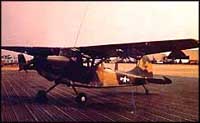
What would Daniel Davis say if he knew we had abandoned him?



 Take Me Home.......