Punxsutawney, Pennsylvania: Entertainment in the 1950's & 1960's (2)
Punxsutawney's Past:Recreation During the 1950's and 1960'sPart Two
I won't say that there are fewer restaurants and "hang-outs" now than had existed in the 1950's and the 1960's. We have plenty of places to buy food today: Burger King, Wendy's, Pizza Hut, Subway, Arby's and the newly constructed McDonald's downtown. However, these places are all forms of fast food chains and tend to no longer possess much of the friendly "home-town" atmosphere that one could easily find in the businesses operating thirty or forty years ago. The emphasis in contemporary restaurants is speed and efficiency, commonly removing the qualities of tranquillity and tendencies of leisure that were common in so many of the old "hang-outs." Places like Carlino's, Chango's, and Tastee Freez (now Joe's Drive-In) are still located and carrying on business, although they have no doubt lost customers to the quicker and more famous fast food restaurants.
One other discernible change that has occurred in the last 50 years in the social history of Punxsutawney is the decline of the town's civic and social organizations. Punxsy has had a long history of social clubs, dating back to four early literary societies formed between 1868 and 1870 (Centennial 21). By the beginning of the 1950's, the town's clubs had multiplied in number and expanded to represent three basic types of groups: community service and charity organizations, veterans' organizations, and organizations for women (Mullin Kille 5).
The community service groups included chapters of the Rotary Club, Lions Club, Kiwanis, Elks Lodge, Eagles, Moose Lodge, and the Slovak Club (5). The Rotary Club was the earliest community service club to be started in Punxsutawney in 1921 (Centennial 161). The Lions Club of Punxsutawney was formally chartered in February of 1945, with approximately 300 individuals attending the first meeting held in the Army and Navy Club rooms (159). The club continues to organize and operate Camp Little Leo, a celebrated summer health camp providing recreation for disabled children, first proposed in 1946 (159). The Kiwanis Club's motto is "We Build," and the club has given Punxsy proof of this by contributing $5,000 to the construction of Harmon Field and also funding the preparation of the Armory field as a location for the carnival (168). The organization, formed in 1922, also regularly donated funds to the YMCA, the high school, the 4-H Club, and other local youth groups (169).
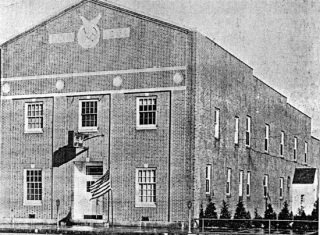
The Elks, officially called the Benevolent and Protective Order of Elks Lodge, was founded in 1895 under the principle of "charity, justice, brotherly love, and fidelity" (162). The Punxsutawney branch of the Fraternal Order of Eagles, Aerie No. 1231, was established on February 17, 1906 with a roster boasting 166 members (165). The group was oriented, at the time, with the promotion of the national social security act, old-age pensions, and other charitable causes concerning the elderly, veterans, children, and blue collar workers (165). The Moose Lodge was chartered in February 11, 1945, and participated in many civic duties, such as raising funds for the Boy Scouts, the blood bank, and support of both the Moosehart, a home for orphaned children, and the Moosehaven, a home for aged members of the order (168).
Local community service groups were also organized, including the Punxsutawney Garden Club, the Country Club, the Chamber of Commerce, the Punxsutawney Groundhog Club, and numerous literary and church groups (Mullin-Kille 5). The Garden Club was organized April 4, 1933, initially by a group of women concerned with the advancement of gardening and beautification of the town and its roadways (Centennial 156). The Country Club, the fifth oldest of its kind in Pennsylvania, was started in 1900 by Dr. Frank Lorenzo, who wanted to establish an organization to support the local golf course (185). The club in its early stages was not the prestigious and expensive club that exists today, and required the use of tin cans to substitute for holes (185). The Chamber of Commerce, originally formed under the name of the Business Men's and Merchant's Association, formed in 1908 to cultivate the commercial, industrial, and civic potential of Punxsy (155).
The Groundhog Club originated casually in the year 1886, with a group of individuals that celebrated the German tradition of Candlemas Day, based on the legend that any animal casting a shadow on February 2nd would forecast a "second winter" (185). The group, also known to feast on groundhogs, received their name from Punxsutawney Spirit editor, Clymer H. Freas, who claimed only Punxsutawney's groundhog foretold the truth (185). Every year since then, the group has met on Gobbler's Knob to observe the groundhog's prophecy on February 2nd and held a banquet during the summer in honor of this, thus leading to the present's Groundhog Festival occurring annually (185). The main focus of the club is to promote the groundhog's image and renown, while at the same time, serving and contributing to the community (185).
Veteran organizations in Punxsutawney included the American Legion, Spanish-American War Veterans, Veterans of Foreign Wars (VFW), Disabled American Veterans, and the Army and Navy Club (Mullin-Kille 5). The American Legion in Punxsy, the John Jacob Fisher Post No. 62, was founded on June 24, 1919 as a community organization for veterans of both World Wars (171). On February 12, 1920, an Auxiliary was added to the Post for the women who, with their husbands and families, are involved with the Legion (174). The Spanish-American War Veterans organization in Punxsutawney, the Herman Hughes Post, was devoted to honoring the 109 enlisted men of Company 5, a group of Sixteenth Regiment of the Pennsylvania Volunteer Infantry, who were recruited from Punxsutawney in 1898 and deployed in Puerto Rico (213). The VFW of Punxsutawney was organized in 1928, under the name of the Probyls-Brennan Post, but was revised in 1935 and renamed the Robinson-Morrison Post No. 2076 (179). The requirements of membership are that an individual must possess an honorable discharge from any service and must have served overseas in any war during or since the Spanish-American War (179). The operations of the club are to provide funds for disabled veterans, help veterans with employment and schooling, assisting in funerals for deceased veterans, and raising funds for the families of deceased veterans (179). A similar group, the DAV, provides support for all disabled American veterans and their families, contributing to several welfare organizations and charities (177).
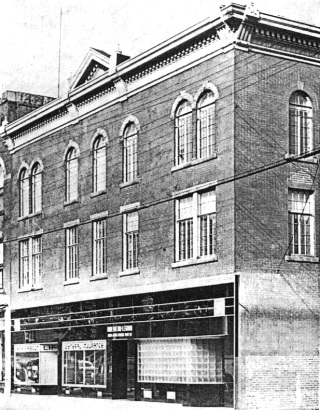
Punxsy's Army and Navy Club, established in 1934, is open almost exclusively to members of the American Legion, Spanish-American War Veterans, VFW, and DAV clubs, although there are several "Class B" members who are not veterans (179). The club aimed to provide a variety of entertainment for its members and their families, including annual picnics and dinners, weekly dances, sponsoring a bowling team, and providing banquet and club rooms (179).
Women's groups consisted largely of auxiliary organizations of men's groups, such as the American Legion, the YMCA, the Masons (Order of the Eastern Star), the Lindsey Fire Company, the Elk Run Fire Company, and church groups, such as the Dames of Malta and the Pythian Sisterhood (164). Independent organizations for women in Punxsutawney were the Daughters of the American Revolution (DAR), the National Federation of Business and Professional Women's Club (BPW), and the Irving Club (Mullin-Kille 5). The DAR of Punxsy was founded on April 3, 1924, in order to: "foster a spirit of true patriotism, to encourage historical research in relation to the American Revolution, to maintain and extend the institutions of America... and preserve the memory of noble men and women who bore their share in the danger and privation in the War of Revolution" (Centennial 176). Punxsutawney's branch of
BPW was established in 1919, the 35th charter of its kind in Pennsylvania, to promote interest and further the advancement of working women (155). The group maintains an active interest, as well, in civic affairs, working with the Chamber of Commerce to meet the best interests of the community (155). The Irving Club is one the oldest recorded literary societies for women in Western Pennsylvania, initially founded in 1895, by Mrs. Ada R. Mundorff (156). The name originated in homage to Washington Irving, considered by the 15 women members to be the "first American who had won for his country recognition on equal terms in the literary republic" (157). The club, limited to a 25 member maximum, has gone to great lengths to contribute to the public interest of the community, such as making the first contribution to the public library, arranging for music to be introduced in schools, and beginning the drive for War Bonds during World War I (157).
Many of the organizations remain active today, such as the Army and Navy Club, the Elks Lodge, and the Order of Eagles, although activity tends to be to a lesser degree than it was between the 1940's and 1960's. The organizations continue to be a large influence in the maintenance of the community, but there have been no major changes in the groups or community areas in the last two decades. Other organizations, such as the Punxsutawney Pistol Club, the Punxsutawney Barbershop and Quartet Oragnization, and the Welcome Wagon Club, have completely ceased to exist and with them a beneficial asset and influence to the borough of Punxsutawney (Kauffman).
The civic organizations contributed much to the surrounding community, most notably endorsing and contributing to the construction and maintenance of the local parks, Barclay Square and Harmon Field, as well as funding for the local library. With the decline of these groups, the emphasis on these areas also seemed to dissipate, especially in the case of Harmon Field, the abandoned football field (Centennial 26). Still, the area offers many other fine recreational parks that, although not positioned directly in town, are located nearby. Sportman's Park, located only one mile out of town, offers the community rifle ranges, archery ranges, picnicking areas, and a play area for the kids (Mullin-Kille 7). The park also has facilities provided for social uses, such as dances, private parties, and reunions (7). Sportsman's Park has gained wide notoriety recently as the location where the festivities taking place on February 2, Groundhog's Day, more commonly called Gobbler's Knob (Kauffman). Anita Community Park is also located fairly close to Punxsy, six miles north on the extension of Elk Run Avenue (Mullin-Kille 7). The park features tennis courts, areas for swimming, and picnicking facilities (7). Cloe Lake is another recreational area situated relatively close to Punxsutawney, located approximately four miles north on route 36 (7). Boating and fishing were the main forms of recreation found at the lake (7). Further out of town are several parks, including Cooks Forest Park, located 37 miles north of Punxsy, Clear Creek State Park, 34 miles north, Prince Gallitzin Park, 40 miles southeast, and Curwansville Dam, located 24 miles northeast of town (7). Almost all of these parks have facilities for swimming, camping, hiking, fishing, picnicking areas, and cabins (7).
A related topic that helped to establish the success of these parks, as well as open up the community for tourism and commerce, was transportation. During the 1950's and 1960's, Punxsutawney possessed two running taxi services: the Railroad Taxi Service, located at 323 Indiana Street, and the Punxsutawney Taxi Service, operated from an office located at 109 Pine Street (42). The town also had a local bus service that operated twelve buses scheduled during every 24 hours, transporting passengers to nearby towns (6). The railroad, which played a very influential role in the formative years of the town, once again became important in serving Punxsutawney, this time through transportation (Baun). The Baltimore and Ohio Railroad constructed shops in town and provided a passenger service for the citizens of Punxsutawney and vicinity (Mullin-Kille 6). The company had terminals operating in Pittsburgh and in the state of New York, both in the cities of Buffalo and Rochester (6). Punxsy also had two operating airports, one municipal and the other privately owned (6). In addition, the Clearfield Aviation Institute began offering the community instruction in the area of aeronautics, located in the abandoned Punxsutawney Hospital Building (Centennial 27). Plans were being developed in the 1950's to transform one of the airports into a commercial air service, although only the municipal airport exists today (Mullin-Kille 6).
The development of transportation was not the only pioneering technology to be found in Punxsutawney during this time, as radio, television, and telephone technology were also being advanced. In addition to the Punxsutawney Spirit, the only daily paper in the town's history, the town also broadcast news and information over the local radio station, then known as WPME (Mullin-Kille 6). The radio station, located at 103 North Gilpin Street, served Punxsutawney and surrounding area with 5,000 Watts of power (6). In association with the radio station, the Kiwanis Club sponsored and broadcasted the Kiwanis Harvest of Talent, concentrating and highlighting local talent (Punxsutawney Spirit advertisement). Radios and other new technological equipment were made available to the town through Punxsy's hardware shops, namely Joe Beatty's Radio Shop (Centennial 108). The store was located in the building across from the Punxsutawney Post Office on North Findley Street, first erected in 1923 as Payne's Repair Shop (108). Joe Beatty, upon purchasing the store, renovated the store to create a showroom for experimental equipment and was the first store to introduce television to Punxsutawney on January 11, 1949 (108).
After this initial introduction, Punxsy was quick to embrace television, having a clear reception of five channels by the late 1960's (Mullin-Kille 6). Cable television was also available then, through the service of the Punxsutawney TV Cable Company, adding three more channels to the basic channels, including one channel owned and broadcast by the school district (6). The following is a quotation from the 1967 Con Survey Directory by the Mullin-Kille Company, describing the use of this channel:
	Punxsutawney Area School District is one of the
	few school districts in the eastern United States
	that has a closed circuit television system, complete
	with cameras, consoles, receivers, and video tape
	equipment.  This [system] is housed in a separate
	building which enables [the school] to televise live
	throughout the entire school system, or rebroadcast
	or videotape programs. The citizens of the community
	also enjoy an unique privilege since anyone on the
	TV cable system can receive all programs from the
	school via channel 12 (Mullin Kille 6).
The school itself was another vital part of the community's recreational entertainment, offering teens several activities and clubs, as well as providing the community with sports programs and the occasional play or musical performance (4). Baseball remained quite popular, continuing a long history of support by the town, probably having been Punxsy's premiere spectator sport (Centennial 22). High school football also became especially popular during this time, as a "standard feature of Punxsutawney's social life," with the addition of lights on the playing field (27). Another high school sport that began to draw much attention from the town was basketball (27). During the early 1960's, the boy's team was coached by Charles (Chuck) Daily, who later went on to become the professional coach of NBA teams, including the Detroit Pistons and the New Jersey Nets (Punxsutawney Spirit). Along with the baseball teams sponsored by the high school, Punxsy also had Little League, Teener League, and Legion League teams and once even had semi-professional leagues operating in the town (Mullin-Kille 7).
Other forms of sporting recreation during the summer included local tennis courts, golf courses, archery ranges, and the George C. Brown community swimming pool (7). The pool, adjacent to Harmon Field, was open to all residents and offered swimming lessons to area kids during the summer months (Kauffman). The pool was usually crowded, with crowds increasing and decreasing depending on the temperature of the day (Mottern). To keep the pool in maintenance there is an admission charged, although most of the area kids who frequented the pool purchased season tickets (Mottern). The pool had both a typical diving board and a 10 meter high diving board for more experienced swimmers, although the high dive has been removed since then (McIntire). To ensure that the pool was not used exclusively by kids, there was an hour each night restricted for adult swimming only (Mottern).
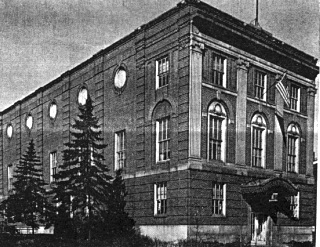
The entire community had a chance to enjoy many other events and activities that occurred during the summer, as well, ranging from carnivals to car shows (Forsythe). The carnival in Punxsutawney was originally operated by genuine gypsies, who enforced the stereotypes by offering fortunes and palm readings (Forsythe). During the early years of the carnival, it was held in what was called the "Farmer's Market," an area of land now covered by parking lots, the Eagles Lodge, and the National City Bank (Baun). It received the name because, until the early 1950's, area residents would bring and sell their baked goods, prepared food, and produce in that portion of the town each weekend (Baun). The streets on either side were closed off to allow a one way passage through the "market," along a street no longer there (Baun). When the town was going through a renovation and redevelopment process during the 1970's, the parking lots and a number of buildings were removed from this area, leaving open lots (Pantall Hotel Brochure). Even before that time, the carnival had relocated first to Kuntz Memorial Baseball Field, and then, to the National Guard Armory Field, located next to the present day State Police Barracks, where it still takes place today (Schwartz). The carnival in Punxsutawney remains an annual event that brings the entire community together, although other events such as horse shows, sponsored by the Punxsutawney Saddle Club, car shows, sponsored by the Punxsutawney Antique Car Club, and air shows, sponsored by the Punxsutawney Municipal Airport, have since become rare occurrences (Mullin-Kille 7).
It may seem that in listing all of these wonderful treasures and esteemed structures of the past, I am implying that Punxsutawney has recently submerged itself into a dull atmosphere, lacking any worthwhile entertainment or value. This is not true, however, as there are still many places for the residents of Punxsutawney to find enjoyment. Many of the social clubs still operate, the parks are still operating, and the town has made attempts in the past decade to reintroduce recreational activities and opportunities back into the community. The restaurants in town, although they may not be as homelike and serene as the "Ma & Pa" style restaurants of the past, still offer kids a place to eat and convene when they feel like it. Some recently constructed restaurants in town have even attempted to recreate the neighborly impressions made by the old restaurants, such as Gimmick's and Granny's Kitchen, by creating a comfortable atmosphere for one to simply relax, not to simply devour nourishment. The town still has a pool hall, a community swimming pool, a bowling alley, and a roller rink, and has lately added an arcade for the teens. The schools do, although the schedule is infrequent, provide dances and social events for the area kids and local sports are just as important as they ever were.
I am not trying to show that the town has become devoid of any entertainment or value, but instead I am trying to show that we have lost so much. The YMCA, the theaters, the hang-outs for kids are all terrible losses in the history of the town, losses I feel should never have occurred. I think that these places would do so much to create a better environment in and around the town if they were still in operation today. Maybe then we wouldn't see masses of teenagers being forced out of parking lots for loitering, when they are just trying to "hang-out." Maybe then we wouldn't see such drastic drug and alcohol use in our area's schools. The town's population has been on a decline since the second World War: in 1951 the population was 10, 174, in 1967 the population shrank to 8,680, and in 1992 the population was listed in the American Heritage Dictionary as 7, 479 (Mullin-Kille 6). There must be an underlying reason why the town is losing so many of its residents. This is not to say that Punxsy cannot revitalize the town, attracting people and businesses back into the area, but the need for some form of change is apparent and urgent. I feel that this change needs to occur in the area of entertainment and community recreation: making Punxsutawney a great place to live, not just visit.
Bibliography
Baun, Maxine. Personal interview. 25 April 1997.

Baun, Mervin. Personal interview. 25 April 1997.

Boles, Margaret Cabell. Punxsutawney Centennial

   1849-1949: 100 Years of Progress.

Bridge, Bob. Personal interview. 27 April 1997.

Community and Area Map of Punxsutawney.  Punxsutawney

   Chamber of Commerce.

Forsythe, Shirley. Personal interview. 11 April 1997.

J. Z. Duffy Company. Jefferson County, Pennsylvania Area Directory. 1960.

Kauffman, Beverly. Personal interview. 11 April 1997.

Kauffman, Dan. Personal interview. 17 April 1997.

Lepley, Jean, Personal interview. 23 April 1997.

McIntire, Mike. Personal interview. 20 April 1997.

Mottern, Carol. Personal interview. 20 April 1997.

Mullin-Kille Company. Punxsutawney, Pennsylvania

   Con Survey Directory.  Spirit Publishing Company: 1951.

Mullin-Kille Company. Punxsutawney, Pennsylvania

   Con Survey Directory. Spirit Publishing Company: 1967.

Pantall Hotel.  Punxsutawney, Pennsylvania.

"Punxsutawney." American Heritage Dictionary of the

   English Language, 3rd ed. Boston: Houghton-Mifflin, 1992.

Punxsutawney Spirit 18 November 1961, Spirit Publishing Company.

Punxsutawney Spirit 24 November 1961, Spirit Publishing Company.

Punxsutawney Spirit 16 June 1966, Spirit Publishing Company.

Punxsutawney Spirit 2 July 1966, Spirit Publishing Company.

Punxsutawney Spirit 5 July 1966, Spirit Publishing Company.

Punxsutawney Spirit 17 July 1966, Spirit Publishing Company.

Schwartz, Jenny B. Personal interview. 20 April 1997.

Veitz, Wendy. A History of Great Fires in Punxsutawney,

   Pennsylvania. Spirit Publishing Company: 1993.

Waite, Vivian. Personal interview. 23 April 1997.
Explore Punxsutawney more by following these links:
Punxsy takes weather seriously, see what's going on now
Punxsutawney.COM
Punxsutawney Historical Society: everything you'd want to know
The Punxsutawney Chamber Of Commerce
The Weimers' Punxsy Page: informative index of all things 'Punxsy'
Yahoo's Punxsutawney Page: current news report from Punxsy
Punxsutawney Spirit's Homepage: Punxsy's only newspaper
Punxsutawney Area Community Arts Center
Punxsutawney's own Joe's Drive-In: a traditional 'hang-out'
Punxsutawney's Pantall Hotel & Restaurant
Here's some sites about Punxsy's most valued citizen, Phil:
The Official Groundhog's Day Homepage: tons of stuff here
Now Punxsutawney Phil is apparently owned by the state (hmph!)
Groundhog's Day Page: includes info about the Bill Murray film
A Groundhog's Day website hosted by my ISP
The Shadow Report: a list of Groundhog's Day outcomes
Sportman's Park: where the Groundhog festivities occur
Return to SLeDGE HeadQuarters.
 Go to the Geocities Sunset Strip