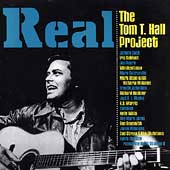
Real: The Tom T. Hall Project, Sire-Delmore, 31039-2.
Real: The Tom T. Hall Project, Sire-Delmore, 31039-2.
For more than three decades, Tom T. Hall, aptly named "The Storyteller," has written extraordinary songs populated with the voices of ordinary people and the struggles they face. His gift is his ability to show the heroism of these characters as well as the humor that makes their struggles--and, by extension, our own--bearable. Hall's songs are littered with the displaced, impoverished, and isolated, often struggling musicians who cannot ignore the call of art and the road, even though, paradoxically, they understand it is the source of their isolation. In exploring these themes, Hall taps into a well of American art and, by extension, traditional country music.
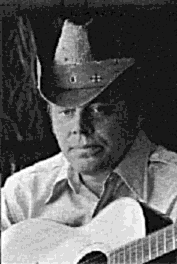 However, this staple has virtually disappeared in today's Hot Country. Rather than the exhausted musician who, after the show, downs a beer before heading to the next anonymous town, we're treated to performers with a surrogate family of fans, a myth especially perpetuated by music video. Consider two recent examples from superstar Garth Brooks, who vacillates between throwing an on-going party for fans in "Tearin' It Up, and Burnin' It Down" and serenading them in "Your Song." After all, which image is more marketable: Garth flirting with the camera or Hank Williams passed out in the back of a Cadillac? Tom T. Hall's music suggests he would choose the latter, which makes him terribly out of step by today's standards when all a performer really needs is a hat, tight jeans, a personal trainer, and a slick producer to make it on Country Music Television.
Challenging the limits of this approach is Real: The Tom T. Hall Project, the first of two planned Hall tributes, and perhaps one of the most significant--and postmodern--country music compilations of the decade. This 17-song disc re-examines works from throughout Hall's career, illustrating how contemporary his writing remains while, at the same time, exploring the artists who have contributed material.
Real is a dynamic collection that brings together traditional and experimental artists from across the spectrum of alternative country music (an appropriately vague term). Real's creators have placed Hall's original songs in a kind of "dialogue" with a range of alt.country performers, each with different musical interests and approaches and who are, themselves, noted songwriters. When Hall's traditional songs are revised by other, mostly younger, artists, several things happen: The music is re-invigorated, and the artistry of Hall's writing highlighted; this, in turn, calls attention to the innovations of those musicians who have followed him as well as their respect for his music. In addition, a number of tracks on Real were mixed in garage studios, a point which echoes the "Do-It-Yourself" ethos of punk. Although this may initially appear at odds with Hall's traditional country style, it is, instead, a fitting reaction against the expensive studios and generic music of Hot Country.
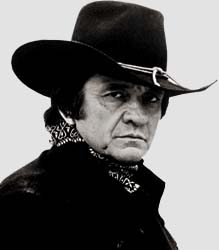 A number of musicians here take a traditional approach to Hall's music. Real opens with the words, "Johnny Cash for the Tom T. Hall Project, 'I Washed My Face in the Morning Dew.' Take one." Few openings could be more appropriate given Cash's "Man in Black" persona and the content of Hall's song as well as the social awareness that pervades his writing. Moreover, Cash's appearance gives the disc a musical credibility furthered by Ralph Stanley's pure bluegrass treatment of "The Water Lily," which highlights Hall's love of bluegrass. Cash and Stanley lay a foundation for R. B. Morris' "Don't Forget the Coffee, Billy Joe," the Mary Janes' "Iím Not Ready Yet," Iris DeMent's stalwart, twangy "I Miss a Lot of Trains," and Kelly Willis' heartbreakingly honest "Thatís How I Got to Memphis." All are solid neo-traditional takes of Hall standards.
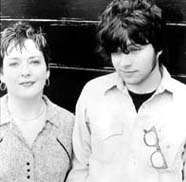 A neo-traditional track of note is Whiskeytown's "I Hope It Rains on My Funeral," clearly a tribute to Hall's 1970's Mercury Sound, which particularly illustrates the dialogic nature of Real. The band has slowed and darkened Hall;s original, opening with an isolated fiddle and focusing on the resignation of Ryan Adams; voice as he describes a life that has, seemingly, been out for him from the start. Significantly, Whiskeytown changes the last two lines of the song from Hall's "If Iíve got one wish, I hope it rains at my funeral / For once, I'd like to be the only one dry" to "Grant me this and rain on my funeral / Once I'd like to be the only one that's left there crying." Thus, Adams transforms the ironic humor of Hall's original to a resignation that not only alters the song's tone but also alludes to Whiskeytown's (and Adams') turbulent history.
In addition, Real has a number of tracks by artists known primarily as writers. Richard Buckner ("When Love Is Gone"), Jonny Polonsky ("Old Enough To Want To"), Ron Sexsmith ("Ships Go Out"), and Joel R. L. Phelps ("Spokane Motel Blues") use minimal arrangements to call attention to a song's lyrics, an approach consistent with their own music. However, the Polonsky and Sexsmith songs are never fully realized while the Buckner track gives Hall's writing Buckner's trademark despair. More interesting is Freedy Johnston's take on "Coffee, Coffee, Coffee," which echoes the Nashville Sound of the 70s largely through its emphasis on piano and lack of twang.
Perhaps the most interesting tracks on Real are those by artists more willing to experiment with sound. For example, Mary Cutrufello plays a blues rock on "Candy in the Window," and Syd Straw and the Skeletons do a rocky "Harper Valley PTA," with the Skeletons' names substituted for various hypocritical PTA members. Calexico's "Tulsa Telephone Book" is compelling for its infusion of Latin horns and rhythms; here, "J.B.," not "T," calls around Tulsa, trying to find "Juanita"--not Hall's Shirley. Calexico's revision is engaging, calling attention to the diversity and flexibility of Hall's writing.
 Of particular interest is Joe Henry's treatment of "Homecoming." Here Hall's story of the son, a musician, stopping to visit briefly with his father before heading back out on the road, is a musical pastiche. Henry's track opens with a staticky sample taken from Charley Pride's classic Live at Panther Hall as the musician is introduced. The announcer describes the singer as "virtually unknown" until two years ago, but "today, he's one of the greatest." Soon, a drum loop makes its way through the old words, juxtaposing past and present styles while underscoring the songís timeliness--even though it was written in 1969. Occasionally, spliced-in applause, presumably from the same source, breaks through the restriction of the drum loop, while the vocal remains distanced, like the speaker. Even though he is having a conversation with his father, it's clear that the son no longer sees this as his family; indeed, the splicing is, at points, awkward, like the conversation, which is self-conscious and mechanical. The track ends with a sampled "Thank you, thank you very much!" along with more applause as the son again leaves home, having completed yet another performance. Henry's treatment of "Homecoming" reinvigorates the song, using 1990s technology to connect with the past, each commenting on the other.
Real closes with Mark Olson and Victoria Williams' version of "It Sure Can Get Cold in Des Moines," a barren account of the artist who writes a song based on seeing a young, homeless woman weeping in a Des Moines hotel during a cold spell. Olson sings an isolated solo, with Williams' voice occasionally adding harmony and, by extension, community. The song--and, indeed, the entire disc--leads up to the line "Life is just like that sometimes," a testament to human endurance and the humor that enables us to accept this truth.
Hall himself has noted, "All I know is just don't judge anybody. God made everybody different. . . . And be honest. That's the main thing. Just tell the tale." In the end, Real is a kind of biography, the story of The Storyteller and of the artists who continue to tell his stories.
or email Editor Gary Burns; for review information, email Reviews Editor George Lewis.