
For the purpose of analysis, bones are often put into one of five categories:
Long bones - any bone with a long center shaft (diaphysis) which is capped on each side by a joint (articular end) which are known as the epiphyses
Compact bones - the wrist and ankle bones which are cuboidal in shape (no recognizable shaft) and often have multiple articular facets where other bones attach to allow for complex movement
Flat bones - thin bones which serve to protect internal organs (skull protecting the brain) or allow for extensive muscle attachment (ribs and the many muscles of the chest and back)
Irregular bones - bones with complex shapes and functions may contain elements of various categories such as he vertebrae and pelvis and the many small bones that make up the face
Sesamoid bones -small bones that develop in tendons to protect joint areas from excessive wear such as the patella (knee cap).
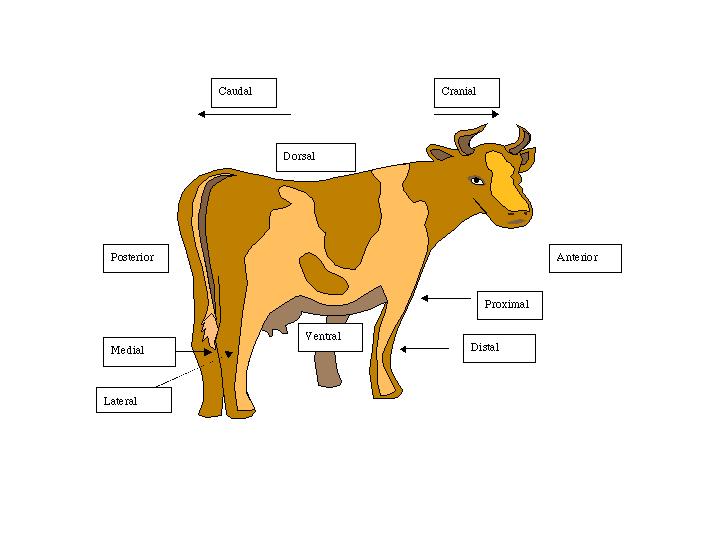
Also useful for describing bones is the following orientation system:
Cranial - toward the head
Caudal - toward the tail
Anterior - toward the front in normal anatomic position
Posterior - toward the back in normal anatomic position
Medial - toward the center in normal anatomic position
Lateral - away from the center in normal anatomic position
Superior - upper (opposite of inferior)
Inferior - lower (opposite of superior)
Dorsal - towards the top (opposite of ventral)
Ventral - towards the bottom (opposite of dorsal)
Distal - away from an attachment
Proximal - towards an attachment
Normal anatomic position for a human is standing upright, facing forward, arms at your side, palm side of the hand facing forward.
Due to the complexity of the naming of bone surface features, these will be defined as they are encountered in the bone identification pages.