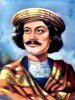
| Rammohun Roy was born in the village called Radhanagore of Khanakul, Hooghly a district in West Bengal on May 22, 1772. His father Ramakanta Roy was an orthodox Brahmin and his mother was Tarini Devi. Rammohun was educated in Persian, Arabic, Sanskrit & Bengali. He studied the works of great scholars and evolved into a free thinker. This also led him to leave home on more than once occasion and finally be driven away from his home by his father. On one of these occasions he landed up in Tibet to study Buddhism but again incurred the wrath of the teacher and his disciples owing to his radical free thinking. |
|
| Rammohun was a great thinker and philosopher. He was extremely rational in his thinking. His studies of the sacred Hindu texts like the Vedas and the Upanishads led him to believe strongly in God the omnipotent the formless or Nirakar one. To propagate his views he formed the Atmiya Sabha in 1820 that started the crusade against the so called practices that were being carried out in the name of Hindu religion like child marriage, Suttee and meaningless observance of rituals. The puritans tried to stop him and even contemplated imparting bodily harm but Rammohun was steadfast in his belief. His strength of character cowered down his enemies and he became the pioneer sowing the seeds of the Bengal Renaissance. |
|
| Rammohun was a muti facted personality. He realised the neccessity of education and stressed the need for imparting English education along with the vernacular form as well. To facilitate this he himslef wrote a number of books thus giving birth to the prose form writing in Bengali literature. It was with his active participation that a number of schools were setup. Rammohun came to Calcutta in 1815 after a successful administrative career in the British East India Company and formed an association of like minded Hindus and English scholars. It included among them Prince Dwarkanath Tagore who was a great well wisher of Rammohun. It was with the active coercion of Rammohun was born Hindoo College which is now better known as the Presidency College Calcutta. |
|
| Rammohun propagated his liberal religious views amongst his friends. They used to assemble at the Unitarian Church. It was to form a house or Mandali of their own prompted Rammohun to build a Samaj building of his own. The plot of land was donated by "Firingi" Kamal Bose and thus was born the first Brahmo Samaj in 1828. The trust deed of the Samaj invites the people form all walks of life to come and worhsip the One and Omnipotetnt God. He wrote Bhabo Shei eke, jini jale sthale shunne saman bhabe thake... The foundation day of this Brahma Sabha was 6th Bhadra (20th August, 1828) and it is still celebrated with due devotion among the Brahmo community throughout the world. |
|
| But Rammohun did not stop at the formation of the Brahma Sabha. He raged a tireless crusade to eradicate the dogmas and rituals that were prevailing in the existing form of Hinduism. He appealed to the British Government to abolish the heinous act of Suttee and due to his tireless efforts Lord William Bentinck abolished Suttee in 1828 much to the dismay of the Hindu puritans. He strove for the freedom of the press,emancipation of women and elimination of child labour. In fact Rammohun was a man far ahead of his time. His concepts have come to practice in the modern United Nations and the Indian Constitution without as much as a recognition to him. In fact Mahatma Gandhi called him Pioneer of Modern India and Rabindranath referred him as a Bharatpathik. |
|
| In fact so wide were his field of activities that the existing Mughal emperor conferred him the title of Rajah and send him to England to plead for him in front of the British Parliament. Rammohun became the first Indian to visit outside his country. On his journey he went on board a French vessel to slaute the flag of liberty and broke his leg in this endeavour. He stayed at the house of Mary Carpenter and his oration and lifestyle drew a large following amogst the Britishfraternity. He breathed his last in Bristol on September 27, 1833 and lies buried at Arnos Vale cemetry in that city. |
|
| The notable literary works of Rammohun include Tuhfat-ul-Muwahhidin (1805),Vedanta (1815), Ishopanishad (1816), Kathopanishad (1817), Moonduk Upanishad (1819), The Precepts of Jesus (1820), Sambad Kaumudi - a Bengali newspaper (1821), Bengali Grammar (1826), Brahmapasona (1828), Brahmasangeet (1829) and The Universal Religion (1829). |
|
| The views in these pages are solely mine |