 FCEV
FCEV
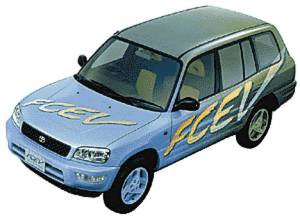 This near-future electric vehicle converts methanol into
hydrogen to produce electricity in its fuel cell. A fuel cell electric vehicle produces
electricity in on-board fuel cells, using the energy to power its motor. If the fuel
cell cannot produce enough electricity for the motor during acceleration, a bank
of batteries provides a power boost. When the vehicle decelerates or goes down a
hill, the motor acts as a generator, using the kinetic energy to generate electricity
and store it in the batteries, charging them. FCEVs differ from conventional electric
vehicles in their source of electricity. In other words, they need not depend on
outside sources. This near-future electric vehicle converts methanol into
hydrogen to produce electricity in its fuel cell. A fuel cell electric vehicle produces
electricity in on-board fuel cells, using the energy to power its motor. If the fuel
cell cannot produce enough electricity for the motor during acceleration, a bank
of batteries provides a power boost. When the vehicle decelerates or goes down a
hill, the motor acts as a generator, using the kinetic energy to generate electricity
and store it in the batteries, charging them. FCEVs differ from conventional electric
vehicles in their source of electricity. In other words, they need not depend on
outside sources.Hydrogen is the fuel that produces the electricity. And Toyota already developed another FCEV that stores hydrogen in storage units containing hydrogen absorbing alloy (metal hydride). This time, however, we developed an FCEV that uses methanol as its basic fuel, reforming the methanol into hydrogen to produce electricity. The body, chassis, and powertrain are the same as the RAV4 EV. |
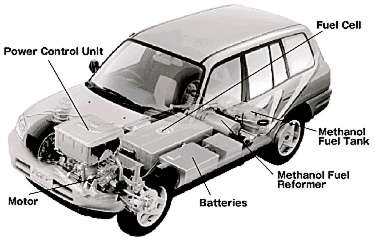
 Here's what Toyota's FCEV needs to operate: fuel
cells, a tank to hold the methanol fuel, a conversion device to produce hydrogen
from methanol, and batteries, among other things. In this FCEV, we reduced the size
of many components so everything could fit beneath the floor. As a result, no interior
passenger or luggage space needs to be sacrificed. Here's what Toyota's FCEV needs to operate: fuel
cells, a tank to hold the methanol fuel, a conversion device to produce hydrogen
from methanol, and batteries, among other things. In this FCEV, we reduced the size
of many components so everything could fit beneath the floor. As a result, no interior
passenger or luggage space needs to be sacrificed.The FCEV uses methanol as its source of energy. Methanol is a byproduct of the dry distillation of wood. It is also called wood alcohol or methyl alcohol. Today, most methanol is made from natural gas. It is one of the leading candidates in the search for a greater variety of energy sources. R&D projects aim at developing technology to produce methanol from bio-mass materials, to ensure a stable, long-term supply of fuel. |
There is no combustion in fuel cells. Instead, they produce electricity directly, through chemical reaction. And that results in very high efficiency. As a vehicle, a methanol-powered FCEV is more than twice as energy-efficient as a gasoline-powered car. So even though methanol has only half the calorific value of gasoline, and even though the FCEV's fuel tank holds a little less than a gasoline model, the FCEV has the same cruising range (about 500 km) as a gasoline car.
|
|
|
|
