BANANACUE
REPUBLIC
Vol II, No. 11
Mar 16, 2005


social criticism by
Vicente-Ignacio de Veyra III
CONTENTS
War Photos Museum
Reality
TV
CINEMA
ONE has been doing a commendable job of showing foreign films dubbed in
Tagalog, like this week's showing of the Yang Zhimou classic Not One
Less and the visionary Hark Tsui action oeuvre Time and Tide.
For one, the shows pit the Tagalog language against the attainments of
foreign cinematic products’ visions and new visual techniques and
technologies or otherwise expensive production rarely done here. It almost
seems to propose the reality that there are other Tagalog cinemas other
than those by Tagalog directors and writers.
May
I offer my own proposals here?
First,
there is this film that won the top award at last September’s Venice
Film Festival, Mike Leigh’s Vera Drake. It’s definitely a movie
that should stir the Cinema One audience if to be dubbed and shown on the
channel.
That’s because Vera Drake brings back the old legal and religious debate on abortion. The heroine is familiar to Philippine culture, a comadrona who does it for free just to help her fellow “ka-barangay”, especially impregnated young women. Many pro-choice feminists may find in Vera Drake an ideal, however rusty, and in governments that disallow the medical profession from taking the role of Vera Drake’s sympathetic position (and present religious views) a formidable enemy. “Pro-lifers”, meanwhile, will see her imprisonment as a symbol of the triumph of justice over ignorance.

In the end, Vera Drake the movie does not preach and does in fact add nothing to the debate. Except, perhaps, the plea for understanding in the assumptions that 1) perhaps Vera Drakes are not few and far between (as the movie dramatized in the prison scene), and that 2) maybe the reason why Vera Drakes continue to exist and increase in number is because of a burgeoning demand and necessity. The ultimate message by ellipsis asks whether imprisonment or even execution of Vera Drakes will suffice, implying the corollary ultimate question as to whether there are solutions to the problem other than what present laws and dogmas allow us to imagine.
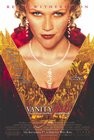
BUT THERE is this other film that Cinema One should prioritize an airing a dubbed version of. While Vera Drake it was that won the Venice top plum, a mere nominee for the award was Mira Nair’s cinematic dramatization of William Makepeace Thackeray’s novel Vanity Fair. I say dubbing this one for the channel would certainly bring Thackeray’s vision of early 19th-century England into the notice of the Filipino channel’s impoverished audience majority. After all, it is this audience’s views on its own society that must be liberated from its having been jaded and unpoliticized by a lack of historical perspective. Presenting a history of debauchery, specifically aristocratic cum plutocratic excesses, albeit foreign and ancient may remind them of parallel visions in things familiar within present-day Philippines. It will thus expand the Lopezes’ civic mission beyond the departments of Bantay Kalikasan, Bantay Bata, etc.
For
Thackeray’s realism portrayed not merely the sloth and grunge of the
underprivileged (by birth and other misfortunes) of that age but likewise
the departments of liveliness and ugliness in the aristocracy’s morality
based on the ideals of enriching themselves via a high regard for
feudalism, colonialism, and slavery. What makes Thackeray’s voice
significant to the present-day Philippine cultural state is the view
(rather my preferred view of what Thackeray’s view was) that the early
19th-century culture he was portraying was not to be blamed
solely on the privileged class but likewise on the upholders of that
morality’s trickle-down effect, the advocates of which were to be seen
in such social-climbing personas as Becky Sharp, the “heroine” of the
novel. While the aristocrats and the moneyed scoffed at the poor and the
fallen and – above all – social climbers, the poor likewise abhorred
social climbing as they wallowed in eternal shame in having been born, or
fated to be, poor. Surely we are all familiar with this kind of fun among
the upper classes – and the corresponding submission among the poor
quarters – in Philippine society.

William Makepeace Thackeray
The pre-Marxist ultimate social climber of Becky Sharp’s day was Napoleon Bonaparte, who did initially declare a prototype-socialism. Unfortunately, that socialism – almost the model of later Stalinist “socialisms” – nonetheless later succumbed to the temptations of aristocratic debauchery and expansionism when Napoleon crowned himself emperor. In the arts, one of those who disavowed their support for Napoleon’s socialist directions was the unfortunate (filially and monetarily and health-wise) Ludwig van Beethoven whose political and esthetic populism later found itself in the arms of a rescuer cum lover countess. Meanwhile, Becky Sharp’s remorse found a rescuer in an old acquaintance, an English tradesman of colonial English India. Obviously, Karl Marx was yet to be heard from underneath the rubbles of the society that created the Industrial Revolution.
Many Philippine movies, like the Sharon Cuneta-starrer Bukas Luluhod Ang Mga Tala, also try to portray this type of pre-Marxist kind of liberation from mockeries. Even the Domingo Landicho-penned Joel Lamangan movie Bulaklak ng Maynila stopped short of ending oppressions the way of social realism and allowed itself to hang as purist realism. In view of these literatures and cinemas, it seems that a Karl Marx will have to be reborn from underneath the increasing rubbles of present society that’s content with its (even slowed-down) mall and coffeeshop revolution. (And by Marxism I don't mean just communism, since even the Marx-inspired SSS can be puzzlingly delightful to a George W. Bush.)
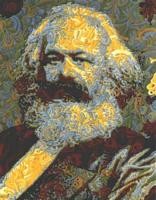
Karl Marx
TOPPING
my top three nominees to the Cinema One roster, however, is a sci-fi movie
also from 2004. It was also nominated to the top award at another event
that happened earlier than the September Venice one. This was the 2004
Berlin Film Festival, held February of that year.
The film I’m talking about had a more subtle, or latent, significance to society, especially to Philippine society perhaps which is often read as an audience that does not have the French and German audience’s supposed receptivity towards symbolism or elliptical suggestion. Thus some believe that though Raymond Red's Ronnie Lazaro-starrer Anino delighted the French and went on to win the Golden Palm for shorts, its symbolism will not mean anything to a local jury.

a scene from Anino
Sci-fi
films are often symbolist too, social significance-wise. That’s because
many of them do not merely exaggerate present or past tendencies, like Lav
Diaz’ Hesus Rebolusyonaryo or such movies as 1994 whose
messages are easier to understand, but actually invent new products the
human (ill) significances of which are not as familiar to our past-present
experiential subconscious.
The
film I’m referring to is Omar Naim’s The Final Cut. It features
Robin Williams as a special employee of a firm that has made a business
out of brain implants the memories of which can be viewed onscreen and
showed to the public. The implant memory can also be edited if the subject
of the implant wants to forget certain events or if a relative of the
subject wants that subject to forget certain events. From the ars poetic
point of view, you can say this is a comment on film’s representation of
reality, with film editors acting as the activators of a certain esthetic
or moral utopia. But from a symbolist cum Marxist critical angle, one can
read the film as a commentary on governments’ and corporate power’s
receptiveness to inventions that “make saints out of criminals”. The
invention does present advantages, as in allowing a female child molested
by her father to “forget” the experience or a man troubled by a memory
to revisit that memory and witness clearly onscreen that what he
remembered was not exactly how it went (thus freeing him from a harrowing
guilt). However, disadvantages will include cutting certain bad memories
in someone who does not wish to forget even those bad memories.

Such
editors abound in present society. The corrupt or prejudiced media are
such editors. The official publicists of governments and parties and
corporations and rebel groups are such editors. Historians are like
editors. And sometimes these editing are sheer victims of conventional
wisdom or knowledge without wisdom or academic bookishness not open to
questions. To the intelligent, as against the merely degrees-holding,
there is no final cut.
Even
in Naim’s movie, even this great invention can sustain defects, creating
thus magic: a swing ride gets one to fly, a car ride melds with a
scuba-diving scene, farm animals enter a restaurant, and so on. History
thus can become for the eternal human soul a source of invention as well
as truth-seeking. Creativity and truth. Expression and realism. Esthetics
and facts. Dual necessities we cannot do without.
Naim’s movie, should it find its way into dubbing and Cinema One’s roster of dubbed movies, will have offered the Tagalog-understanding Filipino nation with a glimpse of a society whose fates and views of reality rely on its cutters’ whims and esthetics and desired truths, the editors of human utopias ranging from Fox News to CNN to ABS-CBN to Malacanang's and Congress' spokespersons.
But will the Cinema One audience be able to relate that glimpse to their own lives and society? Well, who are we to know? Unless we really believe that the Filipino audience is stupid. Then we have all the right to edit the movie out of the Cinema One roster of candidates.
# # #
Posted 03/16/05. Send comments to: bananacue_republic@yahoo.com
"To
the intelligent, as against the merely degrees-holding, there is no final
cut."