|
Biogardener Homepage with links to my other websites
Trees & Shrubs
Environmental Issues
Getting Started Organically
Edible Garden
Meet Traute Klein
Biogardener Guestbookor Read Entries Related Articles
Healing Trees
Willow, the Aspirin Tree, I
Willow, the Aspirin Tree, II
Propagating Water-guzzling Hardwoods
Principles of Tree Pruning
Amazon BooksSoil, Rodale Organic Gardening Basics, Vol 2by Organic Gardening Magazine
| Leaves of Goldby Traute Klein, biogardener
 Would you like to know what I consider the most important ingredient in gardening? It is those bags of leaves which my neighbors send to the landfill by the thousands. About 40% of North American city garbage consists of compostable garden wastes, and more than half of that is bagged dried leaves which city dwellers dutifully rake up in the autumn, keeping garbage disposal crews working overtime. What a crime! They are disposing of what I consider the most valuable ingredient of my soil. Would you like to know what I consider the most important ingredient in gardening? It is those bags of leaves which my neighbors send to the landfill by the thousands. About 40% of North American city garbage consists of compostable garden wastes, and more than half of that is bagged dried leaves which city dwellers dutifully rake up in the autumn, keeping garbage disposal crews working overtime. What a crime! They are disposing of what I consider the most valuable ingredient of my soil.During the last 50 years, health care providers have impressed on us the need for bulk in the human diet to prevent the diseases of our generation like digestive problems, obesity, and cancer. Well, odd as that may sound, what is good for us is also good for the soil.
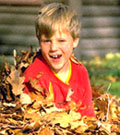 If we are to keep soil at its current fertility, we must return to it what plants take out of it and what is leached out. To improve soil, however, we have to do better than that. I simply ask my neighbors for all those bags of compostables which they would otherwise dispose of, grass clippings, garden wastes, and dried leaves. Especially leaves! They contain the trace minerals which have been leached from the topsoil by unnecessary watering. Tree roots reach down into the subsoil to return these leached minerals which are dissolved in water. Those minerals are contained in the leaves as they fall from the trees in autumn. By returning the leaves to the soil, we enrich it with the most valuable missing ingredients. If we are to keep soil at its current fertility, we must return to it what plants take out of it and what is leached out. To improve soil, however, we have to do better than that. I simply ask my neighbors for all those bags of compostables which they would otherwise dispose of, grass clippings, garden wastes, and dried leaves. Especially leaves! They contain the trace minerals which have been leached from the topsoil by unnecessary watering. Tree roots reach down into the subsoil to return these leached minerals which are dissolved in water. Those minerals are contained in the leaves as they fall from the trees in autumn. By returning the leaves to the soil, we enrich it with the most valuable missing ingredients.Healthy soil produces healthy food. If the soil is deficient in nutrients, the produce grown on it will also lack those nutrients. Land which receives ample rainfall as well as irrigated land becomes deficient in water-soluble nutrients as these run off into rivers or are leached from the topsoil to the subsoil. Consequently the diet in the many countries is defient in trace minerals as well as in magnesium. Since magnesium is required to metabolize other minerals, especially calcium, it is not surprising that osteoporosis has become one of the most common diseases in North America. I am writing on this topic in an article entitled "Magnesium or the Calcium Myth" which is linked below.
Peatmoss is a poor substitute for leaves. It provides the roughage, but it has had too many nutrients leached out of it over the centuries.
 Store-bought produce rots very quickly. It has been force-fed with synthetic fertilizer which allows it to grow fast but leaves it void of trace elements which are needed for total health. Not only the health of the plants is affected. Our own health suffers as well. To regain this health, we should aim to eat produce which has been raised on soil which has been amended with natural fertilizers, especially with leaves, leaves, and more leaves. Store-bought produce rots very quickly. It has been force-fed with synthetic fertilizer which allows it to grow fast but leaves it void of trace elements which are needed for total health. Not only the health of the plants is affected. Our own health suffers as well. To regain this health, we should aim to eat produce which has been raised on soil which has been amended with natural fertilizers, especially with leaves, leaves, and more leaves.
|
The material on this site may be reproduced or republished only by special arrangement with the webmaster.
You are, however, welcome to pass on or link the URL.
