|
|
Don't fear dentistry
|
|

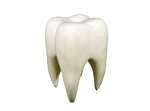
The permanent teeth are the second set of teeth that will last the rest of your life. They tend to be more yellow (and not just because of coffee) and are extremely hard. The final set of teeth is made up of 32 teeth, or 16 on each jaw. There are two central incisors for biting, two lateral incisors for biting, two canines for tearing and cutting, four premolars for chewing, and six molars for chewing. Your teeth are by far one of the most important things you use every day. Many people end up neglecting their teeth with improper oral hygiene. You should take care of them by brushing at least twice a day, flossing once per day, and going for regular dental checkups at least twice per year. New developments include the implantation of artificial teeth or binding posts into the gums or jawbone; antibiotic fiber for periodontal disease; root canal surgery, a procedure that ameliorates pain while permitting teeth to remain in place; and nearly painless lasers to repair dental cavities, usually making local anesthesia unnecessary. Composite resin dental fillings were created as an alternative to traditional metal dental fillings. Tooth fillings colored to look like a natural tooth are known as Composite Resin Dental Fillings,are made of a plastic dental resin. Composite Resin Dental Fillings are strong, durable, and make for a very natural looking smile. Many dental insurance plans cover their use. If you have a cavity in a tooth, broken fillings, mercury fillings, or amalgam fillings, this type of dental filling is well worth discussing with your dentist. Mercury fillings or amalgam fillings can easily be removed and replaced with far more attractive colored fillings. These fillings actually strengthen your tooth beyond the level it had with the amalgam fillings. Composite resin fillings are applied in thin layers, and slowly built up to form the complete filling. A bright dental light will harden each layer before the next is applied. Once your filling is completed, your dentist will use a special paper, articulating paper, to adjust the height of your dental filling and that your bite remains correct. Your tooth is then polished. There are two main types of dentures. Both Complete Dentures and Partial Dentures are finely crafted, custom-fitted. If you properly maintain your dentures they will appear natural and provide a perfect smile. Additionally, dentures help strengthen muscles controlling your expressions that require the support of your teeth, rid you of pronunciation problems caused by missing teeth and aid with chewing. This procedure should be thoroughly discussed with your dentist as there are several personal and medical factors to take into consideration. You may instead be a candidate for dental bridges and dental implants as optional procedures. The main component of dentures is acrylic resin molded over the top of various combinations and paterns of metal. In oreder to use dentures all of the teeth in the top or bottom or both top and bottom of the mouth are removed. It is recomended that after the removal of the necessary teeth that the patient wait at least a month to have the dentures fit to the mouth. The waiting period allows for proper healing in the mouth to take place. For individuals who have chipped, cracked or irregularly shaped teeth, dental contouring and reshaping can be just the ticket for a more beautiful smile. The dental contouring procedure can even be a substitute for braces under certain circumstances. It is also a procedure of subtle changes. A few millimeters of reduction and a few millimeters of tooth-colored laminate can create a beautiful smile when performed by a cosmetic dentist, with no discomfort to you. Tooth reshaping, or dental contouring, is commonly used to alter the length, shape or position of your teeth. You maybe candidate for tooth contouring and reshaping, if you want your teeth to appear less crowded, lack chips and fractures, have decreased overlaps or to be without pits or grooves in the enamel, this procedure should be discussed with your cosmetic dentist. Dental reshaping and contouring is a procedure to correct crooked teeth, chipped teeth, cracked teeth or even overlapping teeth in just one session. This procedure is even a substitute for braces under certain circumstances. This is also a procedure of subtle changes. A few millimeters of reduction and a few millimeters of tooth-colored can create a beautiful smile when performed by a cosmetic dentist, with no discomfort to you. Tooth reshaping, or dental contouring, is commonly used to alter the length, shape or position of your teeth. Grinding your teeth, an improper bite, age, fillings and tooth decay can all be contributing factors in the wearing down, cracking or breakage of your teeth. Dental crowns cover the entire visible surface of your affected tooth and add strength, durability and tooth stability. In other instances, crowns are used to replace a actual missing tooth. These crowns are anchored to the teeth on either side, with a bridge section connecting the two crowns. Instead of bridges, single tooth dental implants may be used that eliminate the need for supporting the crowns. Your cosmetic dentist will make an impression of the tooth and a dental laboratory will create the crown. You will typically leave the office with a temporary crown to wear while the permanent crown is being made - this takes about two weeks. The permanent crown is then cemented onto your tooth. Typically, only two visits are required for this part of the procedure. Often, a preliminary restoration of your tooth may be needed before a crown can be placed. To stabilize your tooth, a filling must first be put in place prior to placing a crown due to the loss of original tooth structure. Tooth crowns usually last ten to fifteen years. There are basically three types of crowns, those made of gold, ceramic crowns and ceramic-veneered gold crowns. Gold and metal-ceramic crowns are extremely durable and are normally used in molars, where the forces from chewing and grinding are most prevalent. Ceramic crowns are used primarily for front teeth, since they can best resemble the natural tooth color.
Terms interpretationStomatology Tooth bleaching Rejuvenation at european beauty clinic
|
|
Information in this document about Dental care named Don't fear dentistry is for End User's use only and may not be sold, redistributed or otherwise used for commercial purposes. The information is an educational aid only. It is not intended as medical advice for individual conditions or treatments of Dental care. Additionally, the manufacture and distribution of herbal substances are not regulated now in the United States, and no quality standards currently exist like brand name medicine and generic medicine. Talk about Dental care to your doctor, nurse or pharmacist before following any medical regimen to see if it is safe and effective for you. © Copyright 2007 World Women Society, Dental care department. |