4056 Campbell Ave.
Arlington, Va. (In Shirlington)
703-671-8700
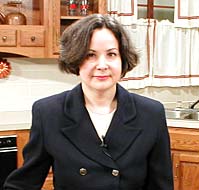
Suzanne McGrath - President
Suzanne McGrath - President
Classic Cheese Fondue
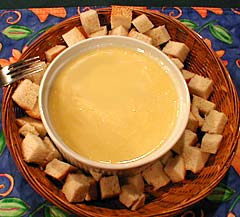
Ingredients:
1) 1 Garlic Clove - halved crosswise
2) 1 ½ Cups of dry white wine (preferably,
Muscadet)
3) 1 tbs. Cornstarch
4) 2 tsp. Kirsch (found at local ABC stores)
5) ½ lb. Emmental cheese, coarsely
grated (2 Cups)
6) ½ lb. Swiss Gruyere or French
Raclette or Comte - Coarsely grated (2 Cups)
7) Accompaniment: Cubed French bread
Preparation:
1) Rub insides of 4-quart heavy pot with
cut sides of garlic, then discard.
2) Add wine to pot and bring to simmer
over moderate heat.
3) Stir together cornstarch and kirsch
in cup.
4) Gradually add cheese to pot and cook,
stirring constantly in a zigzag
pattern, until
cheese is melted and creamy.
5) Stir cornstarch mixture again and stir
into fondue.
6) Bring fondue to a simmer and cook,
stirring until thickened, 5-8
minutes.
7) Transfer to fondue pot set over a flame
and serve with bread for dipping.
Three-Cheese Fondue
with Champagne
Ingredients:
1) 4 tsp. Cornstarch
2) 1 tbs. Fresh Lemon Juice
3) 1 ¼ Cups of dry (brut) Champagne
(preferably, Cristalino)
4) 1 Large Shallot - Chopped
5) 2 Cups Gruyere, Raclette, or Comte
- coarsely grated
6) 1 1/3 Cup of Emmental coarsely grated
7) ½ Cup diced rindless Camembert
cheese
8) Generous pinch of ground nutmeg
9) Pinch of ground White Pepper
10) Accompaniment: 1 baguette of French Bread - cubed
Preparation:
1) Stir cornstarch and lemon juice in
small bowl until cornstarch
dissolves; set
aside.
2) Combine Champagne and shallot in fondue
pot or heavy saucepan;
simmer over medium
heat 2 minutes.
3) Remove pot from heat.
4) Add all cheese and stir to combine.
5) Stir in cornstarch mixture.
6) Return fondue pot to medium heat and
stir until cheeses are melted
and smooth and
fondue thickens and boils, about 12 minutes.
7) Season fondue with nutmeg and white
pepper.
8) Serve with bread cubes.
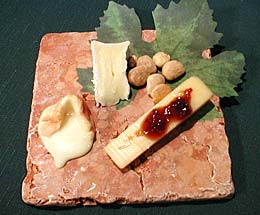 -
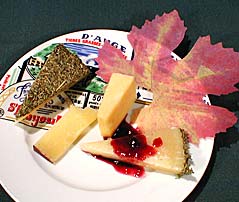
1) Cheese Plate best
with White Wine - Left
2) Cheese Plate
best with Red Wine - Right
Say "wine and cheese and most people say: "Of course, what
a natural pairing!"
Not so fast! While some combinations are wonderful, others
are very uncomplementary.
So how to make head or tail? Well, a helpful way to look at
it is to match certain styles
of cheese with particular types of wines. An abbreviated listing
of cheese styles and
the types of wines with which they often find good matches is listed
below.
Cheese Style Examples of wines to try...
Cheese Style Examples Wines to Try
| Fresh, soft, unaged cheeses | Fresh MozzarellaFresh, unaged goat cheesesFresh Ricotta | Fresh, mild whites without too much acidity (e.g. Pinot Grigio or Muscadet)With goat cheeses: light, fresh whites with more acidity (Sauvignon Blanc is a classic; Chenin Blanc also works well) |
| Soft-ripened or aged cheeses (i.e. they get softer rather than firmer as they ripen, ending up actually runny) | Brie, Camembert, Pont L'Eveque, as well as double and triple cream cheeses like Explorateur and St. Andre | Sparkling wines work well because the effervescence cuts through the richness; or try a buttery Chardonnay or Viognier to complement richness with richness; also work with medium-bodied reds like Merlot and Cabernet Sauvignon |
| Washed rind cheeses (soft cheeses like Brie, the rinds of which are washed with wine, beer, or some other liquid while aging, resulting in a stronger flavor | Epoisses from Burgundy, Munster from Alsace | White Burgundy or other rich Chardonnay works well; Riesling and fruity Alsatian whites like Gewurztraminer complement the spiciness of the cheese |
| Semi-soft cheeses | Monterey Jack, Havarti, Finnish Lappi, Fontina d'Aosta | Mild, smooth whites like Chardonnay and Pinot Blanc, as well as soft, fruity reds like Barbera or Dolcetto |
| Firm Cheeses | Cheddar, Aged Gouda | All kinds of light to medium-bodied reds, from Barbera and Beaujolais to Syrah, Merlot, and lighter Zinfandels |
| Hard Cheeses (i.e. hard enough to grate) | Asiago, Parmesan, Aged Jack, Pecorino Toscano or Romano | These cheeses really sing with full-bodied, assertive reds like Syrah, Shiraz, Barolo, and Barbaresco |
| Blues | Roquefort, Maytag Blue, Stilton, Shropshire Blue, Cashel Blue | Sweet wines work best because the sweetness cuts the extreme saltiness of these cheeses. Try everything from Port to Vin Santo, Cream Sherry, and Sauternes-type wines. |
Good Eating!!!
