
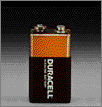
A battery is a device that makes electricity by making chemical reactions. A battery consists of one or more units called electric cells. Alessandro Volta an Italian physicist was the first person to creat an operational battery. It was know as a voltaic pile. It consisted of a stack of pairs of silver and zinc disks.
Their are many different kinds of batteries. A Primary battery stops working and must be thrown out after a certain chemical is used up. A recharcheable battery can be used again after is has realeased all of it's electric energy.
A dry cell consists of a zinc container filled with substances that produce an electric current by reacting chemically with one another. The container itself is the negative terminal of the cell. A carbon rod in the center serves as the positive terminal.

A 9-volt battery has six individual dry cells. Each cell produces 1 1/2 volts of electricity. The cells are connected together in one after another so that their total voltage equals 9 volts. These types of batteries power transistor radios.

Most lead-acid storage batteries have six cells. Each cell contains two sets of lead electrodes called plates. The plates are separated by plastic or rubber sheets. A solution of sulfuric acid, called the electrolyte, surrounds the plates. Each terminal post on the outside of the battery is connected to one set of plates. Vent holes in the case allow water to be added to the electrolyte and also permit gases produced in the cell to escape.
