|
.
|
...
|
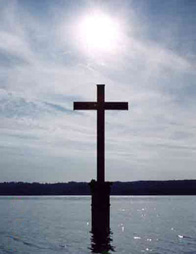
TO
THE GLORY OF
GOD
"The world cannot
hate you; but it hates Me because I testify of it, that
its deeds are evil." (New Testament: John, Chapter 7,
verse 7)
The
message on this post does not prone wars, hatred or
religious intolerance, it does not make prophecies on the
end of the world nor future conflicts. It does acknowledge
and assume the existence of a procrastinated war
campaign--like that being waged in the Middle East and
openly supported by willing Christian nations.
Our
message does not warn of the economic melt down of our
economies--as our markets are now geared towards armament
and weapon manufacturing--it tries to see beyond the present
world conflicts.
The
message is about ultimate survival after the crisis. It
serves as a blueprint for a world order under the auspices
of a strong Christian faith. For regardless of whether the
war is won or lost, our faith needs to be as strong as those
fundamentalisms that now oppose us.
INDEX
Part
1
.................................................
Christian
Faith
Part
2
.......................
Definitions
of
The
Antichrist
Part
3
......................................
Ernal
Christian
Soul
Part
4
................................................
Anti
Capitalism
Part
5
...................................................
Relevant
Facts

1.
CHRISTIAN
FAITH
The
original human beings rebelled against God, and from that
time until the coming of Christ the world was ruled by sin.
The hope of a final reconciliation was kept alive through
our savior Jesus Christ, who partly vanquished sin and
Satan. Jesus, born of the Virgin Mary by the power of the
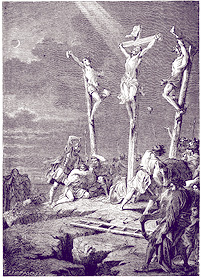
Holy Spirit, preached the coming of God's Kingdom but was
rejected by religious leaders of false religions and
conspirators, such as those who delivered Him to the Romans
to be crucified.
"Beloved,
believe not every spirit, but try the spirits whether
they are of God: because many false prophets are gone
out into the world.
2: Hereby know ye the Spirit of God: Every spirit that
confesseth that Jesus Christ is come in the flesh is
of God:
3: And every spirit that confesseth not that Jesus
Christ is come in the flesh is not of God: and this is
that spirit of antichrist, whereof ye have heard that
it should come; and even now already is it in the
world." (Bible, 1 John 4)
Christianity is the
religion of about a billion people whose belief system
centers on the person and the teachings of Jesus Christ.
Although Christians today
tend to emphasize what unites them rather than what divides
them, substantial differences in faith exist among the
various churches. Christianity is by definition the negation
of other false religions, the pagan in one's self. The
history of salvation is in fact also the history of man's
continual judgment of God.
Even if Christianity did
not come to being, as it did, there remains the possibility
that the founder of the next religion would still have
emerged from the same sources just the same. This
affirmation lies in the hope explaining the historical and
salutatory persistence of the forsaken: even in the most
virulent anti-Christian sentiments is the possibility of
begetting Christ. The Christian, therefore, is indebted to
his antagonists for the realization that he must forever
guard against the evil within himself. Christ, in
accomplishing this deed, was the first to completely conquer
man's undoing and demonstrates that the real spiritual path
of salvation lies within the reach of each individual in
overcoming their own anti-Christian
ways.
2.
DEFINITIONS OF
THE
ANTICHRIST
The
"Antichrist" by definition stands as the enemy of Christ,
Christianity and all Christians. The mission of all false
religions, in fact, are to aid and precipitate
Christianity's downfall through the propagation of
anti-Christian teachings.
"Who
is a liar but he that denieth that Jesus is the
Christ? He is antichrist, that denieth the Father and
the Son." (Bible, 1 John 2, verse 22)
"For many
deceivers are entered into the world, who confess not
that Jesus Christ is come in the flesh. This is a
deceiver and an antichrist." (Bible, 2 John 1, verse
7)
The
term "Antichrist" is used in two New Testament Books, 1 John
(2:18, 22; 4:3) and 2 John (7). These texts state that the
Antichrist has come and is active in those who deny "that
Jesus is the Christ."
The antagonist of Christ, according to the New Testament,
was expected by early Christians to appear and reign over
the world until overthrown at Christ's Second Coming which
will complete God's plan of salvation.
"In
order that all may honor the Son, even as they honor
the Father. He who does not honor the Son does not
honor the Father who sent Him." (New Testament, John,
Chapter 5, Verse 23)
3.
ETERNAL
CHRISTIAN
SOUL
Christianity
inherited and modified the belief that the world would be
transformed by the coming of the Reign of God. The
Christians hold that the bodies of those who had died would
rise again, reanimated, and that the righteous would be
triumphant, the wicked punished. This belief, along with
Jesus' promise of "eternal life," developed into a doctrine
of eternal rewards (heaven) and punishments (hell) after
death.
As Christ Himself
remarked "He is not God of the dead, but of the living." For
Christ and Christians this last sentence has great
relevance. The Christian believes in immortality and thus
has a soul, this is what makes Christians world-negators as
opposed to materialist world-affirmers. But at the same time
as "world affirmation" and "world negation" are in constant
battle, they maintain a vital balance between the material
and spiritual world.
"Truly,
truly, I say to you, he who hears My word, and
believes Him who sent Me, has eternal life, and does
not come into judgement, but has passed out of death
into life." (New Testament, John, Chapter 5, Verse
24)
Other religions proper,
described and taught in the world are crude by definition
if, unlike our faith, they forsake a theory of immortality.
When their kings, heroes or prophets die and are buried it
marks an end of the matter; there exists but not the
slightest traces of any existence after death.
Of course Christian
theology also displays a dialectical tension between God's
transcendence over nature and history as creator and ruler,
and his personal, moral participation in history for the
sake of humankind. Christians however believe God is
concerned with history, judgment, and redemption, His
central manifestation is Jesus Christ, through whom God's
will for mankind is revealed, his judgments are made known,
and his power to save is effected.
"For
just as the Father raises the dead and gives them
life, even so the Son also gives life to whom He
wishes." (New Testament, John, Chapter 5, Verse
21)
For this cause therefore
the antichrists were seeking all the more to kill Him,
because:
"He
not only was breaking the Sabbath, but also was
calling God His own Father, making Himself equal with
God." (New Testament, John, Chapter 5, Verse
18)
And after these things
Jesus was walking in Galilee; for He was unwilling to walk
in Judea, because his enemies were seeking to kill Him.
(see: New Testament, John Chapter 7, verse 1, verse
13)
And the enemies of Christ
also sought to kill Paul (See: Bible, Acts 23, verse
12).
We learn that the "Chief
priests and elders" actually agreed to the dastardly plan.
The Pharisees must have also yielded to the prevailing
opinion and approved of the plot, and this, as their
halfhearted defense of Paul indicates, without many twinges
of conscience.
"Now
therefore ye with the council signify to the chief
captain that he bring him down unto you to morrow, as
though ye would enquire something more perfectly
concerning him: and we, or ever he come near, are
ready to kill him." (Bible, Acts 23, verse
15)
Consider this: Paul is
accused before the high council of his people because he
believes in the resurrection of the dead, most Pharisees
also knew that behind Paul stood the shadow of
Christ.
The non-Christian loving
God becomes for other followers nothing but the projection
of their innate essence and are in constant nexus. As the
man, so is his faith, this may explain the curious
contradiction that some lost souls believe in the All
Mighty, but not in their own immortality.
Christianity, therefore, has a message of salvation for the
individual soul, all their ideas are not bound up with their
earthly existence or possessions. We can see on this matter
that there is a tremendous difference between religious
denominations. The beginnings of a true religion, must warn,
in the course of time, being swallowed up without a trace by
the "furious belief in God," which restrains some in any
feeling for the individual, the eternal soul.
That this conscious act
would take place by priests and clerics one can begin to
understand why some clamored "Crucify! Crucify!" against the
supernatural appearance of the Savior, who came from the
despised "heathen district" of Galilee.
This religion of Man
divinized was conceived solely as applying to the profit of
the superior predestined being, yet the promise of universal
dominion, according to anti-Christian orthodoxy, did not
interpret in the sense the reign of the God over all nations
and worlds, but in that of material domination to be imposed
on the world by mortals. The awaited Messiah could no longer
represent the Redeemer of original Sin, a spiritual victor
who would lead the world, it was a temporal king, bloody
with battle, who would lead the people of this
world.
It is probably clear that
a people which grows up completely denying the existence of
life after death must limit all of its thoughts and
endeavors to the present world, pursuing earthly riches and
material rewards. But even the great accumulation of worldly
possessions limited to the realm of earthly existence cannot
sway the fundamental human need for immortality, simply
because the feeling of the eternal is a basic character of
humankind. Wherever soul makes itself felt, however
slightly, the feeling for immortality necessarily
appears.
The foundations of
Anti-Christianity must forever be propangadized as it is the
sole means of keeping the dogma alive, the people who serve
as vehicles of this pagan ritual must be exerted constant
pressures to keep influencing the flocks and promote the
well founded anti-Christian teachings to the world. This has
been the historic mission of the antichrists, but it is
something they utterly failed to accomplish without
resorting to terror, violence or wars. By failing in this
they failed everywhere and have only accomplished to
reinforced the Christian faith. They are now without a
mission of blessing and few of their leaders could ever
claim a spiritual mission.
Anti-Christian movements
may still be present in this world today but only persist as
degenerate oppressive and repressive ideals, they can never
aspire to be channels of service, hope and goodwill toward
all humankind. The essence of the Anti-Christian idea and
its influence on the world is the same as it is used on
their followers, that is the destruction of real values in
favor of fictitious values, as a means of control in a
fleeting world of limited material wealth.
Any religion that
promotes universal prosperity, peace and betterment of
humankind will find very little resistance. In fact most
God-loving Christians will, throughout the world, tolerate
any religious views however extreme as perfectly acceptable.
But if such time comes when a campaign against the Christian
religion will be encouraged; when a religion will call upon
fundamentalism as a weapon to wage war against Christianity;
when every conceivable manner will be justified to thrust a
religion upon all the citizens of the world, then such
fanatical dogma will have to bare part of responsibility and
the anti-Christian oppressors should expect but the
strongest opposition.
4.
ANTI-CAPITALISM
Throughout
medieval Europe Christian doctrine forbade Christians to
take interest on loans; as a result, other religious
denominations were required to engage in money lending on
behalf of the royal treasuries.
One might say that the interesting fact about why European
countries remained immune to early forms of capitalism is
precisely because they have had a strong Christian
following.
Christian teachings have
demonstrated a common defense mechanism that allows their
communities to escape the most rampant forms of capitalism.
Vows of poverty, for example, are hardly the way to monetary
riches. In principle, the Christian faith, as a traditional
force, says no to market innovations, money, speculation,
usury.
In fact it is precisely when Christian orthodoxy begins to
erode that it is supplemented by other forms of state and
governing institutions.
Since the downfall of the
monarchies throughout Europe, the Church has steadily lost
its influence on the masses, with their downfall,
Christianity together with its values, moral codes and
spiritual teachings, has systematically been replaced by the
ideological political aspirations we have today, as the only
way to enrich lives. The modern European economies we have
today were founded on the principles of the treaties of
Westphalia by the mid-seventeenth century. The agreement
effectively ended the rule of the monastical theocracy as
called for by the Respublica Christiana and gave the reign
of powers to pluralist socioeconomic sovereignties away from
Christian unity and religious orthodoxy.
That secular move away
from religious legitimacy has been a cornerstone of
international society ever since.
Since then we have fought for the power the riches can
bestow, yet riches should enrich our lives in the spiritual
sense, it should not be a means to diminish our self-worth.
Though they seem empirical, these fundamental values are
essential in order to weight our importance as beings and
find meaning to our existence. Ideology should not be used
as a means to pursue wealth, instead it should help assure
the basic necessities of life for all. Without this
fundamental goal in mind, man's ideology is flawed, becoming
a manipulative and destructive force.
Capitalism has
substituted itself as a religion, demanding obedience to
divine rules and needs the occasional sacrifices to appease
the anger of the market. Governments went so far as to
imprint: "In God We Trust" on their paper currencies. When
faith in money becomes the only glue holding a society
together, when the need for it becomes a matter of life or
death, one can indeed begin to question how and when it
became the supreme power on earth.
Christian intellectuals
and scholars have not yet achieved singularity of purpose,
because of a certain lack of discipline or procrastinating
tendencies. The Christian flocks increasingly seek personal
gratification and distractions in amusements, games,
pastimes and entertainment where their passions and
creativity not only lay untapped but are simply wasted.
Competitions in art, in sports of all kinds also help to
distract believers from religious scholastic pursuits or
pious observances. The result is that after a time they are
unwilling or simply unable to defend or promote their faith.
Progress in this light becomes a carrier of fallacious
ideas, made to obscure divine secular truths so that minds
may be turned away from God toward modern material
pursuits.
"In order to
achieve a more humane society we need to reevaluate our
moral principles, adopt a new system of worth. We need to
treasure our heritage and use materialism only as tools
to achieve our greatness. Ideological Christian ethics
should restore the natural balance between what is
economic reality (material) and fiction (virtual). In
order to succeed, we need to formulate a doctrine of
spiritual materiality: not mind over matter but value
over brands; not profit for gains but knowledge for
spiritual enrichment." E.A. Englund
5.
RELEVANT
FACTS
- - One of the top
literary best sellers remains the Bible. This indicates
the need for hope and prayer. But it also signals the
need for understanding and motivation in these times of
crises.
- - Religious
doctrines, in the past, made possible the art and science
of statecraft it will no doubt continue to do so in the
future.
- - The building of
nations relied on faith and the power that the church
could provide to unite peoples of a common
land.
- - The Vatican was the
center of transnational power and the financial hegemon
that ruled the economic and military might of the
Christian world.
- - Holy wars:
Christian faith demanded the highest sacrifices but in
return offered unison and political stability, it also
made possible the rule of law.
- - Christian
fundamentalism was not only necessary to build the
military might it was invaluable in order to enable a
religious war with Islam.
- The Crusade was an
attempt at conquering the Holy Land but was also seen as
the ultimate endeavor to establish the Christian faith as
the only worldwide religion.
- - Economically Europe
was stronger, financially it was not dependent on outside
resources and relied on state contributions and donations
towards war efforts.
- - The failed crusades
led to an internal conflict that created a schism of the
Christian faith, Protestantism-Catholicism.
- - It left Islam
stronger and more unified.
- - Today the US has
precipitated two open-ended conflicts liking with a world
war on specific Islamic nations
(Irak-Afganistan).
- - Bush has said this
was a modern crusade then apologized for the reference,
why? Because we are not ready to mount such a war, we are
neither strong morally nor spiritually as in the
past.
- - Wall Street cannot
expect to replace the Vatican as a financial center
supporting a modern crusade since all state institutions
would need to support such campaigns.
- - The US is now so
much engulfed in and driven by dirty finance, drug
trafficking and illegal trading of arms and goods, its
government can no longer represent Christian values. The
shadow economy it tries to globalize is destabilizing
every Christian institution. The shadow economic interest
the world is pursuing is becoming a pagan hegemon with a
mighty arsenal at its disposal to impose its rule of law
on the world.

|
...
|