 |
|
Website
|
| A Salute
To Dustin Hoffman (1999)
(TV)
... aka The 27th American Film Institute Life Achievement Award: A Salute To Dustin Hoffman (USA: complete title) ... Guest |
| Forever Hollywood (1999) documentary ... Himself |
| AFI's 100 Years... 100 Stars (1999) (TV)... Himself |
| Saturday Night Live (March, 20 1999) (TV) ... Captain |
| Independent Film Channel Commercials (1998) (TV) commercial |
| Out Of The Past (1998) (just voice) documentary ... Henry Gerber |
| Ambush At Fort Bragg (1997) audiobook, written by Tom Wolfe, performed by Edward Norton |
| Only In America (1994) video course in American English... Duane, Kevin, Bruno, Eric, guard |
 Click
on the icon on the left to go to Only
In America
Page. Click
on the icon on the left to go to Only
In America
Page. |
| . |
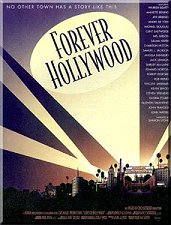 Forever
Hollywood
(55 min.) is a permanent, daily, public attraction film which screens exclusively
at the Egyptian Theatre. Produced by the American Cinematheque, the film
celebrates a century of movie-making history and the eternal allure of
Hollywood glamour. The unique story of Hollywood, the bountiful farming
suburb, turned movie capital of the world, is told through interviews with
some of today’s best known stars and filmmakers. The film is narrated by:
Sharon Stone. Offering their unique perspectives in interviews shot specifically
for the film, are: Warren Beatty, Annette Bening, Jeff Bridges, Andre de
Toth, Michael Douglas, Clint Eastwood, Mel Gibson, Salma Hayek, Charlton
Heston, Samuel L. Jackson, Angela Lansbury, Jack Lemmon, Shirley MacLaine,
Edward Norton, Robert Redford, Rob Reiner, Vincent Sherman, Kevin Spacey,
Steven Spielberg, Gloria Stuart, Quentin Tarantino, John Travolta, John
Waters. Forever Hollywood is written and directed by Todd McCarthy (chief
Variety film critic and director of the award-winning Visions Of Light),
produced by Sasha Alpert and co-directed and edited by Arnold Glassman.
Barbara Zicka Smith is the executive producer. The film represents a broad-based
commitment by the Hollywood community. Eastman Kodak Company spearheaded
the project by providing valuable production funds to launch the million
dollar movie. Panavision chief John S. Farrand called upon production
and post production companies to join Panavision to support the endeavor.
Studios, guilds, and unions waived fees, including the American Federation
of Musicians, Directors Guild of America, Screen Actors Guild, Writers
Guild of America, Canal+, CBS, Columbia Pictures, MGM, Miramax, New
Line, Paramount Pictures, Turner Entertainment, Twentieth Century
Fox, Universal Studios, and Warner Bros. Forty-five companies
contributed over one half million dollars of services to make the 35mm
film: Bi-Pack, Chapman-Leonard, Crest National, Cinema Research Corp,
CFI Imaging and Laboratory, Custom Film Effects, Deluxe Laboratories,
Digital Editing Solutions, Dolby Laboratories, Hollywood Film & Video,
Hollywood Rentals, Howard Anderson Co., J&R Film / Moviola Digital,
Kodak, Modern Music, Mole Richardson Co., Morgan Creek Prods, Pacific Title,
Panavision, New Standard Post, Negative People, Raleigh Studios, Sony Pictures
HD Center, Todd AO Hollywood Digital, Todd AO Studios, Todd AO Video, Title
House, Warrenwood Sound Studios, and YCM Labs. Other contributors were
Ashfield Film & Video, Audio Plus Video, Buena Vista Imaging, CBO,
Coffey Sound, Design Setters, Digital Symphony, DJ Audio, Fotokem, Four
Media Lab, In Frame, Kino Flo, Lightning Dubbs, Macht Entertainment, Randall
Michelson Photography, Modern Props, Modern Video, Paskal Lighting, Rosco,
Technicolor, Trackwise, and Vidfilm. Altogether, Forever Hollywood is comprised
of over 400 images from archives and feature films. This 35mm movie
features film lips from over 75 American films, footage dating back to
the earliest days of the industry, behind-the-scenes glimpses of studios
and films in production, rare home movies of the stars, tantalizing peeks
at Hollywood nightlife and its famous clubs and remarkable historical material
that reveals the ever-changing face of Los Angeles over the years.
“The Cinematheque has produced an original film that will give visitors
to Los Angeles an insider’s perspective on the glamour and mystique of
the most celebrated industry in the world,” says American Cinematheque
director Barbara Smith. “It is our gift to the city and is designed to
preserve the rich legacy of the film industry and make it accessible to
both visitors to Los Angeles as well as local movie lovers. What better
place is there to immerse yourself in Hollywood history than at the historically
significant Egyptian Theatre, the home of the very first Hollywood movie
premiere?” (Robin Hood in 1922). “To people all over the world, Hollywood
has always represented glamour and the hope of success and celebrity, and
countless people arrive every year to pursue these elusive but not impossible
dreams,.” Says director Todd McCarthy. “This film is designed to make Hollywood
history come alive and to evoke the distinct periods that produced so many
different and cherished films, and to illustrate how Hollywood was influenced
by significant social and cultural changes in the world.” Forever
Hollywood
(55 min.) is a permanent, daily, public attraction film which screens exclusively
at the Egyptian Theatre. Produced by the American Cinematheque, the film
celebrates a century of movie-making history and the eternal allure of
Hollywood glamour. The unique story of Hollywood, the bountiful farming
suburb, turned movie capital of the world, is told through interviews with
some of today’s best known stars and filmmakers. The film is narrated by:
Sharon Stone. Offering their unique perspectives in interviews shot specifically
for the film, are: Warren Beatty, Annette Bening, Jeff Bridges, Andre de
Toth, Michael Douglas, Clint Eastwood, Mel Gibson, Salma Hayek, Charlton
Heston, Samuel L. Jackson, Angela Lansbury, Jack Lemmon, Shirley MacLaine,
Edward Norton, Robert Redford, Rob Reiner, Vincent Sherman, Kevin Spacey,
Steven Spielberg, Gloria Stuart, Quentin Tarantino, John Travolta, John
Waters. Forever Hollywood is written and directed by Todd McCarthy (chief
Variety film critic and director of the award-winning Visions Of Light),
produced by Sasha Alpert and co-directed and edited by Arnold Glassman.
Barbara Zicka Smith is the executive producer. The film represents a broad-based
commitment by the Hollywood community. Eastman Kodak Company spearheaded
the project by providing valuable production funds to launch the million
dollar movie. Panavision chief John S. Farrand called upon production
and post production companies to join Panavision to support the endeavor.
Studios, guilds, and unions waived fees, including the American Federation
of Musicians, Directors Guild of America, Screen Actors Guild, Writers
Guild of America, Canal+, CBS, Columbia Pictures, MGM, Miramax, New
Line, Paramount Pictures, Turner Entertainment, Twentieth Century
Fox, Universal Studios, and Warner Bros. Forty-five companies
contributed over one half million dollars of services to make the 35mm
film: Bi-Pack, Chapman-Leonard, Crest National, Cinema Research Corp,
CFI Imaging and Laboratory, Custom Film Effects, Deluxe Laboratories,
Digital Editing Solutions, Dolby Laboratories, Hollywood Film & Video,
Hollywood Rentals, Howard Anderson Co., J&R Film / Moviola Digital,
Kodak, Modern Music, Mole Richardson Co., Morgan Creek Prods, Pacific Title,
Panavision, New Standard Post, Negative People, Raleigh Studios, Sony Pictures
HD Center, Todd AO Hollywood Digital, Todd AO Studios, Todd AO Video, Title
House, Warrenwood Sound Studios, and YCM Labs. Other contributors were
Ashfield Film & Video, Audio Plus Video, Buena Vista Imaging, CBO,
Coffey Sound, Design Setters, Digital Symphony, DJ Audio, Fotokem, Four
Media Lab, In Frame, Kino Flo, Lightning Dubbs, Macht Entertainment, Randall
Michelson Photography, Modern Props, Modern Video, Paskal Lighting, Rosco,
Technicolor, Trackwise, and Vidfilm. Altogether, Forever Hollywood is comprised
of over 400 images from archives and feature films. This 35mm movie
features film lips from over 75 American films, footage dating back to
the earliest days of the industry, behind-the-scenes glimpses of studios
and films in production, rare home movies of the stars, tantalizing peeks
at Hollywood nightlife and its famous clubs and remarkable historical material
that reveals the ever-changing face of Los Angeles over the years.
“The Cinematheque has produced an original film that will give visitors
to Los Angeles an insider’s perspective on the glamour and mystique of
the most celebrated industry in the world,” says American Cinematheque
director Barbara Smith. “It is our gift to the city and is designed to
preserve the rich legacy of the film industry and make it accessible to
both visitors to Los Angeles as well as local movie lovers. What better
place is there to immerse yourself in Hollywood history than at the historically
significant Egyptian Theatre, the home of the very first Hollywood movie
premiere?” (Robin Hood in 1922). “To people all over the world, Hollywood
has always represented glamour and the hope of success and celebrity, and
countless people arrive every year to pursue these elusive but not impossible
dreams,.” Says director Todd McCarthy. “This film is designed to make Hollywood
history come alive and to evoke the distinct periods that produced so many
different and cherished films, and to illustrate how Hollywood was influenced
by significant social and cultural changes in the world.”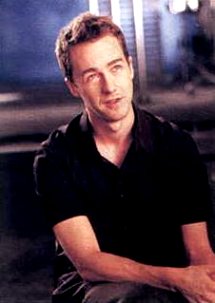
Screening schedule: Tuesday through Sunday at: 11:00 AM; 12:30 PM; 2:00 PM and 3:30 PM. Tickets: Admission is $7 for adults and $5 for Students/Seniors/Children under 12. Reservations are not required except for groups of 40 or more. Call 323.461.2020, ext. 7. Location/Parking/Access: The Egyptian Theatre is located at 6712 Hollywood Boulevard between McCadden Place and Las Palmas Avenue. Selma Avenue runs east/west south of the theatre. Parking is available in adjacent lots on Las Palmas and McCadden, south of Hollywood Boulevard and on Cherokee (1 blk. East of Las Palmas, just north of Hollywood Boulevard). The Cherokee lot is free for the first two hours. The theatre is handicap accessible. No validations. The Egyptian Theatre: The Egyptian Theatre, built by the legendary Sid Grauman (five years before the Chinese), was designed by architects Meyer and Holler and opened in 1922. It was home to the very first Hollywood movie premiere and was known in the silent era as the theater “where the stars see the movies” and later, as the theater, “where the stars see and hear the movies.” Douglas Fairbanks, Mary Pickford, Charlie Chaplin, Barbara LaMarr, Norma and Constance Talmadge, Jesse Lasky, Lillian Gish, Fred Niblo and many other Hollywood pioneers were frequent guests at premieres. Renovated in the late ‘50s for Cinemascope, the theatre continued operating into the early ‘90s. Inside the historic shell are two state-of-the-art movie theatres: the 616-seat Lloyd E. Rigler Theatre and the 78-seat Steven Spielberg theatre. The original entrance portico (or outdoor lobby) is restored with the ticket booths and four massive columns as well as the original Egyptian motif sunburst-ceiling. A 1922 Wurlitzer theatre organ will be installed in 2000 for silent film presentations. This stunning architectural landmark brings the legacy of grand movie palaces into the new millenium, by utilizing state-of-the-art technology at work within a historic shell. The Egyptian has been modified to have perfect acoustics and picture for everything from silent films to Cinemascope movies with 6-track sound and modern THX extravaganzas – all on the giant screen. The Egyptian re-opened in December 1998 following the American Cinematheque’ s $15 million renovation of the building. The Cinematheque holds nightly specialty film programs which focus on filmmaking past and present. Discussions with actors, directors and others involved in the filmmaking process are a staple of the year-round film programs and special events at the theatre. |
| . |
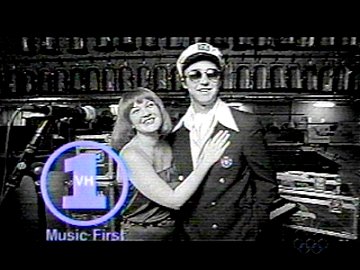 On
March 20, 1999, Drew Barrymore hosted Saturday
Night Live
with musical guest Garbage. In VH-1's Behind The Music, Drew Barrymore
teamed up with Edward Norton, playing 70's musical duo, Captain and Tennille.
The two explained how they developed their image; "Muskrat Love" played
in the background. On
March 20, 1999, Drew Barrymore hosted Saturday
Night Live
with musical guest Garbage. In VH-1's Behind The Music, Drew Barrymore
teamed up with Edward Norton, playing 70's musical duo, Captain and Tennille.
The two explained how they developed their image; "Muskrat Love" played
in the background.
. Captain: "What? How come they're laughing at us?"  Click
on the icon on the left to go to Saturday
Night Live Photo Gallery. Click
on the icon on the left to go to Saturday
Night Live Photo Gallery. |
|
|
 In
1998, Edward Norton joined Matt Damon, Janeane Garofalo, Lili Taylor in
Indipendent
Film Channel's
satirical ad campaign spoofing the independent film world. In
1998, Edward Norton joined Matt Damon, Janeane Garofalo, Lili Taylor in
Indipendent
Film Channel's
satirical ad campaign spoofing the independent film world.
The Independent Film Channel (IFC), managed and operated by Bravo Networks, is the first channel dedicated to independent film presented 24 hours a day, uncut and commercial-free. IFC, which launched September 1, 1994, has the most extensive independent film library on television, with titles from Miramax, Sony Classics, October, and Fine Line. IFC's Advisory Board is comprised of Martin Scorsese, Robert Altman, Tim Robbins, Joel and Ethan Coen, Martha Coolidge, Jim Jarmusch, Spike Lee, Steven Soderbergh, Ed Saxon and Jodie Foster. The Independent Film Channel, reaching over 13 million homes on a full-time basis, is the most widely distributed channel dedicated to independent film on television. The spots were created by the New York production company hungry man, whose co-founder Hank Perlman created/developed ESPN's acclaimed "SportCenter" campaign. IFC's Stuart Selig executive produced the campaign. The first spot was airing during IFC's exclusive coverage of the Independent Spirit Awards on March 21, 1998. In the ad, Damon and Norton wears the same clothes as the ones in Rounders. Matt Damon mentions how he and Ben Affleck wished that Christie could have directed "Good Will Hunting", but they instead had to settle for Gus Van Zant. It then switches to Damon talking to Christie about her film. Edward Norton walks in and introduces himself to Christie. Norton is lamenting the fact that he inadvertently turned down the lead in her soon-to-be-masterpiece "Horses Are Pretty" before seeing "Oogie Boogie Booger" and trying to placate an upset Matt Damon, who clearly wanted the film but never received a meeting. Christie just sits there and watches them both. . Click here to go to Indipendent Film Channel Website. |
| . |
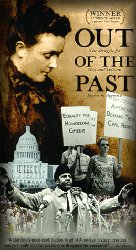 Out
Of The Past
is a 65 minutes documentary, produced in 1998 byZeitgeist Films/Unapix
Films. The film was written by Michelle Ferrari and directed by Jeffrey
Dupre. Jeff Dupre, a former production assistant for filmmaker Ken Burns,
was approached to direct the film by the Gay, Lesbian and Straight Education
Network, a 90-chapter New York organization which works to end homophobia
in schools. Dupre started with a purely historical documentary tracing
400 years of the history of gays in America, but decided he needed a modern-day
story to illustrate it. "To reach out to young people, we thought it would
help if we could find a story that was present day and paralleled history,"
he says. On the other hand, for Peterson, seeing others like her throughout
history helped give her a better persepctive on her own life and sexuality.
"I was taught gay people were horrible people and I wouldn't want to be
one of them," she notes in the film. "If I'd known history was full of
people like me, things could have been different." Peterson's story begins
in 1996, when Kelli Peterson, an East High School student, tried to form
the Gay-Straight Alliance, an after-school club to provide a forum for
gay teens to find support. "I started the group to end the misery
and isolation of behing gay in high school," she says. "The Gay-Straight
Alliance is to show you're not alone, you're not horrible, we understand
what you're going through." However, the idea of a gay club for teens became
so contentious in the conservative Mormon town that the Salt Lake City
School Board finally voted to ban all their non-curricular after-school
clubs, rather than let them assemble for that purpose. Students marched
on the state capitol after legislators debated ways to uphold the prohibition,
and ended up letting the board ban clubs that "involve human sexuality."
Dupre heard of the story about a year after the height of the controversy,
and decided Peterson would make the perfect centerpiece for his film. "We
read about (Peterson's) story to gain the right to meet, I talked to her
on the phone,and the rest is history," he recalls. "We went out in March
'97 to interview her, and by the end of the day, I was in tears. I knew
we had a winner. The (film's) success was riding on her shoulders, it depended
on her screen presence and if she could tell her story in a compelling
way." Dwelling on little-known but determining episodes in American politics,
helmer Dupre integrates a number of interviews with distinguished scholars,
such as historians George Chauncey and Lillian Federman, who discuss these
stories in detail and reflect upon their implications for historians. By
examining how these tales of gays and lesbians have been obscured and then
heroically reclaimed, "Out of the Past" explores the processes by which
American history continues to be reconstructed from a contempo perspective. Out
Of The Past
is a 65 minutes documentary, produced in 1998 byZeitgeist Films/Unapix
Films. The film was written by Michelle Ferrari and directed by Jeffrey
Dupre. Jeff Dupre, a former production assistant for filmmaker Ken Burns,
was approached to direct the film by the Gay, Lesbian and Straight Education
Network, a 90-chapter New York organization which works to end homophobia
in schools. Dupre started with a purely historical documentary tracing
400 years of the history of gays in America, but decided he needed a modern-day
story to illustrate it. "To reach out to young people, we thought it would
help if we could find a story that was present day and paralleled history,"
he says. On the other hand, for Peterson, seeing others like her throughout
history helped give her a better persepctive on her own life and sexuality.
"I was taught gay people were horrible people and I wouldn't want to be
one of them," she notes in the film. "If I'd known history was full of
people like me, things could have been different." Peterson's story begins
in 1996, when Kelli Peterson, an East High School student, tried to form
the Gay-Straight Alliance, an after-school club to provide a forum for
gay teens to find support. "I started the group to end the misery
and isolation of behing gay in high school," she says. "The Gay-Straight
Alliance is to show you're not alone, you're not horrible, we understand
what you're going through." However, the idea of a gay club for teens became
so contentious in the conservative Mormon town that the Salt Lake City
School Board finally voted to ban all their non-curricular after-school
clubs, rather than let them assemble for that purpose. Students marched
on the state capitol after legislators debated ways to uphold the prohibition,
and ended up letting the board ban clubs that "involve human sexuality."
Dupre heard of the story about a year after the height of the controversy,
and decided Peterson would make the perfect centerpiece for his film. "We
read about (Peterson's) story to gain the right to meet, I talked to her
on the phone,and the rest is history," he recalls. "We went out in March
'97 to interview her, and by the end of the day, I was in tears. I knew
we had a winner. The (film's) success was riding on her shoulders, it depended
on her screen presence and if she could tell her story in a compelling
way." Dwelling on little-known but determining episodes in American politics,
helmer Dupre integrates a number of interviews with distinguished scholars,
such as historians George Chauncey and Lillian Federman, who discuss these
stories in detail and reflect upon their implications for historians. By
examining how these tales of gays and lesbians have been obscured and then
heroically reclaimed, "Out of the Past" explores the processes by which
American history continues to be reconstructed from a contempo perspective.
Production values and archival footage are excellent. Prominent actors (Stephen Spinella, Gwyneth Paltrow, Cherry Jones, Edward Norton and Leland Gantt) provide narration for the five figures, bringing to life historical portraits by reading letters and diaries that, for the most part, have been unknown to the general public. Out Of The Past won a special mention in the documentary section of the 13th Turin (Italy) International Gay and Lesbian Film Festival, and an Audience Award in Documentary section at 14th annual Sundance Film Festival. Synopsis: Historically provocative documentary about a Salt Lake City girl's efforts to form a gay high school club, tied to the venerable tradition of homosexual repression in the United States. Released on: Friday, July 31, 1998 |
| . |
 Ambush
At Fort Bragg is
a satiric novella, exclusively on audio, written by Tom Wolfe, the author
of The Bonfire of the Vanities and The Right Stuff. The novella, recited
in an assortment of dialects by Oscar-nominated actor (and Wolfe fan) Edward
Norton, arrived in stores on August 4, 1997. The three-hour audiobook is
available on three CDs or four cassettes and is currently selling for $21.95
(cassette) and $24.95 (compact disc). Ambush
At Fort Bragg is
a satiric novella, exclusively on audio, written by Tom Wolfe, the author
of The Bonfire of the Vanities and The Right Stuff. The novella, recited
in an assortment of dialects by Oscar-nominated actor (and Wolfe fan) Edward
Norton, arrived in stores on August 4, 1997. The three-hour audiobook is
available on three CDs or four cassettes and is currently selling for $21.95
(cassette) and $24.95 (compact disc).
The story deals with one journalist's quest for self-validation and the story of his lifetime. As the producer of a prime-time TV newsmagazine, Irv Durtscher fancies himself the Frederico Fellini of television journalism. For who else can draw 50 million viewers, satisfy the network's gluttony for profits, and advance the cause of social justice? The only problem is that no one else recognizes Irv's genius. Instead, all the accolades go to the blonde bombshell anchor who won't give balding, near-sighted Irv the time of day. But suddenly Irv has a chance to break the most sensational story of his career - one that will surely catapult him into the national spotlight and into Madame Bombshell's heart. For months the wheels of justice have ground to a halt as three soldiers from Fort Bragg have categorically denied that they savagely beat and murdered a member of their company because he was gay. Now, Irv Durtscher, self-proclaimed soul of a soulless industry, is poised to expose the truth. With a fortune in surveillance equipment, he has infultrated a bar near Fort Bragg, in the hopes that the unwitting soldiers will hang themselves on videotape. What he gets is pure dynamite. But Irv's story won't be complete until he arranges to ambush the three young toughs and show them the footage. What happens when one of New York's media elite confronts the Lords of Testosterone?...not what you think. Ambush at Fort Bragg is classic Wolfe -- a blistering send-up of one man's drive for fame and glory and the lengths to which the media will go to showcase their version of the truth. Bantam Doubleday Dell Audio Publishing scored the coup, believed to be the first time an author with Wolfe's credentials has released an audio-only work. "It's an innovative and exciting way to get Ambush out to people," BBD president and publisher Jenny Frost said Friday. "As an author, Mr. Wolfe wants to have his work distributed. And yet he wanted to have his next major print work be his next novel." The audio deal accomplished both. To promote Ambush, Frost said, her company has mounted an unprecedented $150,000 campaign that includes a flurry of ads in major newspapers and magazines. In truth, Ambush has already appeared in print. It was serialized last year in two issues of Rolling Stone magazine. Wolfe, whose last book was 1987's Bonfire, acknowledged in a statement that Ambush at Fort Bragg could turn up in print again. But he said the "innovative opportunity to publish Ambush in audio now" and the "choice of Edward Norton to perform it" convinced him. |
 |

Copyright © 2000-2001 Edward Norton Online website. All rights reserved.