
|
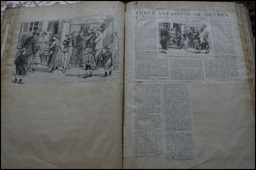 When I went to write this column about being the greatgranddaughter of Maggie Grant, a former Globe and Mail humour columnist, I discovered that there was another journalist in my family. When I went to write this column about being the greatgranddaughter of Maggie Grant, a former Globe and Mail humour columnist, I discovered that there was another journalist in my family.Estelle M. Kerr, my great-grandmother's aunt, drove an ambulance during the First World War and her many columns from the Canadian Courier describe what life was like during the war. Sitting at my grandparents' house, I gently flip through Estelle's delicate scrapbook, the thin pages nearly crumbling in my hands at each turn. I am immediately thrown back in time with each article, each one of Estelle's sketches, every original photograph, and the official documents. Engulfed by intrigue, I read on. I begin to feel the emotions that Estelle felt. Her excitement at having the chance to go overseas. The anticipation of not knowing when the ship would set sail as it sat in the Halifax harbour. The humour she saw in the little war rhymes the soldiers wrote in her autograph book. The scrapbook is like any great novel; it pulls you right in. "A number of my friends gathered to wish me 'bon voyage,' and when the train whisked me past the last waving figure, I found that I had collected a new assortment of luggage - flowers, candy, dried fruits, books and magazines. It was like Christmas morning!" Estelle wrote in one of the earlier articles in the scrapbook about her two-day journey to Saint John. Most articles came across as cheerful to me, aside from her troubles of obtaining her passport and the long waits during the war as they sat on the platform waiting for the wounded to arrive. 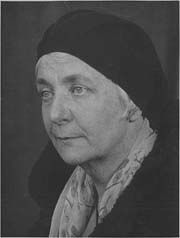 Certain articles did have a more dampened feeling to them. The mood changes are only slight, though. Certain articles did have a more dampened feeling to them. The mood changes are only slight, though."Damp, dark and dirty is the goods station. I can think of other words to describe it but they all begin with D, and some might be deleted by the editorial censor," began one article. All through the hardships of war, Estelle still managed to write uplifting articles, putting a positive spin on a negative situation, such as her "How to enjoy an air-raid" article, where she suggested people should place comfy chairs and other luxuries underground, in case an air-raid should occur. The articles that Estelle wrote about the roles of women during the war are very interesting. In the article "They also serve," Estelle wrote about what women were doing after the war as well. "Well, the war is over - what are we going to do now? Get 'a swell job' or stay by our own fireside while our men work for us once more? In either case I am sure women who have once worked behind the firing lines will never forget it, nor regret it." It's interesting how things play out. I go to my grandparents'to learn more about my great-grandmother and leave there knowing more about the First World War than any textbook has taught me. Authors of textbooks tend to write about the war in a more factual way. Estelle's articles dealt with it on a personal basis. I've also learned a great deal about a relative that I hardly knew anything about. Estelle's scrapbook is a priceless treasure. It is certainly a privilege to be able to go through it. After discovering that I'm the descendant of two great female journalists, suddenly getting into journalism means more to me than ever. It was by mere chance that I got into this program, or perhaps it was fate. Either way, I am honoured to follow in their footsteps. |