|
|
Stomatology and dental procedures
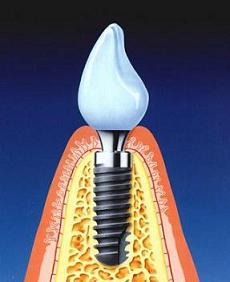
Most people know that the teeth are the hardest and strongest part of the body. There's more than meets the eye, though. Teeth are actually a living part of your body that has blood vessels and nerves. If you used to judge your teeth like a book by its cover, then you're in for one big surprise. Teeth anatomy is a lot more complicated than you ever thought. Excellent crowns and bridges were made by the Etruscans in the 7th cent. B.C. At about that time, teeth were being extracted in Asia Minor as a cure for bodily ills and diseases. Skills achieved by the Etruscans, Phoenicians, Egyptians, Greeks, and Romans were largely lost during the Middle Ages, when barbers and roving bands of charlatans practiced unskilled dentistry at marketplaces and fairs. Abulcasis, a Spanish Moor, was one of the few in his time who studied dental surgery. New developments include the implantation of artificial teeth or binding posts into the gums or jawbone; antibiotic fiber for periodontal disease; root canal surgery, a procedure that ameliorates pain while permitting teeth to remain in place; and nearly painless lasers to repair dental cavities, usually making local anesthesia unnecessary. In areas of your mouth that are under less stress, such as your front teeth, a cantilever bridge may be used. Cantilever bridges are used when there are teeth on only one side of the open space. Bridges can reduce your risk of gum disease, help correct some bite issues and even improve your speech. Bridges require your commitment to serious oral hygiene, but will last as many ten years or more. You maybe candidate for dental bridges, if you have missing teeth and have good oral hygiene practices, you should discuss this procedure with your cosmetic dentist. If spaces are left unfilled, they may cause the surrounding teeth to drift out of position. Additionally, spaces from missing teeth can cause your other teeth and your gums to become far more susceptible to tooth decay and gum disease. The dentist will then make an impression, which will serve as the model from which the bridge, false tooth and crowns will be made by a dental laboratory. A temporary bridge will be placed for you to wear while your bridge is being made until your next visit. This temporary bridge will serve to protect your teeth and gums. Dentists are able to provide much more dramatic teeth whitening. Some patients opt for a take-home kit that provides results in a few days, while others choose a one-hour procedure that uses advanced technologies to immediately bleach teeth several shades lighter. Take-home kits usually involve custom-fit trays with a whitening gel of carbamide peroxide, to be worn for several hours at a time over some number of weeks as determined by the dentist. These kits are usually less expensive than the one-visit whitening procedures. For individuals who are looking for a fast way to achieve dramatic teeth whitening results, in-office whitening is the way to go. Protective gel is applied to the gums, lips and other tissue around the teeth, and then a bleaching solution is applied to the tooth enamel. A high intensity laser or other type of light catalyzes the bleach, and the teeth are treated for one to two hours. Some types of tooth discoloration are difficult to whiten and treat. Teeth that have been subjected to trauma may darken significantly, and resist any bleaching procedure. Some medications affect young children when their teeth are first forming and may also be nearly impossible to treat. Dentists will be able to tell what situations may result in bleach-resistant discoloration, and provide advice on how effective various treatments may be. In cases of extreme discoloration that cannot be subjected to common teeth whitening procedures, porcelain veneers applied to the teeth may be an alternative solution. The classic metal orthodontic braces are the most familiar method of teeth straightening. Consisting of a bracket glued to the front of each tooth and a metal wire connecting them, orthodontic braces usually require several years of wear for effective teeth straightening. They can be uncomfortable, expensive, and embarrassing for older patients. However, they are still the most effective method of teeth straightening and can correct overbites and underbites as well as individual teeth alignment. Lingual braces are similar to classic orthodontic braces but are attached to the backside of the teeth, rather than the front. Although they still have many of the problems of standard braces, they are not visible and may be chosen by adults who do not wish for visible braces. Lingual braces are more expensive than standard braces but the fastest method of "invisible" teeth straightening. Your cosmetic dentist will usually be able to spot problem areas in your mouth that might lead to tooth damage and a need for crowns. Chewing patterns play a big role as well. By selectively grinding the tips of your middle and back teeth (called cusps) will alter your bite to reduce the stress on at-risk teeth. In other instances, crowns are used to replace a actual missing tooth. These crowns are anchored to the teeth on either side, with a bridge section connecting the two crowns. Instead of bridges, single tooth dental implants may be used that eliminate the need for supporting the crowns. Your cosmetic dentist will make an impression of the tooth and a dental laboratory will create the crown. You will typically leave the office with a temporary crown to wear while the permanent crown is being made - this takes about two weeks. The permanent crown is then cemented onto your tooth. Typically, only two visits are required for this part of the procedure. Often, a preliminary restoration of your tooth may be needed before a crown can be placed. To stabilize your tooth, a filling must first be put in place prior to placing a crown due to the loss of original tooth structure. Tooth crowns usually last ten to fifteen years. There are basically three types of crowns, those made of gold, ceramic crowns and ceramic-veneered gold crowns. Gold and metal-ceramic crowns are extremely durable and are normally used in molars, where the forces from chewing and grinding are most prevalent. Ceramic crowns are used primarily for front teeth, since they can best resemble the natural tooth color.
Definitions and terms on this pageStomatology Tooth bleaching Catalog for advanced search. Explore offers from today active companies.
|
|