Wind Energy
Over the centuries, windmills pumped water and ground grain into flour. But
how can the energy of the wind produce electricity? Find out as you continue
reading.
 Windmills use the wind to produce electricity. When wind hits
the blades of a windmill the blades start to move due to their angle. The
hub has a shaft connected to it. It goes to a gear transmission box where
the speed is increased. A (high-speed) shaft protruding from the transmission
box goes to the generator, where the motion of the shaft becomes electricity.
Windmills use the wind to produce electricity. When wind hits
the blades of a windmill the blades start to move due to their angle. The
hub has a shaft connected to it. It goes to a gear transmission box where
the speed is increased. A (high-speed) shaft protruding from the transmission
box goes to the generator, where the motion of the shaft becomes electricity.
Wind just doesn't come when you want it to, it is not steady. Even if there
is wind, there needs to be enough to turn the blades of a windmill. Except
that wind is needed (it can be made), windmills are a great way to produce
electricity right, wrong. They don't produce enough electricity, which means
they can't power to many homes. In 1995 there were13,437 windmills that were
grouped in farms. All of them
togethe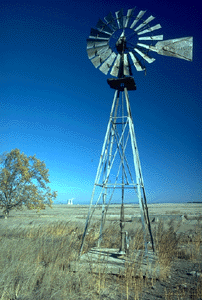 r could only produce enough power for San Francisco.
So most power plants make their own strong, steady wind. It's called steam.
All you have to do to make steam is boil water. Power plants do this in their
huge boilers. But boiling water in a power plant is not like boiling water
in a pot at home. Instead of letting the steam escape, boilers keep it trapped
for a while. The pressure of the steam pushing against the boiler walls grows
as more and more steam is made. When the pressure is high enough, a valve
opens. High-pressure steam rushes through a pipe into the steam turbine.
The strong, hot wind pushes the blades of the turbine. The shaft turns. The
generator turns. Electricity is produced.
Updated: 3/29/01