The WTO IN QATAR: Stacking the Odds against Democracy
August, 2001
THE WARNING BUZZER SOUNDS
Public attention is intensifying around the World Trade Organization's (WTO) fourth ministerial, to be held from Nov. 9-13 in Doha, Qatar.
Until 1999, scanty - and shallow - media coverage allowed the WTO to function under minimal public scrutiny. This all changed when mass protests succeeded in shutting down the Seattle Ministerial in 1999. Awareness-raising efforts brought the truth about the WTO - the way it undermines environmental protection, labour rights, education, common access to intellectual property, etc. - to light. The choice of Qatar, a tiny desert monarchy where democratic freedoms are largely non-existent, was made to move things back into the shadows, but this retreat has had the unintended result of redoubling public suspicion.
The mainstream press has lately been narrowing the debate on the WTO to focus on the question of whether a new 'round' will be initiated in Doha which would expand the liberalization programme into new sectors of the global economy. Those sectors proposed for Doha are what are termed the 'Singapore issues', which include investment, competition policy, environment, transparency in government procurement, and trade facilitation. A major accomplishment of the protests in Seattle was to block a new round from happening, which is why people like Mike Moore, Director-General of the WTO, are now anxious to initiate a new round at Doha in order to signal renewed momentum for the WTO.
ROUND ONE - GLOBAL CAPITAL COMES OUT SWINGING
The previous round (the Uruguay Round) included many sub-agreements, including rules regarding trade in services (GATS), trade-related intellectual property (TRIPS), and agriculture. Some of these sectors are currently under review, such as the TRIPS agreement. The TRIPS has had severely negative implications on developing nations, particularly regarding their capacity to use
 cheap generic drugs to combat disease. These nations are now fighting to reduce the scope of the TRIPS. Liberalized agriculture has also had little benefit for poorer nations as continued subsidies in rich countries, the total of which is now estimated at about $1 billion dollars per day, serve to underwrite high-tech, monoculture-based industry. Poor nations are effectively locked out of the high-profit markets, and when farmers go under, multinationals move in to convert fields for feed-crop monoculture or for livestock pasture. Small-scale farmers in the rich countries have not fared any better as the goliaths of the industry such as Archer-Daniels Midland not only gain increasing control due to their economies of scale, but also grab the lion's share of the aforementioned subsidies. Also, we mustn't forget how the WTO has served to erode the capacity of nations to enact and to maintain health and environmental regulations. The undermining of the U.S. Clean Air Act, the scuttling of measures designed to protect endangered turtles, and penalties against Europeans for enacting health protection laws prohibiting the import of hormone grown beef are just a few of the many instances in which the WTO has succeeded in overriding hard-won efforts to manage the environment and health responsibly.
ROUND TWO - OR NOT?
Still reeling from round one, the nations of the Majority World are not anxious to embark on a second. Led by Tanzania, the Lesser Developed Countries (LDCs), the poorest members of the WTO, as well as numerous developing countries (notably India, Pakistan, Malaysia, Indonesia, and Jamaica), have been vociferous in their rejection of the idea. One reason is because they have learned from past experience that in broad negotiations in which an agenda is not specifically defined beforehand, they are at a marked disadvantage. The rich countries have the money, the coordination, the information-access, and the leverage to win out in loosely structured negotiations. Immediately following the Uruguay round, the general feeling among developing countries was that they had secured an advantageous deal, but it didn't take long before the deeper implications of clauses which they initially perceived as benign became apparent. In the words of Ambassador Halida of Indonesia, there is "deep concern over the initiative by some Members to launch a 'comprehensive' round which includes new issues. Indonesia has learned a very good lesson from past experience, that a proposal that looks fair on the surface may have very different and serious consequences."
The rich countries nevertheless maintain that there was a "fine balance" achieved at Uruguay, and any changes in the existing agreements would require a new round to "rebalance" the overall trade equation. Regarding the Singapore issues, these countries are especially anxious to resurrect the idea of liberalized investment after the collapse, due to broad public outrage, of the OECD's Multilateral Agreement on Investments (MAI).
But the way things stand, it doesn't look like a new round will happen, because in contrast with pre-Seattle days, developing countries now have a popular global movement to back them up in questioning the wisdom of pushing forward with the neoliberal agenda. Thabo Mbeki, President of South Africa, states: "We believe consciousness is rising, including in the North, about the inequality and insecurity globalization has brought and about the plight of the poor countries. The protests against the WTO, World Bank, and IMF are a sign of a changing atmosphere which a more coherent Third World voice can take advantage of." Even so, the degree of leverage that the rich nations can exert behind the scenes should not be underestimated. Debt financing, military aid, and a host of other tools can be used to rein in the recalcitrant poor.
THE WTO - RIGGED FROM THE START
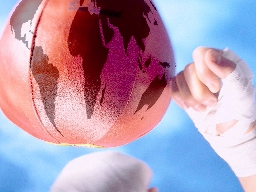
The WTO is a rigged match where the wealthy wear loaded gloves, and for anyone concerned with social and environmental justice, the new round question has to be regarded as a sham. Focussing on whether there is a new round or not reduces the question to whether the global neoliberal agenda will expand rapidly or slowly, while the real question is how to undo the damage the WTO has already done. In spite of the recent barrage of rhetoric from neoliberal apologists about alleviating poverty, the gap between rich and poor continues to increase. Oxfam reports that in the last twenty years the ratio of average income in LDCs to average income in rich countries has gone from 1:87 to 1:98 and the gap is widening at an accelerating rate. In the rich countries, overall GDPs increase, but closer examination shows that the poor are nevertheless getting poorer. Minister of International Trade Pierre Pettigrew boasts how trade now represents over 43% of Canada's GDP, and it is true that the number of millionaires in Canada has tripled over the last decade. Meanwhile, however, average workers' wages have only risen by 2%, not enough to keep up with inflation, and child poverty here is now the highest in the industrialized world.
The WTO is fundamentally at odds with the collective interests of the majority not merely because of its lack of transparency and accountability, but because it is founded on the principle of putting the strictly quantifiable profits of private capital ahead of the less tangible but more long-term benefits of social programs, environmental sustainability, cultural diversity, and respect for human rights. The "profits before people" principle makes the WTO an arena where the wealthy invariably emerge as the only winners.