
| Checklist of the Collembola: Key to the genera of Paronellinae |
|
This key is still under construction. Note that missing figures will be provided as soon as possible. Currently, the key is in the feasibility study phase to find out how to integrate in the checklist in a modular way a key that has been generated with DELTA.
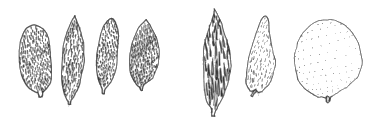
1(0). Scales absent............................................... 2 Scales present (fig.1)..................................... 10 |
|
 |
|
2(1). Mucro absent or vestigial (fig.2a)..................... Yosiia Mucro well developed (fig.2b, 3&7).......................... 3 |
|
 |
|
3(2). Mucro falcate (fig.2b)............................ Metacoelura Mucro not falcate (fig.3&7)................................. 4 |
|
 |
|
4(3). Base of mucro with enlarged scale or bladder like appendage (fig.3)................................................... 5 Base of mucro without appendage............................. 8 |
|
5(4). Vertex of head with 2 + 2 macrochaetae (fig.4c&d)........... 6 Vertex of head with at least 6 + 6 macrochaetae (fig.4a&b).. 7 |
|
 |
|
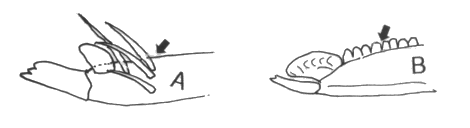
6(5). Dens crenulate (fig.5b).............................. Akabosia Dens straight and smooth (fig.5a)...................... Salina |
|
 |
|
7(5). Dentes with spines (fig.6)........................... Paronana Dentes without spines............................ Pseudosalina |
|
 |
|
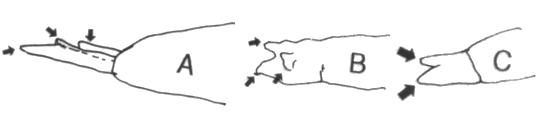
8(4). Mucro with 2 teeth (fig.7c)................................. 9 Mucro with 3 teeth (fig.7a)................ Pseudoparonellides |
|
 |
|
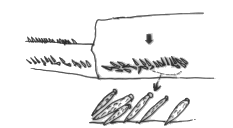
9(8). Dens with a dorsal row of stout serrated spines (fig.8)....... ................................................ Glacialoca Dens without serrated spines..................... Paronellides |
|
 |
|
10(1). Metathorax not strongly bent............................... 11 Metathorax strongly bent so as to point mesothorax downwards (fig.9)....................................... Campylothorax |
|
 |
|
11(10). Mesothorax not humped (fig.10b)............................ 12 Mesothorax sharply humped (fig.10a)................. Idiomerus |
|
 |
|
12(11). Mucro sharply separated from dens (fig.11b)................ 13 Mucro weakly separated from dens (fig.11a)................. 25 |
|
 |
|
13(12). Head with 6 + 6 or fewer eyes.............................. 14 Head with 8 + 8 eyes....................................... 19 |
|
14(13). Body with clear pigment pattern, 6 + 6 eyes................ 15 Body without pigment or with diffuse pigment, 6 + 6 or fewer eyes..................................................... 16 |
|
15(14). Unguiculus acuminate (fig.12b)................ Dicranocentruga Unguiculus excavate (fig.12a)..................... Trichorypha |
|
 |
|
16(14). Fourth antennal segment not divided in halves (fig.13a).... 17 Fourth antennal segment subdivided into two halves (fig.13b).. ............................................. Troglopedetes |
|
 |
|
17(16). Mucro 3 times as long or less than greatest width............. .............................................. Trogalophysa Mucro 4 times as long or more than greatest width.......... 18 |
|
18(17). Mucro serrate on only basal half (fig.14b)...... Cyphoderopsis Mucro serrate on whole dorsal edge (fig.14a)....... Troglobius |
|
 |
|
19(13). Mucro 1.5 times as long as basal width (fig.15a)........... 20 Mucro subequal in length to basal width (fig.15b)............. .............................................. Bromacanthus |
|
 |
|
20(19). Mucro with 2 teeth (fig.7c)................................ 21 Mucro with 3 or more teeth (fig.7a&b)...................... 22 |
|
21(20). Antennal segments 1 & 2 with macrochaetae at least 2/3 as long as segment (fig.16)......................... Parachaetoceras Antennal segments 1 & 2 with macrochaetae much shorter than segment length................................... Glacialoca |
|
 |
|
22(20). Manubrium with short smooth spines (fig.17)......... Paronella Manubrium without spines................................... 23 |
|
 |
|
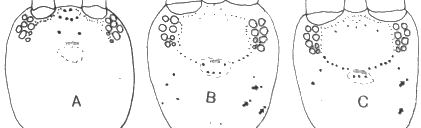
23(22). Vertex with macrochaetae (fig.18b&c)....................... 24 Vertex without macrochaetae (fig.18a)............. Lepidonella |
|
 |
|
24(23). Genal and occipital areas of head with 1 or no macrochaetae (fig.18c)....................................... Callyntrura Genal and occipital areas of head with 3 macrochaetae (fig.18b)................................. Dicranocentroides |
|
25(12). Antennal segments 1 & 2 with macrochaetae at least 2/3 as long as segment (fig.16)...................................... 26 Antennal segments 1 & 2 with macrochaetae much shorter than segment length.............................. Pseudoparonella |
|
26(25). Mucro with 2 teeth (fig.7c)................... Parachaetoceras Mucro with 3 teeth (fig.7b)...................... Plumachaetas |
|
Akabosia
Base of mucro with enlarged scale or bladder like
appendage (fig.3). Dens crenulate (fig.5b). Mucro well developed (fig.2b,
fig.3&7). Mucro not falcate (fig.3&7). Scales absent. Vertex of head with 2 + 2
macrochaetae (fig.4c&d).
Bromacanthus
Head with 8 + 8 eyes. Mesothorax not humped
(fig.10b). Metathorax not strongly bent. Mucro subequal in length to basal
width (fig.15b). Mucro sharply separated from dens (fig.11b). Scales present
(fig.1).
Callyntrura
Genal and occipital areas of head with 1 or no
macrochaetae (fig.18c). Head with 8 + 8 eyes. Manubrium without spines.
Mesothorax not humped (fig.10b). Metathorax not strongly bent. Mucro 1.5 times
as long as basal width (fig.15a). Mucro with 3 or more teeth (fig.7a&b). Mucro
sharply separated from dens (fig.11b). Scales present (fig.1). Vertex with
macrochaetae (fig.18b&c).
Campylothorax
Metathorax strongly bent so as to point mesothorax
downwards (fig.9). Scales present (fig.1).
Cyphoderopsis
Body without pigment or with diffuse pigment, 6 +
fig.6 or fewer eyes. Fourth antennal segment not divided in halves (fig.13a). Head
with 6 + 6 or fewer eyes. Mesothorax not humped (fig.10b). Metathorax not
strongly bent. Mucro sharply separated from dens (fig.11b). Mucro 4 times as
long or more than greatest width. Mucro serrate on only basal half (fig.14b).
Scales present (fig.1).
Dicranocentroides
Genal and occipital areas of head with 3
macrochaetae (fig.18b). Head with 8 + 8 eyes. Manubrium without spines.
Mesothorax not humped (fig.10b). Metathorax not strongly bent. Mucro 1.5 times
as long as basal width (fig.15a). Mucro with 3 or more teeth (fig.7a&b). Mucro
sharply separated from dens (fig.11b). Scales present (fig.1). Vertex with
macrochaetae (fig.18b&c).
Dicranocentruga
Body with clear pigment pattern, 6 + 6 eyes.
Head with 6 + 6 or fewer eyes. Mesothorax not humped (fig.10b). Metathorax not
strongly bent. Mucro sharply separated from dens (fig.11b). Scales present
(fig.1). Unguiculus acuminate (fig.12b).
Glacialoca
Antennal segments 1 & 2 with macrochaetae much
shorter than segment length. Base of mucro without appendage. Dens with a
dorsal row of stout serrated spines (fig.8). Head with 8 + 8 eyes. Mesothorax
not humped (fig.10b). Metathorax not strongly bent. Mucro 1.5 times as long as
basal width (fig.15a). Mucro well developed (fig.2b, 3&7). Mucro with 2 teeth
(fig.7c). Mucro with 2 teeth (fig.7c). Mucro sharply separated from dens
(fig.11b). Mucro not falcate (fig.3&7). Scales absent, or present (fig.1).
Idiomerus
Mesothorax sharply humped (fig.10a). Metathorax not
strongly bent. Scales present (fig.1).
Lepidonella
Head with 8 + 8 eyes. Manubrium without spines.
Mesothorax not humped (fig.10b). Metathorax not strongly bent. Mucro 1.5 times
as long as basal width (fig.15a). Mucro with 3 or more teeth (fig.7a&b). Mucro
sharply separated from dens (fig.11b). Scales present (fig.1). Vertex without
macrochaetae (fig.18a).
Metacoelura
Mucro well developed (fig.2b, 3&7). Mucro falcate
(fig.2b). Scales absent.
Parachaetoceras
Antennal segments 1 & 2 with macrochaetae at
least 2/3 as long as segment (fig.16). Antennal segments 1 & 2 with
macrochaetae at least 2/3 as long as segment (fig.16). Head with 8 + 8 eyes.
Mesothorax not humped (fig.10b). Metathorax not strongly bent. Mucro 1.5 times
as long as basal width (fig.15a). Mucro with 2 teeth (fig.7c). Mucro with 2
teeth (fig.7c). Mucro sharply separated from dens (fig.11b), or weakly
separated from dens (fig.11a). Scales present (fig.1).
Paronana
Base of mucro with enlarged scale or bladder like
appendage (fig.3). Dentes with spines (fig.6). Mucro well developed (fig.2b,
fig.3&7). Mucro not falcate (fig.3&7). Scales absent. Vertex of head with at least
fig.6 + 6 macrochaetae (fig.4a&b).
Paronella
Head with 8 + 8 eyes. Manubrium with short smooth
spines (fig.17). Mesothorax not humped (fig.10b). Metathorax not strongly
bent. Mucro 1.5 times as long as basal width (fig.15a). Mucro with 3 or more
teeth (fig.7a&b). Mucro sharply separated from dens (fig.11b). Scales present
(fig.1).
Paronellides
Base of mucro without appendage. Dens without
serrated spines. Mucro well developed (fig.2b, 3&7). Mucro with 2 teeth
(fig.7c). Mucro not falcate (fig.3&7). Scales absent.
Plumachaetas
Antennal segments 1 & 2 with macrochaetae at least
fig.2/3 as long as segment (fig.16). Mesothorax not humped (fig.10b). Metathorax
not strongly bent. Mucro with 3 teeth (fig.7b). Mucro weakly separated from
dens (fig.11a). Scales present (fig.1).
Pseudoparonella
Antennal segments 1 & 2 with macrochaetae much
shorter than segment length. Mesothorax not humped (fig.10b). Metathorax not
strongly bent. Mucro weakly separated from dens (fig.11a). Scales present
(fig.1).
Pseudoparonellides
Base of mucro without appendage. Mucro well
developed (fig.2b, 3&7). Mucro with 3 teeth (fig.7a). Mucro not falcate
(fig.3&7). Scales absent.
Pseudosalina
Base of mucro with enlarged scale or bladder like
appendage (fig.3). Dentes without spines. Mucro well developed (fig.2b, 3&7).
Mucro not falcate (fig.3&7). Scales absent. Vertex of head with at least 6 + 6
macrochaetae (fig.4a&b).
Salina
Base of mucro with enlarged scale or bladder like
appendage (fig.3). Dens straight and smooth (fig.5a). Mucro well developed
(fig.2b, 3&7). Mucro not falcate (fig.3&7). Scales absent. Vertex of head with
fig.2 + 2 macrochaetae (fig.4c&d).
Trichorypha
Body with clear pigment pattern, 6 + 6 eyes. Head
with 6 + 6 or fewer eyes. Mesothorax not humped (fig.10b). Metathorax not
strongly bent. Mucro sharply separated from dens (fig.11b). Scales present
(fig.1). Unguiculus excavate (fig.12a).
Trogalophysa
Body without pigment or with diffuse pigment, 6 + 6
or fewer eyes. Fourth antennal segment not divided in halves (fig.13a). Head
with 6 + 6 or fewer eyes. Mesothorax not humped (fig.10b). Metathorax not
strongly bent. Mucro sharply separated from dens (fig.11b). Mucro 3 times as
long or less than greatest width. Scales present (fig.1).
Troglobius
Body without pigment or with diffuse pigment, 6 + 6
or fewer eyes. Fourth antennal segment not divided in halves (fig.13a). Head
with 6 + 6 or fewer eyes. Mesothorax not humped (fig.10b). Metathorax not
strongly bent. Mucro sharply separated from dens (fig.11b). Mucro 4 times as
long or more than greatest width. Mucro serrate on whole dorsal edge
(fig.14a). Scales present (fig.1).
Troglopedetes
Body without pigment or with diffuse pigment, 6 +
fig.6 or fewer eyes. Fourth antennal segment subdivided into two halves (fig.13b).
Head with 6 + 6 or fewer eyes. Mesothorax not humped (fig.10b). Metathorax not
strongly bent. Mucro sharply separated from dens (fig.11b). Scales present
(fig.1).
Yosiia
Mucro absent or vestigial (fig.2a). Scales absent.