|
 |
|
|
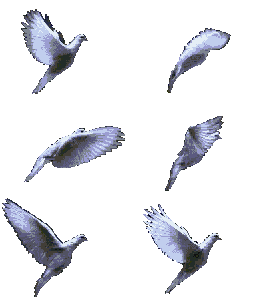
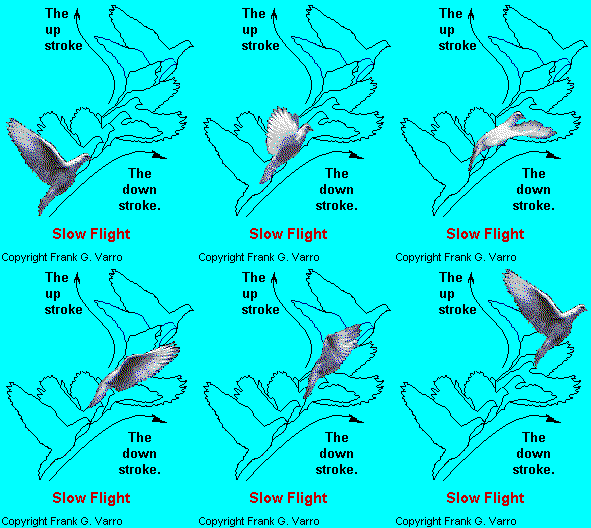
SLOW FLIGHT. This method of flight is the pigeons escape mechanism from a standing start. The complexity and blending of the down stroke and up stroke is a beautiful harmony of effort; and attests to the millions of years of evolution. Prolonged use of the pattern of flight must be an exhausting process and my racers avoid extended use of it. They prefer the more classic flap and glide stokes with a gradual rising when leaving the loft or training crates. When startled into using the slow flight process they soon land or revert to the extended flap and glide stoke while the muscles replace the depleted glucose ( sugars ) used for energy by breaking down stored fats.In Slow Flight the positioning of the wing is exaggerated, in both the up stroke ( wings positioned high over the pigeons back ) and in the down stroke ( wings positioned below and in front of the pigeons body ), when compared to normal flight. The down stroke is actually setup and assisted by the finish of the previous up stroke. The wings have been placed high over the birds back and the feathers on each wing may actually touch each other ( Fig. 1 ). Placing the wings in this position, and forcing the air out and away creates a potential vacuum between the wings when the down stoke is started. As the wing is forced down in the down stroke, air rushes into this void above the wing. This rush of air creates lift on the wing sooner than if only a partial wing lift were made. ( Fig. 2, 3, & 4 ) show the wing rapidly pushing air down which lifts the bird. ( Fig. 3 ) is blurred because of the high wing speed at this point in the wing stroke. The primary feathers are shaped to act like propellers in an efficient wing. They help propel the pigeon forward during the down stroke. In addition to this action the wing itself assumes the shape of a moving propeller ( Fig. 4 ). This happens as the leading edge of the wing ( front ) moves ahead of the training edge ( feather ends ). This lifts the back end of the feather up, which diverts the pushed air backward, pushing the pigeon forward. The down stroke ends with the wings coming together, extended and well in front of the body, setting up the up stroke.
In normal flight the upstroke is one of energy conservation and reducing the negative effects of repositioning the wing. In Slow Flight the pigeon flies with the top surface of the wing pushing the air! The wing is raised in front of the pigeon ( Fig. 5 & 6 ); and then is flung back ( Fig. 6, 7, & 8). This fling pushes air back providing additional lift and forward motion to the bird. The continued extension and raising of the wing sets up the next down stroke and creates the potential vacuum which assists the down stroke. The feathers of the each wing may actually touch each other over the back of the bird. A Clapping sound may be produced at this point.
The clapping in flight is said to be one indicator of racing form. Could it be that an extra supply of glucose in the muscles encourages the pigeon to play with its flight methods and the clapping is a sign of that available energy?