|
Cleopatra on the Nile, | The Nile river was most important to Egypt, and Queen Cleopatra travelled on it in her boat (barge). |
| Set your sail and drift awhile. | In Egypt the wind blows from north to south. To travel north, they allowed the current to carry them along. To travel south, they unfurled the sail. |
| Keep on going and you'll soon | |
| Be at the Mountains of the Moon. | In ancient times it was thought that the Nile originated in mountains in the centre of Africa called 'The Mountains of the Moon'. |
| | |
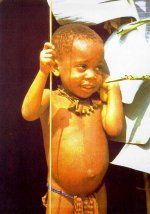
| Pygmies there will bring you gold; | This region was the home of the Pygmies, who were known to the Egyptians and Greeks. |
| Place it in your barge's hold. | |
| Honey, fruit, and many a flower; | Pygmies are known to love honey. |
| Anything that's in their power. | |
| | |
| From the Forest there will come | Dense rain forest (jungle) is the home of the Pygmies. |
| Music by the flute and drum: | |
| Watch our dance and you will see | It is said that Pygmies danced in the court of Egyptian monarchs. |
| How your little friends love thee. | |
| | |
| Your enemies are far away, | Cleopatra fought a war with Rome. |
| So with us we hope you'll stay: | |
| They cannot find you in our home, | |
| Even though your rivals roam. | 'Your rivals roam' is a homophone of 'your rival's Rome'. |
PART 2
|
No one knows the Pygmies' secret; | |
| But to you, Our Queen, we'll speak it. | |
| Let us take you to our City, | There are many intriguing abandoned cities in jungles, in Mexico and south east Asia. |
| Long a ruin but very pretty. | |
| | |
| So for many days they went | |
| To the place that they had meant. | |
| Through the Forest, green and dim; | |
| At waterfalls they'd stop and swim. | To the Pygmies the rainforest is a source of joy and not fear, as it may be to other peoples. |
| | |
| At last they came upon a block | |
| Of smooth and gleaming pure-white rock. | |
| From the Forest they emerged | |
| Onto the massive city's verge. | |
| | |
| Along the spacious avenues | |
| They wandered, and oft-times perused: | |
| whoever could have built these places | |
| Surpassed by far all other races. | Abandoned cities are evidence of ancient civilisation. Great Zimbabwe has been presented by Africans as evidence not only that a great civilisation was present in Africa, but also that Africans were capable of producing an indigenous culture. However, there are peoples who we know never had a city or a civilisation, such as the Pygmies and the Bushmen; are we to think any less of them? This poem makes light of this attitude, and questions the value of civilisation. |
PART 3
|
Our ancestors in ancient times | |
| Had visitors from many climes: | |
| And they (before from us did part) | |
| Found inspiration for their art. | In the last century it was often thought that civilisation had one place of origin, and dispersed from there. |
| | |
| The Sphinx you see, so very old, | Close to the pyramids in Egypt stands the Sphinx, a large stone figure with the body of a lion and the head of a man. It is usually thought to be the same age as the pyramids but could be considerably older. |
| Was copied in your land (we're told). | |
| The Temple here, so long vacated, | |
| At Ephesus was replicated. | This city in Asia Minor had one of the 7 Wonders of the Ancient World, the Temple of Artemis. |
| | |
| Hanging gardens once abounded, | The Hanging Gardens of Babylon were another of the 7 Wonders. |
| Now by forest they're surrounded; | |
| And if you look most carefully, | |
| A stately pleasure-dome you'll see: | An allusion to the poem 'Xanadu' by Coleridge. |
| | |
| But Pygmies tired of hewing stone, | |
| Now the Forest is our home. | |
| We gave it up, there's no regret; | |
| Our happiness you'll not forget. | |