
Lou
Reed
Biography
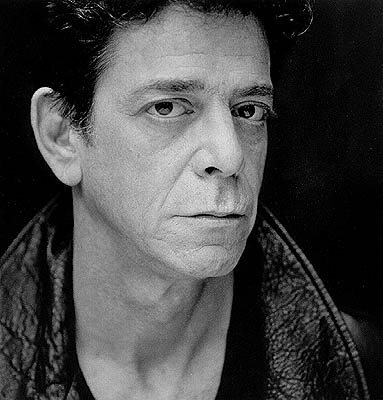
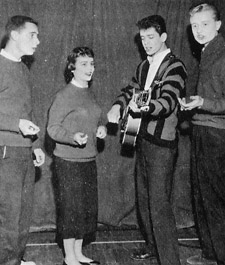
Lewis Allen Reed (also Firbank) was born on March 2, 1942 in Brooklyn,
New York, U.S.A. Being a member of many high school bands, he made his
recording debut with the Jades in 1957. The Jades's "So Blue" single
enjoyed some notoriety when it was played by disc jockey Murray the K, but
was soon lost in the multitude of singles released in that period.
After graduating from Syracuse University, Lou took a job as a contract
songwriter with Pickwick Records, which specialized in cash-in, exploitative
recordings.
A high school band called C.H.D.
His many compositions from that era included "The Ostrich" (1965), a tongue-in-cheek dance song
that impressed the label hierarchy so much that Lou formed the Primitives to promote it as a single.
The group also included a recent acquaintance, John Cale, also sowing the seeds of the Velvet
Underground.
Lou Reed led this unit between 1966 and 1970, contributing most of the material. For the most
part, his songs drew on the incisive discipline of R&B, while the lyrics displayed an acerbic view of
contemporary urban life. Lou's departure left everybody drained of inspiration. Following the break,
he found employment outside of music. Two years passed before Lou Reed was released.
Lou Reed was recorded in London with British musicians, including Steve Howe and Rick
Wakeman. The set boasted some excellent songs, many meant for the Velvet Underground. The UK
tour with the Tots, a group of New York teenagers, was successful.
David Bowie, a Velvets fan,oversaw Transformer which captured a mood of decadence. It
included the classic 'Walk On The Wild Side'. This song surprised everyone by becoming a hit,
reaching the UK Top 10 and US Top 20 in 1973. Lou then returned to the dark side of his talents with
Berlin.
By steering a course through attempted suicide and anti-establishment, he put forth his new
found commerciality and challenged his audience in a way very few comtemporaries dared. While a
crack back-up band built around guitarists Dick Wagner and Steve Hunter provided muscle on Rock
'N' Roll Animal, Sally Can't Dance showed an artist bereft of direction and purpose. After confirming
a second in-concert set, Lou released Metal Machine Music, an electronic, atonal work over a
double album. Torn apart by critics,its out of sync oscillations have since been applauded by the
avant garde fraternity. Others still do not take this piece of work seriously.
Coney Island Baby was the next album and it is believed to be Reed's softest, simplest collection to
date. The next album Street Hassle displayed Reed's rejuvenated power. Lou Reed's empathy with
New York's subcultures is apparent in this album. The title track, which was later revived by Simple
Minds, was very impressive while other songs revealed a wryness which was thought to be missing
from Lou Reed's earlier solo work.
Subsequent releases failed to scale similar heights but they offered a new-found maturity. Lou
Reed entered the 1980's as a stronger and more incisive performer. At this time Lou Reed was
associated with guitarist Robert Quine, formerly of Voidoids.
Lou Reed produced other albums such as The Blue Mask, Legendary Hearts and Mistrial. These
were purposeful collections and the material was concise and punchy. The following album, New
York, exemplified artistic rebirth. In this album there was a strong rhythmic pulse and the sound was
stripped to the bone, The lyrics focused on the seedy low-life that Lou Reed astutely characterizes.
His lyrics alternate from being pessimistic and cynical and they reassert the fire of his best work. In
this album Lou Reed regained the power to paint unsavory pictures without asking for, or receiving,
pity. New York showed a return to form for Lou Reed and garnered much interest in his previous
works.
Lou Reed has continued to produce albums into the 1990's. He continues to show facets of
dramatic regeneration that places the hugely talented artist at rock's cutting edge. In 1993 Lou Reed
joined together with his colleagues for a high-profile reunion of Velvet Underground. This reunion was
short-lived but Reed was able to return to his solo work. Lou Reed continues to perform for live
audiences and has a fan base of young and old, alike.
Contents
You are visitor
