 INVENTION
FROM EDISON
INVENTION
FROM EDISON
THE LIGHT BULD
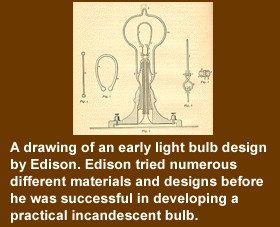 |
Throughout the 1800s, many scientists and inventors strove to create a cost effective, practical, long-life incandescent light bulb. The primary hurdle was creating a long-lived, high-temperature filament--the key to a practical incandescent light. Many high-melting-point materials were explored in inert/evacuated chambers in the process. Men such as William Robert Grove, Frederik de Moleyns, W.E. Staite, John Daper, Edward G. Shepard, Heinrich Gobel, C. de Chagny, John T. Way, Alexander de Lodyguine, Joseph Wilson Swan, and Thomas A. Edison dedicated their time and efforts in the race to develop the first practical incandescent light bulb. Breakthroughs for Edison and Swan came in 1879, when they independently developed the first incandescent lamp that lasted a practical length of time -- at best a mere 13.5 hours. Their separate designs were based on a carbon fiber filament derived from cotton. The next stage of development focused on extending the practical life of the carbon filament bulb. Edison developed bamboo-derived filaments in 1880 that lasted up to 1200 hours. |

