|
Nájera is a city of preRoman foundation, with uncertain origins. Crossing land, located in strategic place, lived different cultures: autrigones, vascones, berones, Romans, suevs, Arabs... From begingings of 10th century Nájera is mentioned on the continuous fights between Moors and Christians. To this population gave the Arabs the name of Náxara ("Place between rocks "or" Place at noon") and to its Naila river called Naxarilla by him. Year 923 was reconquered definitively by Ordoño II of Leon, in collaboration with Sancho Garcés I of Navarre (905-925). This it incorporated it to his kingdom, along with the Ducado de Cantabria, donating it to his son Garci'a Sanchez I (925-970), with the denomination of "Kingdom of Nájera". Later, throughout centuries X and XI one became the issued capital of the fabulous kingdom of Nájera-Pamplona. In her they reigned Sancho Garcés II successively Sandal (970-994), Garci'a Sanchez II the Temblón (994-1004) and Sancho Garcés III the Greater one (1004-1035). With this monarch, denominated “Rex Hispaniarum” (1004-1035), the top of its fame and splendor like capital of a great empire reached Nájera that included all earth reconquered until the moment, and it extended from the coasts of Galicia to the County of Barcelona and beyond the Pyrenees to Toulouse. Then Nájera was scene of transcendental events in the history of Spain, Don Sanco celebrated Cuts and gave the famous Law of Nájera, origin of the Navarrese legislation and bases Here of the national right. In its reign the first currency of Reconquista was coined in Nájera. It favored the peregrinations to Santiago de Compostela, establishing alberguería and hospitals, and turning to Nájera important stage the jacobea route. To the death of Sancho the Greater one, the vast empire divided between its children Garci'a, Fernando, Ramiro and Gonzalo, becoming Nájera cradle of the kingdoms of Navarre, Castile and Aragón. In Nájera its first-born, king Don Garci'a remained (1035-1054), nicknamed "the one of Nájera", because it was born, lived and was buried in this city. He was a great king, typical representative of the medieval monarchs. |
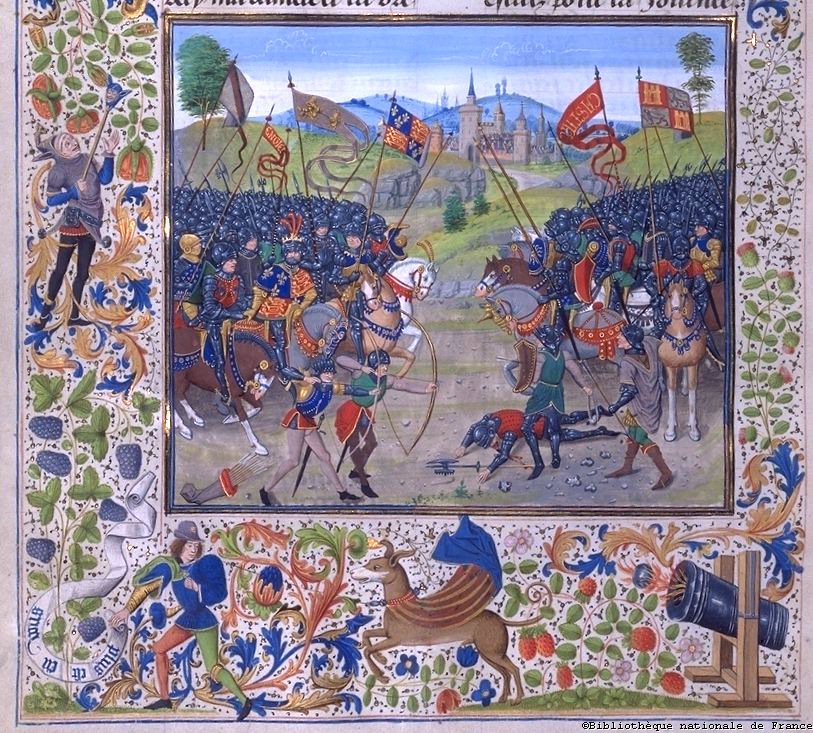
He conquered Calahorra to the Moors, and between his great works the Real one of Nájera appears the foundation of the monastery of Santa Maria, of original style Romanesque-visigothic. Also it instituted the Military order of the Horsemen of the Terrace or the Jar, first that was based on Spain. It died in the battle of Atapuerca in fight against his brother Fernando, king of Castile, the 1 of September of 1054. The Nobleman or the one of Peñalén happened his son to him Sancho Garcés IV (1054-1076), that fought against the Moors of I was worth of Zaragoza, to that turned tributary. Together with his cousin Sancho Ramirez de Aragon, he faced the annexionist attempts of the king of Castile. Ramon died in Peñalén, despeñado by his bastard brother. To its death, the Navarrese part of the kingdom pas6 to the crown of Aragñ; and border Nájera, Calahorra and other seats were incorporated to the kingdom of Castile by Alfonso I SAW, that it alleged hereditary rights. From then, declined its splendor, Nájera it happened to become preferred residence of monarchs and Castilian noble, and witness of its disputes, you intrigue and battles. In 1136 Alfonso VII the Fighting one established in her its cut, summoning in Nájera later Cortes of the Kingdom two years. Finally the Wished one donates the Kingdom of Nájera to its son Sancho III. Alfonso VIII, the one of the Navas, son of the previous one and White of Navarre, also was born in Nájera. Still the city was witness of remarkable facts like the proclamation of Fernando III Santo like King of Castile the 1 of May of 1218, or the famous Battle of Nájera in 1367 between the troops of Pedro I Cruel and their brother Enrique de Trastámara. Juan II honored it with the title of City, and Enrique IV granted the names to him of "Very noble and Very loyal" in 1454. In 1465 he granted the city to D. Pedro Manrique de Lara, to that Kings Cato'licos confirmed in their position in 1482, adding in addition the title to Duke of Nájera ("Duke Forte"). Carlos V visited Nájera by and Felipe II twice once, of passage to Cortes de Tarazona. During the war of Independence whatever of material value was occupied by the French, who confiscated goods and imposed forts contributions to the najerinos, sacking and artistic they found in the city. http://centros4.pntic.mec.es/ies.esteban.manuel.villegas/Histnaj.htm |