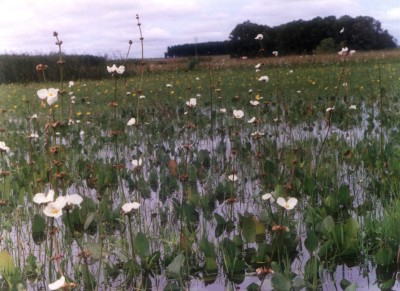




About the ecosystems of Cynolebias
Cynolebias are found only in temporal ponds, where they are almost the only kind of fish, actually.
Water characteristics of this seasonal environments are mainly determined by rainfall.
Connections between this places and main rivers or creeks are only downstream. Occasionally during flood periods circulating waters may reach them. This causes predators invasion and almost ever result in killies disappearance. So we can affirm that they will rather prefer conditions found there. Depth is not so much, around half a meter or even less. Surface of the water is always in movement since winds blow quite fast all year round in this part of the continent. So oxygen levels are always high, despite the lack of current. Transparency of the water is remarkable, great amounts of plants are often covering big portions avoiding algae growing caused by direct sunlight. This is important, and many people affirm that keeping this species outsidegive them much benefit.
We usually found cynolebias from March to October, along the cold season. Temperatures vary from a minimum of 5º C to a maximum of 18º C – 20º C in the late spring. Further than this most environments get dry or volumes of water allow bird predators to take count of remaining adults. Even most fish are not prepared to thrive under such conditions and die. In summer, the dry season in Uruguay, the lack of water makes this places almost empty at all, waiting for the rains to come while the eggs are incubating in the substrate.
Generally this consists of organic debris mixed with a fine lime. That’s what we call peat in terms of aquarium. Coconut fiber or even other vegetable debris boiled and treated are, besides used, because taking this soil to the aquarium or reduced recipients may cause water degradation. Live foods are always present in big quantities in ponds. Just from the beginning of the rainy season different kinds of crustaceans can be found, like artemia, gammarus, daphnia and many others, making this waters an ideal source of growing supplies for the youngsters. Large fish like Megalebias species and full grown Austrolebias tend to feed on smaller fish, tadpoles and tubifex worms. It is almost impossible to keep this fish in aquarium without a permanent supply of them. So those who take the challenge of developing populations of them in their installations would have to think about setting not only big tanks to host such grown up guys but also the complementary ones to hold the necessary diet of live food to keep
them happy. Water filtration is not so important at any point, and having the regular partial changes will make a corner filter, that breaks the surface while making the water flow gently, more than enough to keep it clear and healthy. Chemical data examined from many locations let us to establish the ideal parameters in a pH of 6.5 to 7.5, and a conductivity around 100 µS/cm2.
Total dissolved salts are always so little regarding the precipitation origin of the water.
Despite, some times we had found particular places where they raise conductivity up to the thousand, but of course this is an exception that only confirms the rule, and also the fact that this fish are hardy, as long as we respect their basic needs. Treat them well and they will recompense the breeder with the nicest sights that nature can accomplish.

Back to Cynolebias articles