This Page is dedicated to the Proper Hoof Care of all Equine !
And to all the
animals we can not reach maybe someone
will see this and help them too!
All the animals in these pictures have been purchased to remove them from the neglect. Most of the time it does not start out as abuse, but through lack of knowledge or understanding it becomes abuse. We fix what we can and have the vet do the rest. When they are back to good health we find them GOOD homes.
There are onelists out there for almost every type of animal, as well as other lists, with people who are only too happy to help out with information. If you have an animal like below and want to change there are plenty of us that would love to help you. We do not all want to just take them away. We are not here to judge, but to help.
These feet were very badly twisted. Donkeys feet seem to twist more than horses when not done regularly.
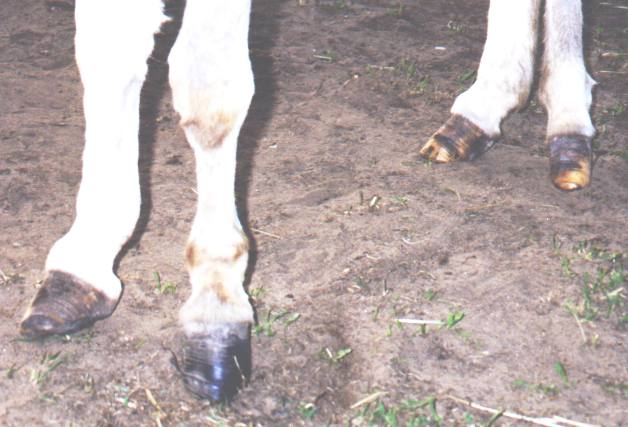
These feet are now all fixed and almost back to normal. Thankfully, the legs straighted out with the feet, as we GRADUALLY turned them around. We never do too much at one time, so we will not hurt them anymore than they already have been hurt. If you try to fix them too quickly you can damage the tendons and nerves permanently.
These feet were twice as long when we purchased her. The lady cut them off to this just before we picked her up. The blood vessels and nerve endings had to be growen out past where she cut. Try cutting off half your finger with no anesthesia.

These feet are close to normal now. It took longer for her, because she would not let us touch her feet at first. They were badly swollen and very painful. The lady said you needed to tie her up real tight to do her feet. She cut them off with a cattle clipper. We first had to gain her trust, before we could help her get her well. We now do her feet with one person holding her and talking quietly to her and the other doing the cutting and fileing. She stands real nice and quiet and if she should get upset we just reassure her until she quiets down. We are confident that she to will be 100% again real soon.
If you are thinking of getting an animal. Please! Check out all their proper care BEFORE you purchase the animal. Animals can feel pain and most abuse starts as neglect. If you purchase from a good breeder they will be more than happy to help you learn what you need to know about the animal before it comes to this.
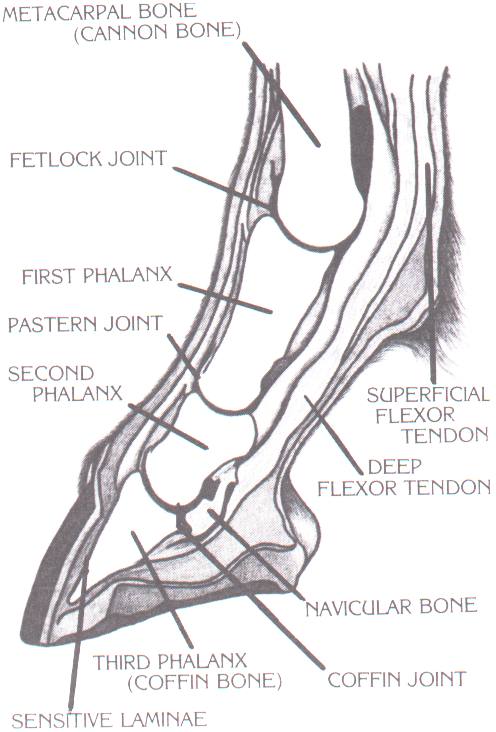
It took awhile to train the donkey to walk incorrectly, it will take time and patience to retrain the donkey to walk correctly. Do not get mad if the donkey is afraid or jumpy. All he knows is pain from the damage and you must show him there will be no pain. Gain his trust and you will have a friend for life.
| A donkeys hoof is slightly steeper and "boxier" than a horses hoof. The "frog"( the arrow shaped soft part at the back, bottom, center of the sole of the hoof) sets slightly higher in the hoof, probably due to the terrain as they developed over the centuries, tend to have tougher hooves, and need to be trimmed slighly different. The object in a horses hoof is to trim the heel down so the frog barely touches ground. Frog makes contact as a way of "pumping" the blood back up the leg. The rest of the foot is trimmed to level the angle of the hoof to match the angle of the pastern of the horse. Since the frog of the donkey is higher in the hoof, trimming the heels down that far will only cause callouses and corns on your donkeys heels. The hoof will still need to be trimmed to match the slope of the pastern but the heels will be left a little longer giving a "boxier" appearance to the hoof. A good farrier can figure it out with time, some have already done enough donkeys to know, but many have done none and will trim donkeys like a horse so it's best to talk to him now. |