Details
Hip
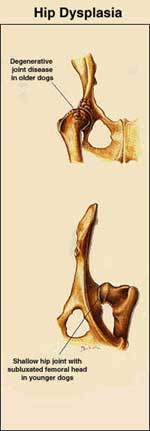
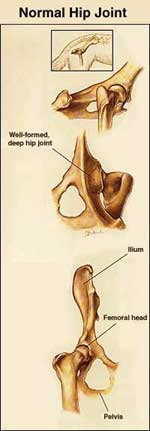
dysplasia is a condition in which abnormal formation of the hip joint results in
unstable hip joint. As the affected dog ages, the hips gradually become
arthritic and may degenerate to cause total crippling of the rear limbs. The
exact cause is unknown but it is believed to develop because the skeleton grows
faster than the supporting muscles. The imbalanced growth rate is influenced by
heredity and diet. Other unknown factors may influence the development and
severity of hip dysplasia. Not all dogs with hip dysplasia are affected to the
same degree. The disease can be very mild and cause no signs at all, or it may
be severe and crippling of the rear limbs. While the disease usually affects
both hips, occasionally it only affects one side. Hindleg lameness, a swaying or
staggering gait, "bunny-hopping" while running, discomfort on rising,
reluctance to climb stairs or stand on the rear legs, and reluctance to run or
jump are all signs of hip dysplasia. Though this disease is most common in large
breeds of dogs, it may occur in any breed.
|
|
|