Airmanship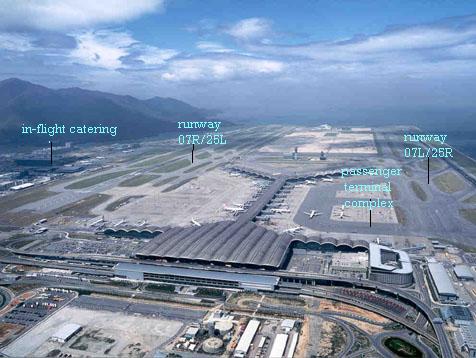 (airport
layout plan)
(airport
layout plan)
Introduction
There are two quite separate aspects of flying ; one is the use of the controls
to fly the aircraft, and the other is rather like road sense when cycling. Quite
apart form pushing the pedals and steering, it is doing the right thing at the
right time -- both for one's own safety and that of everyone else.
The pilot of an aircraft needs something very close to a 'road-sense' of the air
to help him fly safely, and this ability or sense, coupled with experience and
training, is called Airmanship. There are many things in Airmanship that a pilot
must think about if he is to fly safely in the crowded skies.
Taxying
Although taxiways are not as crowded as roads, pilots must keep a very good
look-out for obstructions
such as other aircraft,
workmen and station vehicles.
The aircraft brakes should be tested as soon as possible after starting to taxy,
whilst the speed is low. During taxying, the brake pressure (shown on a gauge in
the cockpit) should be checked frequently, and if it falls significantly the
aircraft should be stopped before the brakes lose their effectiveness. In
general, the amount of power used should be low (as brakes quickly overheat) and
the speed should be kept low to limit the stresses on the undercarriage,
especially when turning.
In tail-wheel aircraft where the centre of gravity (C of G) is behind the main
wheels, there is a tendency for a turn, once started, to tighten up. In nose
wheel aircraft where the C of G is ahead of the main wheels a natural
directional stability results and the turning force has to be maintained to
sustain the turn.
In large aircraft it is normal to post crew members in suitable positions, or to
use the ground crew as additional look-outs when turning in confined spaces. |f
the forward view is restricted by the nose of the aircraft (as in the Chipmunk)
the pilot has to taxy slowly, and yaw the aircraft from side to side to ensure
the way ahead is clear.
The runway used for taking-off and landing is normally the one into wind. Unless
on an operational 'scramble' the pilot stops the aircraft at the holding
position. The holding position is a white line across the taxiway, from which
the pilot has a good view of the runway, and the finals approach. Light aircraft
normally turn about 45 degree into wind, whilst large aircraft are stopped
heading along the taxiway.
at the holding position the pilot completes his 'vital actions' before take-off.
They are called 'vital' because they are checks which are essential to the
safety of the aircraft. Checks in large transport aircraft are normally done
from a printed lists, whilst a fighter pilot completes them from memory. wing to
the high fuel consumption and small fuel load of jet fighter aircraft, vital
actions are carried out whilst taxying to the holding position. Also at the
holding position is the runway controller's caravan. One of the runway
controller's functions is to scrutinize aircraft about to take-off and check for
loose panels, fuel or hydraulic leaks etc.

下一頁