 Principle of
Flight
Principle of
Flight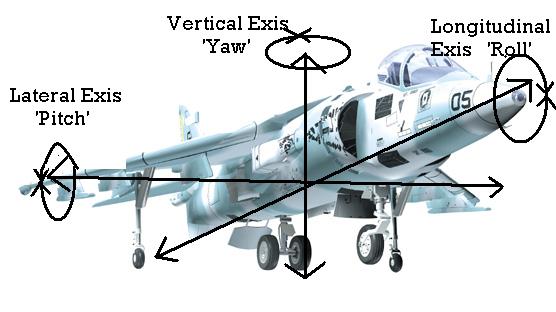
Lift ~~~
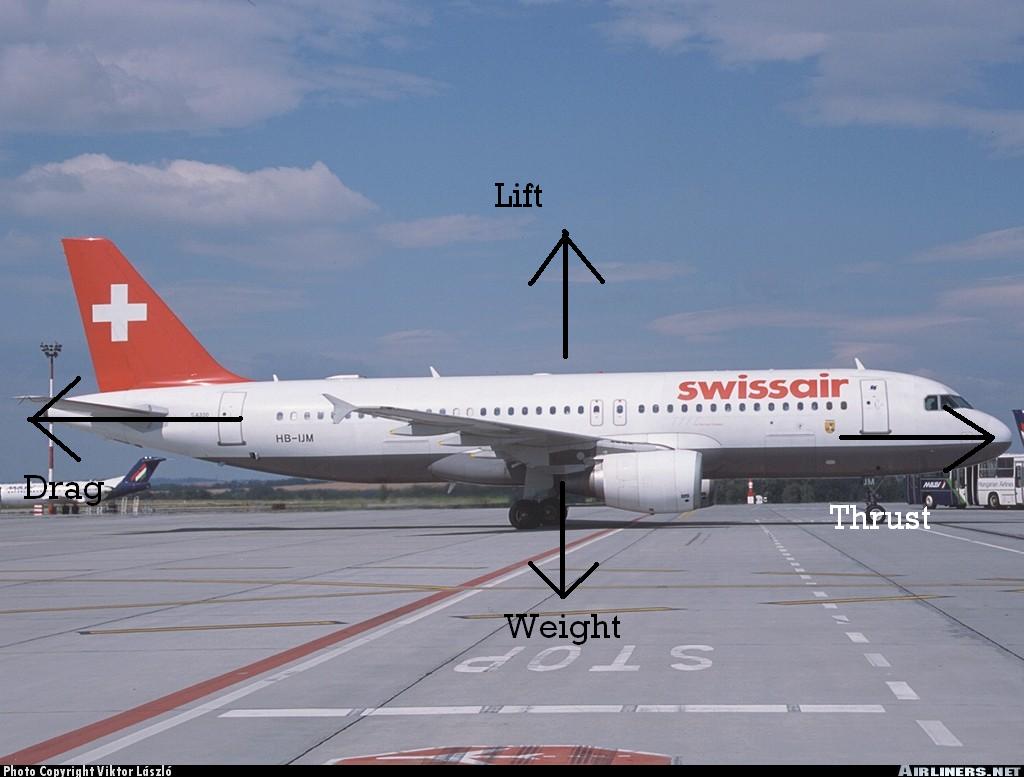
Lift is the force created by the interaction between the wings and the airflow.
It always act upwards. It is considered to be the 'most important force' as
without it, an aircraft cannot ascend from ground and maintain altitude.(不明白的話,請按上圖)
Weight ~~~
This force acts on an aircraft due to the interaction between the aircraft's
body weight and Earth's gravity. Weight is a downward force.(不明白的話,請按上圖)
Thrust ~~~
This force is created by an aircraft's engine and is required for forward
motion.(不明白的話,請按上圖)
Drag ~~~
This force acts in reverse direction to that of 'Thrust' and hinders forward
motion. Drag is considered as a negative force and all engineers try their best
to reduce drag.(不明白的話,請按上圖)
1.)In steady straight and
level flight at constant altitude and speed, the amount of the Lift acting on an
aircraft is equal to its Weight and its Thrust is equal to its Drag.
2.)The mechanism of flying
is based on the wing of aircraft, which is so shaped that the speed of air flows
over the top surface will be faster and therefore the pressure will be lower.
3.)Air around the lower
surface of the wing will experience higher pressure and slower speed than the
supper surface.
4.)Stalling is that when
the angle of attack increases beyond about 15 degrees the airflow becomes
turbulent and lift decreases rapidly and suddenly.
5.)Stalling can occur at
any attitude and it is the angle of attack that determines the occurrence of a
stall.
6.)The angle of attack is
the angle between the incoming air (or path of the aircraft) and chord line of
the wing.
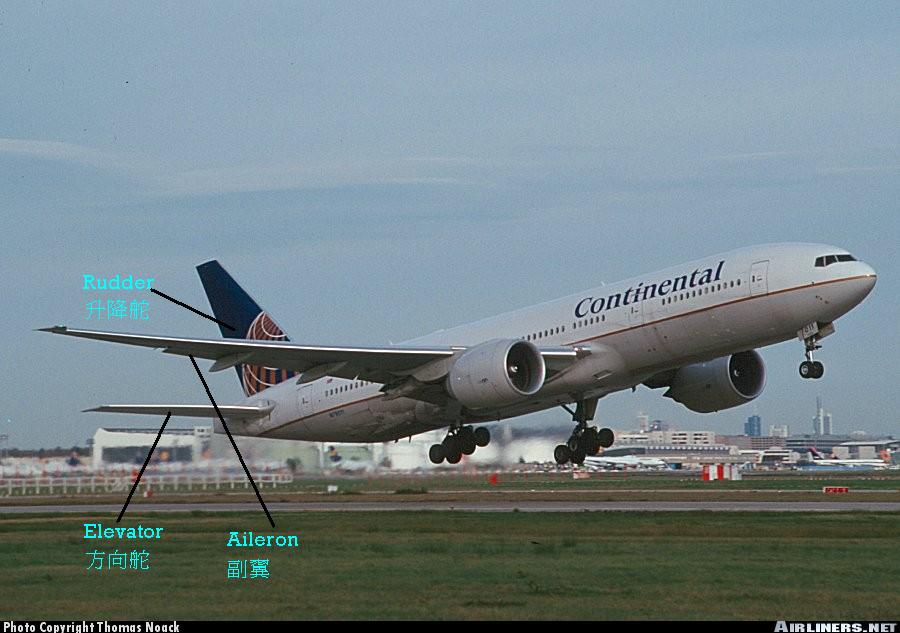
7.)The movement of an
aircraft in the rolling plane is about the Longitudinal axis, and is controlled
by ailerons.(控制飛機的部分)
8.)When the left aileron
move upwards, the right ailerons moves downwards and the aircraft roll to its
left.
9.)The movement of an
aircraft in the yawing plane is about the Vertical axis (or Normal axis), and is
controlled by rudder. (The axis of
rotation)
10.)When the rudder moves
to the left, the aircraft nose will move to the left.
11.)The movement of an
aircraft in the pitching plane is about the Lateral axis, and is controlled by
elevator.
12.)When the elevator moves
upwards the aircraft nose begins to move upwards.
13.)The feet of the pilot
control rudder and the hands control ailerons and elevator.
14.)When the flaps on an
aircraft are fully extended, lift will be increased and drag will also be
increased.
15.)The drags acting on an
aircraft are named as Form Drag, Skin Friction and Induced Drag.
16.)From drags and Skin
Friction increase with air speed.
17.)Induced Drag decreases
when air speed increase.
18.)Polishing all the
surfaces over which the airflow passes can reduce skin friction.
19.)Streamlined shape of
aircraft can reduce form drag.
20.)Flaps are hinged
surfaces which are fitted to the trailing edges of the wings ---- inboard of the
ailerons.
返回