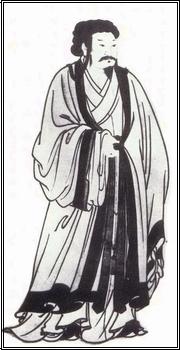
先帝創業未半而中道崩殂,今天下三分,益州疲弊,此誠危急存亡之秋也。然侍衛之臣不懈於內,忠志之士忘身於外者,蓋追先帝之殊遇,欲報之於陛下也。誠宜開張聖聽,以光先帝遺德,恢弘志士之氣,不宜妄自菲薄,引喻失義,以塞忠諫之路也。宮中府中,俱為一體,陟罰臧否,不宜異同。若有作姦犯科及為忠善者,宜付有司,論其刑賞,以昭陛下平明之理,不宜偏私,使內外異法也。侍中、侍郎郭攸之、費禕、董允等,此皆良實,志慮忠純,是以先帝簡拔以遺陛下。愚以為宮中之事,事無大小,悉以咨之,然後施行,必能裨補闕漏,有所廣益。將軍向寵,性行淑均,曉暢軍事,試用於昔日,先帝稱之曰能,是以眾議舉寵為督。愚以為營中之事,悉以咨之,必能使行陣和睦,優劣得所。親賢臣,遠小人,此先漢所以興隆也;親小人,遠賢臣,此後漢所以傾頹也。先帝在時,每與臣論此事,未嘗不歎息痛恨於桓、靈也。侍中、尚書、長史、參軍,此悉貞良死節之臣,願陛下親之信之,則漢室之隆,可計日而待也。
臣本布衣,躬耕於南陽,苟全性命於亂世,不求聞達於諸侯。先帝不以臣卑鄙,猥自枉屈,三顧臣於草廬之中,諮臣以當世之事,由是感激,遂許先帝以驅馳。後值傾覆,受任於敗軍之際,奉命於危難之間,爾來二十有一年矣。先帝知臣謹慎,故臨崩寄臣以大事也。受命以來,夙夜憂歎,恐託付不效,以傷先帝之明,故五月渡瀘,深入不毛。今南方已定,兵甲已足,當獎率三軍,北定中原,庶竭駑鈍,攘除姦凶,興復漢室,還于舊都。此臣所以報先帝,而忠陛下之職分也。
至於斟酌損益,進盡忠言,則攸之、禕、允之任也。願陛下託臣以討賊興復之效;不效,則治臣之罪,以告先帝之靈。若無興德之言,則責攸之、禕、允等之慢,以彰其咎。陛下亦宜自謀,以諮諏善道,察納雅言。深追先帝遺詔,臣不勝受恩感激。今當遠離,臨表涕零,不知所云。
(The English Version of "the first petition on taking the field") from English version of "Romance of three kingdoms"
The late Emperor had accomplished but half his great task at his death. At this moment the empire is in three parts, and our country is weak; it is a most critical moment for us. Still, ministers are not remiss in the capital, and loyal and devoted soldiers sacrifice their lives abroad, for they still remember the special kindness of the late Emperor and wish to show their gratitude to him by service to your Majesty. Therefore it would be indeed fitting that you should extend your holy virtue to glorify his virtuous memory in the stimulation of the will of your purposeful officers. Your Majesty should not lose yourself in the pursuit of mean things, quoting phrases to confound the eternal principles of rectitude and so preventing remonstrance from honest men. One rule applies to the palace of the Emperor and the residence of a courtier; there must be one law rewarding the good and punishing the evil. Evil-doers and law-breakers, as also true and good men, should be dealt with according to their deserts by the officers concerned in order to manifest Your Majesty's impartial and enlightened administration. Partiality is wrong, as is one law for the court and another for the provinces.
The high officers Kuo Yu-chih, Fei I and Tung Yun are honest men, devotedly anxious to be loyal to the last degree; wherefore His late Majesty chose them in his teatament. My advice is to consult them in all palace matters, great or small, before taking action. Your majesty will reap the enormous advantage of having any failings corrected.
General Hsiang Chung is a man of well-balanced temperament, versed in military
matters, to whom, after testing hom,the late Emperor applied the epithet 'capable'.
The concensus of opinion is that he should be Commander-in-chief. My advice
is to consult him in all military matters, great or small, whereby your military
forces will yield their maximum, each one being employed to the best advantage.
Attract worthy men, repel mean men. This policy achieved the glory of the Former
Hans, while its reversal ruined the Latter Hans. When the late Emperor was with
us he often discussed this with your servant, and he took much to heart the
story of Huan and Ling.
President Chen Chen and Historian Chiang Wan are both incorruptible and enlightened men, honest to the death. I would that Your Majesty should have them near and hold them in confidence. If this be done, then the glory of the House of Han will be quickly consummated.
I was originally a peivate person, a farmer in Nanyang, concerned only to secure
personal safety in a troubled age and not seeking conversation with the contending
nobles. His late Majesty, overlooking the commonness of my origin, condescended
to seek me thrice in my humble cot and consult me on the trend of events. His
magnanimity affected me deeply, and I concerned to do my utmost for him. Then
came defeat, and I took office at a moment of darkest outlook and at most difficult
crisis. This is twenty-one years ago. The late Emperor recognized my diligent
care, and when dying he confided the great task to me. From that day I have
lived a life of anxiety lest I should fail in my trust and so dim his glory.
That is why I undertook the expedition to the wastes beyond the Lu river. Now
the south has been quelled, and our army is in good condition. I ought to lead
it against the north, where I may meet with a measure of success in the removal
of the wicked ones, the restoration of Han and a return to the old capital.
This is my duty out of gratitude to the late Emperor and loyalty to Your Majesty.
As to a discussion of the pros and cons and giving a true version of the whole
matter, that belongs to Kuo and Chiang and Tung. I desire Your Majesty to cinfide
to me the task of slaying the rebels and restoring the Hans. If I fail, then
punish me by telling the spirit of the late Emperor. If you know not what restoration
implies that is the fault of your advisers.
Your Majesty should take pains to be guided into the right path and examine
carefully what is laid before you, carefully remembering the late Emperor's
testament.
I cannot express what would be my delight if you had the goodness to accept
and act on my advice.
Now I am about to depart on a distant expedition I write this with tears and
scarce know what I said.