Home>Possessed>My
thoughts on Fury by Salman Rushdie
 |
 |
 |
 |
|
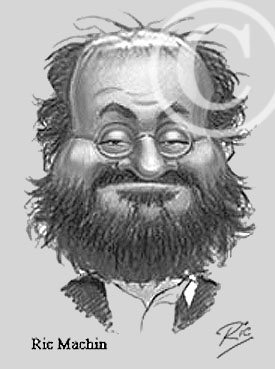
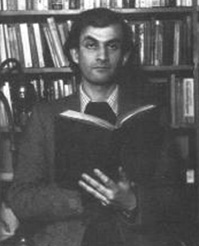
The son of a successful
Muslim businessman, Salman Rushdie was born in Mumbai (Bombay) and
educated in England at Rugby School and Cambridge University. After
working as an advertising copywriter in London, he achieved critical and
popular success in 1981 with his second novel, Midnight's Children,
which won the Booker Prize. A superb exercise in magic realism, this
allegorical fable of modern India combines verbal energy, narrative
drive, surreal invention and sparkling humour. It was awarded the
'Booker of Bookers' in 1997 and established Rushdie as one of the finest
writers on the literary stage.
Rushdie's next book,
Shame (1983), attacked contemporary politics in Pakistan, while his
fourth novel, The Satanic Verses (1988), describeds a cosmic battle
between good and evil, set in contemporary England and combining
fantasy, philosophy and farce. Regarded by many critics as Rushdie's
greatest book, it included an extended section that appeared to
denigrate the prophet Muhammad and the Islamic faith. This apparent
blasphemy caused outrage among Muslims, first in Britain and then
worldwide, with book-burnings and riots in many cities.
|
The outcry reached a
peak in 1989 when Iran's spiritual leader, Ayatollah Ruhollah
Khomeini, issued a fatwa (legal opinion) against Rushdie.
The fatwa had the
force of law in Islamic terms and decreed that Rushdie deserved to
die, having blasphemed against Islam. A large bounty was offered to
anyone who would execute him and the author was forced into hiding,
with full-time police protection, a condition that endured for many
years. The fatwa was not formally lifted until 1998.
Despite a situation
that might have come out of one of his own books, Rushdie continued
to write. In 1990, a book for children, Haroun and the Sea of
Stories, was published followed in 1995 by The Moor's Last Sigh,
which some critics considered to surpass the imaginative brilliance
even of Midnight's Children. This book was also not free from
controversy, since it attacked the corruption and violent politics
of his native city of Bombay.
In 1999 Rushdie
produced a novel about rock and roll, The Ground Beneath Her Feet,
and re-emerged into the public arena. |
(....Thanks to BBC
Online) |
|
 |
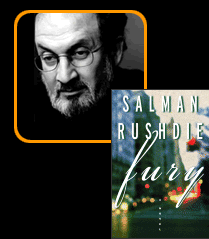
Fury - Salman
Rushdie (the anger never leaks out, does it...)
The future was a casino,
and everyone was gambling, and everyone expected to win.
(All paragraphs in
blue are original out of the book, nothing to do with me, and worse, could be an
infringement of copyright....am I the guilty one?)
From the book jacket :
"Life is fury.
Fury-sexual, Oedipal, political, magical, brutal -- drives us to our finest
heights and coarsest depths. This is what we are, what we civilize ourselves to
disguise the terrifying human animal in us, the exalted, transcendent,
self-destructive, untrammeled lord of creation. We raise each other to the
heights of joy. We tear each other limb from bloody limb."
Malik Solanka, historian
of ideas and dollmaker extraordinaire, steps out of his life one day, abandons
his family without a word of explanation, and flees London for New York. There's
a fury within him, and he fears he has become dangerous to those he loves. He
arrives in New York at a time of unprecedented plenty, in the highest hour of
America's wealth and power, seeking to "erase" himself. Eat me, America, he
prays, and give me peace.
But fury is all around
him. Cabdrivers spout invective. A serial killer is murdering women with a lump
of concrete. The petty spats and bone-deep resentments of the metropolis engulf
him. His own thoughts, emotions, and desires, meanwhile, are also running wild.
A tall, green-eyed young blonde in a D'Angelo Voodoo baseball cap is in store
for him. As is another woman, with whom he will fall in love and be drawn toward
a different fury, whose roots lie on the far side of the world.
Fury is a work of
explosive energy, at once a pitiless and pitch-black comedy, a profoundly
disturbing inquiry into the darkest side of human nature, and a love story of
mesmerizing force. It is also an astonishing portrait of New York. Not since the
Bombay of Midnight's Children have a time and place been so intensely and
accurately captured in a novel.
In his eighth novel,
Salman Rushdie brilliantly entwines moments of anger and frenzy with those of
humor, honesty, and intimacy. Fury is, above all, a masterly chronicle of the
human condition.
It does not harm confessing
that you have a hero, though I have been fiercely guilty of trying to deny
myself one. My problem is, the way I see it, having a hero is to consider one's
own self as inferior, and in some sense, offer blatant apologies for living, as
in, existing.
But the nearest I have come to
affording the luxury of a hero is Rushdie. Why? Well, I have no concrete reasons
to offer, because what is, is intangible, its art, and art cannot be broken down
into bits, bytes, and pieces.
What is the digital
equivalent of
lovely? he wondered. What are the digits that encode beauty, the number-fingers
that enclose, transform, transmit, decode, and somehow in that process, fail to
trap or choke the soul of it? Not because of the technology but inspite of it,
beauty, that ghost, that treasure, passes undiminished through the new machines.
(I know these oft and now blue
paras are quite disconcerting to most readers, but I wanted to create that
impression of complete uncontrolled chaos. There is infinite beauty of chaos,
you have to seek it)
The fun part of Rushdie begins
when you start reading between the lines. Its funny (more so especially from an
Indian diasporic view), its real and it reeks.
Life is a fury, he'd
thought. Fury-sexual, Oedipal, political, magical, brutal-drives us to our
finest heights and coarsest depths. Out of furia comes creation, inspiration,
originality, passion, but also violence, pain, pure unafraid destruction, the
giving and receiving of blows from which we never recover. The Furies pursue us;
Shiva dances his furious dance to create and to also destroy. But never mind
about the gods! Sara ranting at him representing the human spirit in its purest,
least socialized form. That is what we are, what we civilize ourselves to
disguise- the terrifying human animal in us, the exalted, transcendent,
self-destructive, untrammeled lord of creation. We raise each other to the
heights of joy. We tear each other limb from fucking limb.
My earliest connection with
'Fury' came in march when I read a news feed screaming a September release of
the book. Having read every single Rushdie work (and more so, cherished it), it
was quite a wait. It was in the ensuing months, that it became apparent, that
the literary world was canning the work. It was almost as if, they were building
an anti-climax for the 'Fury'. Almost every English gossip mill was on a Rushdie
bashing spree. Maybe, it was something to do with his deciding to move to New
York, or maybe.....
There were also talks, that
this would be the third cropper from Salman's stable in even time. (The moor's
last sigh, and, The ground beneath her feet, being the others).
Tempered by these early leaks,
I was a bit apprehensive, but, hell, no, it did not deter me from ordering the
book pre-release (or as they call it, pre-ordering, creative, isn't it). Do I
regret it?
Fury, as the extract above
says, is all about fury being one of our most dominant cornerstones of our
existence. More so, if we look beyond the premise, its easy to see, that Rushdie
is not really bothered about generalizations. He is narrating the story of
Mallik Solanka, and Solly's (thats Solanka) interactions with unbridled fury.
Of course, all of us like to
keep voicing that 'this' work of mine is biographical, 'that' work of mine is
also 'biographical' and so on. Finally it turns out every writer's work is
autobiographical and to an observer, this is so much like some freak
co-incidence. There is no such claim from the author here, but you can help
marvel at the similarities which Solly shares with Rushdie.
Solly is a mid-fifty-ish
professor, a Muslim, a confirmed atheist, married yet un-attached, an extremely
intelligent man, falls in love with this 20-something Indian (Padma...is that
you?), and is clearly opinionated in life....does all of this ring a bell?
The book begins with Indian
born Solly, moving out UK into New York. This action is forced upon him by his
own compulsions, the imperative accentuation of his own impending rage, rage
against the world, rage within himself, against oneself, if that is it. Solly in
a fit of rage is almost about to murder his wife and kid (in their sleep),
overcoming this desire to bludgeon, he abruptly leaves them all and moves into
Newyork.
The book's first para is a
caustic take-off on New York life. New York (I guess) must be an alive city,
like possibly Bombay or Tokyo, and the author's first paragrpah, does more than
justice to the same, it acknowledges the 'life' of the city.
Professor Malik Solanka,
retired historian of ideas, irascible dollmaker, and since his recent
fifty-fifth birthday celibate and solitary by his own (much criticized) choice,
in his silvered years found himself living in a golden age. Outside his window a
long, humid summer, the first hot season of the third millennium, baked and
perspired. The city boiled with money. Rents and property values had never been
higher, and in the garment industry it was widely held that fashion had never
been so fashionable. New restaurants opened every hour. Stores, dealerships,
galleries struggled to satisfy the skyrocketing demand for ever more recherché
produce: limited-edition olive oils, three-hundred-dollar corkscrews, customized
Humvees, the latest anti-virus software, escort services featuring
contortionists and twins, video installations, outsider art, featherlight shawls
made from the chin-fluff of extinct mountain goats. So many people were doing up
their apartments that supplies of high-grade fixtures and fittings were at a
premium. There were waiting lists for baths, doorknobs, imported hardwoods,
antiqued fireplaces, bidets, marble slabs. In spite of the recent falls in the
value of the Nasdaq index and the value of Amazon stock, the new technology had
the city by the ears: the talk was still of start-ups, IPOs, interactivity, the
unimaginable future that had just begun to begin. The future was a casino, and
everyone was gambling, and everyone expected to win.
(Ironically, it almost
seems as if, Rushdie saw 9-11 coming, esp in the way he predicts and depicts New
York as a time bomb, a cauldron waiting to overflow. Its not a dejavuish
feeling, its more oraclish.)
Solly is a rich professor,
thanks to his acclaimed puppet, Little Brain, a female puppet, which has spawned
a complete auxiliary industry around it. ( I could not get it out of my mind,
that this is Rushdie digging Rowling, its takes 'Little Brain' to figure out a
'Potter', right Harry?). Due to extensive commercialization, LilBrain has lost
almost all significance, and purport in the professor's life, save earning him
millions in royalty.
In its origin, the doll
was not a thing in itself but a representation. Long before the earliest rag
dolls and golliwogs, human beings had made dolls as portraits of particular
children and adults, too. It was always a mistake to let others possess the doll
of yourself; who owned your doll owned a crucial piece of you. The extreme
representation of this idea was of course the voodoo doll, the doll you could
stick pins in to hurt someone it represented, the doll whose neck you could
wring and kill a living being, at a distance, as effectively as a Muslim cook
deals with a chicken. Then came mass production, and the link between man and
doll was broken; dolls became themselves and clones of themselves. They became
reproductions, assembly-line versions, characterless, uniform. In the present
day, all that was changing again. Solanka's own bank balance owed everything to
the desire of modern people to own dolls not just with personality but
individuality. His dolls had tales to tell.
His escape to New York has no
higher purpose than to save himself the opprobrium of have to deal with rage in
the face of his own family. The escape is natural and controlled (its not
complete, throughout the book, he receives call and himself calls up his wife
and kid, Aasman). In his romance with a new city, Professor meets with a lot of
people. Three of them dominate the story line.
Mila Milo is a Serbian, who
dotes on the professor, for reasons beyond the invisible (useful phrase, thanks
Enigma). Its only through the progression of the book, does one figure out, that
its a mixture of commercial interest, a residue of some (maybe) past incest, and
Mila's sexual urge for the professor.
She has to talk,
Professor Solanka answered silently, because she thinks I think she fucked her
father, whereas in fact I know her father fucked her, this being an area of
inquiry in which I have done much fieldwork of my own. He fucked her everyday
like a goat -like a man-and, then he left her. And because se loved him as well
as loathing him, she has looked ever since for cover versions, imitations of
life. She is an expert in the ways of her age, this age of simulacra and
counterfeits, in which you can find any pleasure known to woman or man rendered
synthetic, made safe from disease or guilt - a lo-cal, lo-fi, brilliantly false
version of the akward world of real blood and guts. Phoney experience that feels
so good that you actually prefer it to the real thing. That was me; her fake.
Jack Rhinehart, a journalist
friend of Solly, who is the one who introduces him(Solly) to Neela Mahendra (or
Padma Lakshmi, for our ends...). Jack is unhappily married to a pain of a
female, who refuses to seperate from him at a reasonable cost. Jack finally gets
a divorce, loses Neela, and gets deeply involved with a group indulging in
sexual fetishes. Its the members of the group that end up murdering Jack, giving
him an untimely end.
Last, but not the least, Neela
Mahendra, an original from India, but never been there, for the past three
generations based in Lilliput-Blefuscu (get the joke...?). Neela is
caricatured to be do
beautiful that whenever she struts, most men, just lose sight of their own end,
blinded by her beauty and collapse into accidents. She is from
Lilliput-Blefuscu. (For the un-initiated, Gulliver visits the capitol of
Lilliput. His friend Reldresal tells him that the Belfuscu navy is about to
invade Lilliput. The Emperor wants Gulliver to help. Reldresal explains that the
war between the Lilliputians and the people of Blefuscu is about which end of an
egg should be broken before it is eaten.)
Solly finds some peace in
the arms of Neela, and she is his Fury's natural anti-dote. Its just that Neela
is fiercely involved in an ethinic struggle at Lilliput-Blefuscu, and that is an
end she is chasing, irrespective of what else dominates her life.
He should have known.
Solanka thought, pulling the pillow down more firmly over his face. What chance
did mortal man have against the devious malice of the gods? Here they were, the
three Furies, the "good-tempered-ones" themselves, in full possession of the
physical bodies of the women to whom his life was most profoundly joined.
The book oft and now speaks of
the original Greek Furies. In the end, Solanka, inspired by an end to his own
furies, travels to Blefuscu, in a last attempt to reclaim Neela, his 'Neela',
who would deliver him of(f) his furies. Blefuscu burdened by civil war, and a
dickhead (excuse my language) of a 'rebel' leader. The Blefuscu saga ends, with
the Professor and others flying away to safety, while Neela makes love to the
rebel dick, in the process distracting him, and finally getting blown to pieces,
by a bomb she herself places in the palace to do away with the monster. (The
ignominy of death...is this what they call it.)
Towards the end of the book,
the professor makes a bleak attempt to reclaim his only other dear possession,
his son. His wife is now married to a fart-of-a-man, who has begun be-friending
Aasman. His wife is cautious in letting Solly interact with his own son, for the
simple reason, she finds him completely collapsing as a human being, an internal
structural mishap.
Violent action is unclear
to most of those who get caught up in it. Experience is fragmentary; cause and
effect, why and how, are torn apart. Only sequence exists. First this and then
that. And afterwards, for those who survive, a lifetimes of trying to
understand.
The book ends on the kind of
sad, violent, melancholic note, with the Professor trying to get the attention
of his own son, a 100 metres away in an ice-cream shop. Its a jerky end, one
that breaks your heart, if you really want it to.
Like every other Rushdie book,
its not a novel, its not a story, its an experience. I shall cherish these
feelings, for the simple reason, the book has the power to force me to think, to
force me to laugh, to force me to feel, to force me to fly, and to force me to
cry.
At the end of it, I must answer
the question honestly, is it worth it? Its worth it, and maybe much more. Its
better than anything money can buy, go for it. On a cautionary note, its not in
the same comparable league as the Verses or Grimus (which strangely remains my
all time favorite, better than all his books...and the Matrix reminds me of the
Grimus....so similar is it not?).
The noise that emerged
from him was awful and immense, a roar from the Inferno, the cry of the
tormented and the lost. But grand and high was his bouncing; and he was damned
if he was trying to stop leaping or detest from yelling until that little boy
looked around, until he made Aasman Solanka hear him in spite of the enormous
woman and the gathering crowd and the mouthing mother, and the man holding the
boy's hands and above all the lack of a golden hat, until Aasman turned and saw
his father up there, his only true father flying against the sky, aasman, the
sky, conjuring up all his lost love, and hurling it high up into the sky, like a
white bird plucked into his sleeve. His only true father, taking flight
like a bird, to live in the great blue vault of the only heaven in which he had
ever been able to believe. "Look at me!", shrieked Professor Malik Solanka, his
leather coat-trails flapping like wings, "Look at me, Aasman! I am bouncing very
well ! I am bouncing higher and higher!!"
(whew!!)
November 15th 2001, Monday -
Amitabh Iyer