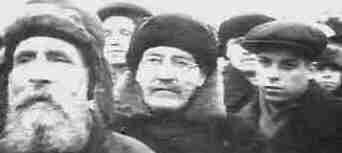
The Marxist-Leninist Gospel
Karl Marx (1818-83) preached that humankind had been conquered by a hateful system known as capitalism. But he held out great hope, predicting the coming of a new era that would free all people from economic and social injustice.
According to Marx's faulty vision, capitalist practices could only produce a heartless world where most people live in desperate poverty and overwhelming ignorance. In earlier times, humanity had suffered under outright slaveholders and feudal lords, but the rise of industrialism had formed a whole new class of dispossessed workers.
These workers were supposedly free to start their own businesses, but in practice the vast majority were so utterly without resources that they had to "sell themselves piecemeal" for poverty wages. For them, existence was little more than a grim struggle for survival. Though their work produced all the good things of life, it was only the capitalist bourgeoisie who truly profited from their labor.
Given the nature of their system, the capitalists had no choice but to exploit and abuse their workers, for the laws of competition favored the survival of the fittest, who always had the hardest hearts.
Even when the capitalists allowed more people to vote and national governments to become more "democratic," they kept all the real power to themselves. In Marxist terms, "the dictatorship of the bourgeoisie" controlled "the means of production" and the lives of whole nations.
As capitalism evolved, all smaller businesses would fail, leaving only the largest monopolies to control the international economy. Wealth and power would become ever more concentrated in the hands of the few — while the working masses would fall into greater and greater depths of misery.
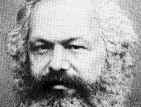
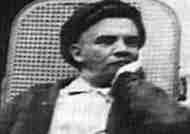
Karl Marx and Vladimir Ilich Lenin
Marx taught that this state of affairs could endure for only so long. Mere reforms in the system would never be enough to improve the living conditions of the people, not when the inevitable crises caused by capitalist practices were leading to deeper and deeper economic depressions and to steeper and steeper rates of unemployment. In the end the workers would stop turning the other cheek and rebel against their callous masters.
One last depression of truly catastrophic dimensions would cause untold social misery and lead to "the general crisis of capitalism." At that point the exploited and alienated masses ("the proletariat") would finally unite in an army of insurrection and fight shoulder to shoulder to make a revolution.
When this Armageddon broke out, the workers would rise up and overthrow the evil social order of the capitalists, and upon the ruins of the doomed system they would build a system of communal ownership based on true justice: "From each according to his abilities, to each according to his needs."
This tremendous revolution would begin in the most industrially advanced nations — like Great Britain, France, Germany, and the United States. Eventually communist fervor would topple old regimes right round the globe, and people all over the world, uniting against their oppressors, would win themselves a glorious future: "The laboring masses of all countries will throw off the yoke of capitalism."
For the first time in history, Marx confidently predicted, humanity would breathe free. After all the centuries of its existence, humanity would finally have liberated itself from oppression. True civilization — communist civilization — would bloom at last, and humankind would reach heights unimaginable under the old order.
A stirring vision! But one that failed to come true. In fact, the first communist revolution did not occur in an industrially advanced country. Instead, it was in semi-feudal, semi-capitalist Russia — in the empire of the czars — that an established state was first overthrown in the name of Marx.
The defeat of Russian forces in World War I by the Central Powers, mainly Germany, had led to the fall of Czar Nicholas II and his court, but Vladimir Ilich Lenin (1870-1924) dictated the nature and policies of the new revolutionary state.
Lenin gave Marxism a new spin by explaining why backward Russia was the first to throw off the chains of capitalism. Marx’s original prophecies had not been fulfilled, Lenin held, because the capitalists of western Europe and America had gone out to conquer the world.
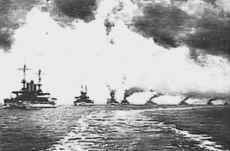
America's "Great White Fleet," 1908
That is, they fought wars of imperialist aggression against distant peoples in order to acquire colonial possessions. Such possessions were vital, since only they could provide enough raw materials and cheap labor to give the capitalist system a new lease on life.
Britain, for example, had taken control of lands like Kenya, South Africa, India, and Burma, while France ruled Morocco, Algeria, West Africa, and Indochina.
Lenin predicted that the capitalist, imperialist nations would eventually inflict mortal wounds on each other while fighting over the undeveloped world’s dwindling reservoir of spoils.
Also contributing to the demise of capitalism would be the increasing resistance of oppressed peoples within the colonies themselves. Their example, Lenin wrote, would have a liberating effect upon workers in the capitalist nations, who would finally be inspired to rise up against their masters and make the proletarian revolution.
Thus imperialism was "the last and highest" expression of capitalism. International socialism was still to come, but it would triumph only after a truly earthshaking war put an end to the worldwide bourgeois ascendancy.
Of course Lenin was overwhelmed with excitement over the outbreak of World War I in 1914. Here was the very apocalypse that he had predicted, and it was occurring even sooner than he had dared to hope!
© 1998 by Larry Hedrick. All rights reserved.
Return to Contents Page for The Marxists Were Coming