No Trump over a Minor
If experienced players lean strongly though not invariably toward an 8-card (or better) major over no trump, they reverse direction abruptly when the choice is between a minor and no trump. Just for that one extra trick it would take for a minor suit game as opposed to a major? Yes, most certainly, just for that one-trick difference, which indeed becomes a two-trick difference when the comparison is made to a no trump game. You might be surprised at how often the cards will yield nine tricks but not eleven on a powerful minor -- both on balanced fits and on long suits -- just so that you have some expectation that every suit is stopped.
This expectation of having every suit stopped might take the form of simple balance and point count, as in one no, pass, three no, where you could both have a low doubleton in, say, a major, a risk we accept for all the times it doesn't happen. Or it might take the form of cuebidding stoppers after a minor suit fit is discovered. And sometimes, even aside from the one no, three no sequence, you just hafta feel the strength is there and the balance to offer game even if you can't determine every suit.
However, a few caveats are in order before I embark on hands illustrating what no trump can do for you even with a good minor suit. For one thing, it isn't just unstopped suits that are a danger. Lightly guarded suits, particularly one bid by at least one opponent, almost assuring you of that suit as an opening lead, can often prove inadequate. Ace-low in the opponents' suit is an awfully skimpy stopper unless you think you can run nine tricks off the top.
People with unbalanced hands should give their partners as much warning as they can that their hand isn't really suited for no trump, that they have a second biddable suit, or their first suit is longer than heretofore conveyed. There is one bid in particular that I'd like the point out, and that is the rebid of a minor at the three level over two no. I can't tell you how many times I've seen people treat that bid as a relay to three no. Their thinking seems to be, "Well, we're at the three level, and I've already said I like no trump, so I guess three no is called for." But there is no point in making that a relay to three no, which serves no function (why not just bid 3 no direct if that's what the bid means?). The rebid of the minor should mean something else, and what it should mean is, "I heard your no trump partner, but my hand isn't really suited to no trump." The rebid of a trump suit at the three level is no stronger than a pass.
In Don't Sneer at the Minors, I have given a hand where 26 pairs (out of 84 or so) bid three no on a 5-5 club suit where the original no trump bidder had a small doubleton in diamonds and his partner a singleton! I said there that there are strategies to avoid such a fiasco, and one of them is for the opening one club bidder (which could represent a balanced 4-4-3-2 hand but doesn't) to bid 3 clubs over the jump to two no. This would both give an idea of the length of the club suit and offer a warning that this partner isn't all that enamored of three no, or why not bid it himself.
The two no trumper can now take into account the value of a 5-5 club suit, looking at two low diamonds, or, having already denied a four-card major, start cue bidding his stoppers until it becomes apparent that diamonds simply are not stopped.
These are only warnings against getting too enamored of no trump over a minor and a reminder that any principle has its limitations. But with these caveats aside, it's time to move on to the positive value of giving strong consideration to a no trump game even on a good minor suit.
|
 A 3 A 3 |
|
 J 6 5 J 6 5 |
|
 A K J 2 A K J 2 |
|
 K J 10 3 K J 10 3 |
| 8 4 |
|
10 9 7 6 2 |
| 10 8 7 4 2 |
|
K 9 4 |
| ------ |
|
Q 10 4 3 |
| A 9 8 5 4 2 |
|
7 |
|
K Q J 5 |
|
|
A Q |
|
|
9 8 7 6 5 |
|
|
Q 6 |
|
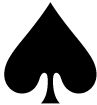
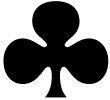
This one comes from the Bicentennial Bridge Match in Philadelphia between a British and an American team. Curiously, both teams failed to smoke out the no trump game, landing in an unmakable 5-diamond contract. It's also curious that, where the 9-trick game is the primary attraction of no trump games vs. 11 for a minor, here 11 tricks are available in no trump but not in the 9-card diamond fit! It's a freak, of course, but it's there and I didn't make up the hand. This actually brings up a second reason why no trump works out better, namely that when your flagship suit doesn't work out, you can often abandon the suit and find enough winners elsewhere. But when you name a suit trump, abandon it you don't, or not for long anyway. I will address this again in No Trump Slams.
|
J |
|
10 9 8 |
|
Q 5 |
|
A K Q J 7 5 4 |
|
|
|
|
|
|
|
Q 10 5 |
|
A J 8 4 |
|
A 9 7 3 |
|
9 2 |
Despite the skimpiest of stoppers in spades and a solid seven-card club suit, the hand will play better in no trump than in clubs. For three no cannot be defeated by any lie of the outstanding cards. Indeed, with a solid 7-card suit like that, instead of thinking it must be trump, you should be thinking you need only two other winners and reasonable assurance you have all other suits stopped.
Can't game be made in clubs? Well, yes, if the opening leader has the king of diamonds or lacking the king, doesn't lead diamonds and both heart honors aren't sitting behind the ace, then I guess it could be. But compare those qualifications with the flat assertion that nothing can beat three no, and that contract becomes far more attractive.