 |
| Dracula Culture |
|
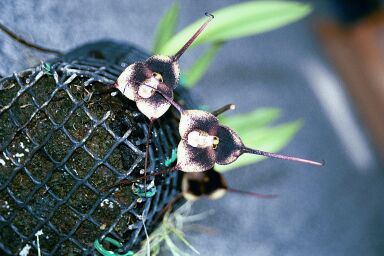
The genus of Dracula belongs to the sub tribe Pleurothallidinae, of the Orchidaceae family. This genus is relatively new, only being created by Dr Carlyl Luer in 1978. This new genus removed certain species from the Masdevallia genus. Draculas are quite similar to masdevallias, but differ from them in certain aspects of their leaf & flower structure. The earliest draculas were reported to have been found by plant hunters in the early 1870s, & new discoveries are still being made today in the cloud forests of Colombia, Ecuador and Peru. There are over 100 documented species. Dracula’s were so named because of the ‘little dragon’ appearance of the flowers, although many see the resemblance of a small monkey face in some of them, & their love of the shady & humid forests. Their colouring ranges from almost white through to near black, with a seemingly endless array of colours, shading & spotting in between. LIGHT These plants like to be quite heavily shaded, particularly during the hottest part of the year. If they are exposed to bright sun light the leave will burn easily & flowers will wilt with in a very short period of time. TEMPERATURE Temperatures that range from about 5oC minimum to a maximum of around 26oC seem to work best for good growth & flowering, although a higher minimum will certainly benefit the plant all round. WATER Draculas don’t like to dry out at all, & should be kept damp. During the hotter months water at least daily, & a mist system is quite important to help keep up plant moisture & the humidity level high. A humidity level around the plants in warm weather of about 90% is ideal. If the plant dries out or is even moved into a dry atmosphere, the flowers will wilt & collapse, sometimes within 15 – 20 minutes, depending on the species. The leaves should be relatively dry by nightfall to help prevent botrytis setting in. During the cooler months watch that the plants do not become water logged, as this will allow the roots to rot. AIR MOVEMENT Continual air movement is required to keep these orchids happy, lack of air movement allows rots to set in due to high humidity, & flowers can wilt prematurely. FERTILISER A very weak nitrogen fertiliser applied every third or fourth watering after flowering for about 6 to 8 weeks is beneficial to growth, switch to a Phostrogen type feed again every third or fourth watering. Feeding of any sort can be cut right back for the winter months. POTTING As these orchids like to send their flower spikes down through the media, they are best potted into mesh baskets with a 12mm square hole size. I line the basket with fresh sphagnum moss & use fine pine bark to plant the dracula into. The moss maintains the moisture while the bark allows for free drainage & easy exit for the flower spikes when they appear. I only repot when the plant has completely outgrown the basket. A basket diameter of about 100mm seems to be best in allowing a lot of growth as will as all the flowers to reach the outside. |
 |