|
|
Bangkok
map
of
bangkok
see my pictures in bangkok
Love it
or hate it, buzzing, sweaty, exotic Bangkok is a city that really is larger than
life. For some, the frenetic pace, heat, traffic and lack of personal space can
be overpowering and good reasons to pass through the city as quickly as
possible, but for many others, the sheer dynamism is intoxicating.
A curious blend of the traditional East with the modern
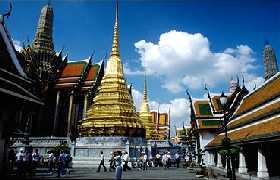
West, every street in Bangkok holds a surprise. Ramshackle buildings crouch next
to exotic temples surrounded by delightful gardens, which are in turn overlooked
by modern hotels and offices. Bangkok has emerged as a major world city with the
traffic jams to match, as well as the all-pervasive mobile phones and designer
clothes a prominent feature on the streets. The chaos on the roads is mirrored
by the busy traffic on the Chao Phraya River, which dissects the city and is
regularly crisscrossed by long-tailed boats, river taxis and small rowing boats,
all miraculously missing each other.
But traditional Thai life is never very far away.
Weaving among the nose-to-tail traffic in the morning rush hour, saffron-robed
monks can still be seen collecting alms, while just moments from the city centre
whole communities live in stilt houses by the river, eking out a living using
skills that have not changed in centuries.
Bangkok became the capital of what was then Siam in
1782, following the destruction of the previous capital, Ayutthaya. Bangkok is
not the name used by the Thais - they call it Krung Thep, which is actually a
very shortened version of its full title. The absolute rule of the monarchy
ended in 1932 when it was replaced by a system of constitutional monarchy. To
this day, the monarchy is regarded with almost religious reverence and it is an
offence, punishable by imprisonment, to insult the royal family. His Majesty
King Bhumibol is the longest reigning monarch in the world, having come to power
in 1946. Following the end of absolute monarchy, Thailand moved towards
democracy but this has been thwarted by the military, which has often staged
coups in protest at government policies. The role of the military in domestic
politics has now been curtailed but the 1990s saw governments come and go
although there has been some stability since the government took on the job of
tackling the economic crisis.
Thailand is staunchly anti-Communist, as seen during the
Vietnam War when it was a strategic ally for the USA. Latterly, it has softened
its stance and relations have improved with its Communist neighbours who have
now become members of the Association of South East Asian Nations (ASEAN), of
which Thailand is an influential member. Thailand's main industries are tourism,
textiles and electronics. Despite over half of Thai citizens working in
agriculture, the industry only accounts for 15% of the GDP, although Thailand is
still the world's largest exporter of rice. The difference in growth between
industry and agriculture during the past few decades has resulted in enormous
inequality between the city and countryside.
Thailand is a tropical country so it is hot throughout
the year, but the best time to visit is between November and March, during the
dry season. During the rainy season, humidity is very high and the downpours are
short but violent and the streets of Bangkok often flood.