Unfounded fears
As I grew older and more experienced, I realized that the ability to distinguish between real and apparent dangers is fundamental to good judgment, and people who don’t possess it are seriously handicapped. They dwell in a state of incipient catastrophe, thinking only of what can go wrong and trying to war it off before it occurs. They aren’t masters of reality, although they like to think they are; they’re masters of unreality because they let their fears, which are figments of an untrustworthy imagination, govern their lives. It’s as if they never break through a secret barrier that separates the timorous from the self-assured.
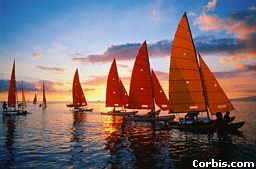
We live in a world that is so chaotic that we have come to believe only a machine with electronic circuits can cope with the variable. We build mathematical models and we stuff them into those machines so they call us what we think we want to know. We ask the machines to answer ultimate “what if” questions: What if interest rates climb through the roof? What if the sun falls out of the sky? And the machines tell us and we use the answers to turn a knob here or throw a witch there. But there’s a major flaw in this approach, apart from the fact that it works only some of the time, and it’s that we have become so busy preventing the future that there’s never a now. It may well be, as I think about it, that the prime virtue of my blue sloop was that it compelled me to live in the present and to avoid too much unhealthy speculation about what might happen at some indefinite point ahead which I couldn’t plainly see. For the truth is that I already know as much about my fate as I need to know. The day will come when I will die. So the only matter of consequence before me is what I will do with my allotted time: I can remain on shore, paralyzed with fear, or I can raise my sails and dip and soar in the breeze.