 Personal Story...
|
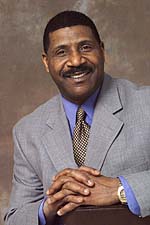
African Americans and Organ Donation: A Personal Story by William Minniefield My name is William Minniefield and I am an African American whose family has been touched by end stage renal disease (ESRD). Some years ago my brother died while waiting for a kidney. My brother’s name was Ronald and he was one year younger than I. He was diagnosed at an early age with high blood pressure that eventually caused kidney damage, requiring a transplant. Ronald had also developed an enlarged heart, a complication associated with long-term dialysis that led to cardiac arrest. When Ronald died he left a wife and two very young children behind. His birthday was August 8th, and mine is August 6th. Seeing his children, my niece and nephew, at family gatherings is a painful reminder that my brother is gone. On my birthday I’m reminded even more so that he is gone, and how much I miss him. On the day of his funeral I put a small jar of red dirt (we are from Atlanta, GA) in his coffin and a note in his suit pocket letting him know that we will always be with him. During the first few months after his death I visited his grave two or three times a week and on his birthday for the next three years. Ronald was on dialysis for five years before his death and those were not good years for him. He was plagued with constant infections and was in a lot of pain. I remember too clearly taking him to some of his dialysis appointments and watching him struggle and feeling so helpless. Near the end of his life I would carry him to his wheel chair and put him in the car. The saddest part of all is, did he need to die. |
 |
As fate would have it, I now have an older brother, Curtis, who has been on dialysis for four years. Curtis developed diabetes in 1990 that lead to his end stage renal disease. In 1996 his doctor told him that it was time to go on dialysis. Curtis must go on dialysis three times a week, for four hours each time. Eleven months ago Curtis was placed on the national transplant waiting list, but my family and I wonder if there will be a kidney available for him. We pray that he won’t have to endure what Ronald did. My family and I have had a rude awakening about how African Americans are affected by renal disease and the difference in treatment that we receive. We learned first hand that the color of a person’s skin can drastically affect the way he or she is treated and the quality of treatment they receive. We have learned that there is little equality or respect for African American within this health care system.
My family has always believed in and supported organ donation. Two years ago my niece, Dee Dee, died two weeks before her fourth birthday from cancer. Even with all the grief her mother was enduring she did not hesitate to donate Dee Dee’s corneas to the tissue bank. Three weeks later she received a letter informing her that two children had received Dee Dee’s corneas. This is the type of unselfish act that we must practice so others may live or have a better quality of life. African Americans must educate themselves concerning organ donation and learn how this disease affects us. We must also learn how to live and eat better to minimize our chances of developing diabetes and hypertension.
This experience with my family, the health care system, and working with African Americans as well as other minority dialysis patients opened my eyes as to where I need to apply myself. There is more to treating patients than just medication. Education must become a large part of the total package for preventing and minimizing diabetes and hypertension. Why must we wait until after the fact? Please think about becoming an organ donor because this story could be about your family.
There are many barriers to African Americans and other minorities’ participation in organ donor programs. Because of the lack of participation hundreds and even thousands of African Americans as well as other minorities die every year while waiting for transplants. Due to high rates and prevalence of hypertension and diabetes, African Americans require organ transplants in higher numbers than members of other ethnic groups in the United States. The shortage of organs donated by African Americans contributes to the longer wait for transplants for African Americans. The longer the wait, the greater the risk of death. Due to the genetic make-up of African Americans, there is a lower chance of organ rejection if the organ is from another African American.
African Americans have a significantly elevated prevalence of diabetes and hypertension. These two diseases put African Americans at a higher risk of developing end stage renal disease that will require kidney dialysis and eventually a kidney transplant in order to stay alive. For this reason it is important for African Americans as well as other minority groups such as Native Americans and Latinos to have a heightened awareness of the risk factors for developing these two diseases and to follow through on regular doctor visits. These visits should include regular blood sugar and blood pressure monitoring.
The leading cause of end stage renal disease in African Americans is high blood pressure. In the general US population, diabetes is the number one cause of end stage renal disease and high blood pressure is the second leading cause. African Americans develop high blood pressure two to three times more often than the white population and the complications are much more severe for African Americans.
The association between end stage kidney disease and high blood pressure is eight times higher for African Americans than for Whites. This disorder has higher rates within the African American population within the age groups of 35 to 50. Many African Americans who have been made aware that they have high blood pressure may not be aware that this can lead to related kidney problems. The second leading cause of end stage renal disease for African Americans is diabetes. Diabetes is now the fifth leading cause of death for African Americans between 45 and 60 years of age and is now the third leading cause of death for African Americans who are 65 years of age and older.
Recent Research Findings
The disparity between African Americans and Whites in the United States pertaining to organ donation is of great concern. Considering the great demand of organs by African Americans, we wanted to get a general attitude concerning the subject of organ donation from a sample of African Americans. We wanted to identify some factors that prevent African Americans from participating in the organ donor process.
As of September 30, 2000 there are 71,930 patients waiting for an organ transplant of some type listed on the National Transplant Waiting List. Of that total number there are 46,521 patients waiting for kidneys alone. Of that 46,521 patients 19,737 are African Americans. Given the fact that African Americans only comprise 12 percent of the total United States population, this a national problem that must be addressed by African American health professionals, health care providers and community groups. The most affected age group is between 18-49 years of age. This suggests that end stage renal disease has an earlier onset for African Americans.
Data from the United Network of Organ Sharing (UNOS) for the year 1998 showed a substantial difference in the donor rates by African Americans and Whites in the United States. The number of cadaveric organs donated by Whites was 4,071 and 583 by African Americans. Living organ donors for that same year were 2,372 for Whites and 391 for African Americans. The fact that all organs recovered are not useable affects the number of actual transplants that take place. The number of African Americans who received kidney transplants in 1999 was 2,835 compared to that of Whites who received 7,600 transplants.
One Solution
In response to the needs of the Buffalo and Western New York area the “Minority Organ Donation Education Program” was developed to address the lack of information and education available to the minority populations concerning organ donation. There are agencies that have failed and continue to fail to educate minority communities concerning this important issue. The overall goal of MODEP is to serve minority communities by educating minorities concerning organ donation and other health issues that affect their quality of life. MODEP was developed by minorities to educate minorities. This was due to cultural barriers and practices that non-minorities have great difficulty understanding. Lectures, presentations, and workshops are given by MODEP. MODEP will work in collaboration with are churches (health ministries), educational institutions and community organizations addressing this and other health issues.