
You are making serious changes to your car, if not done properly, you can do a large amount of damage to your vehicle and render it undriveable or unsafe to operate. If you do decide to install your own remote engine starter, it is recommended that you start this project during a vacation or extended weekend when you will have a couple consecutive days to work on your vehicle.
The alarm I purchased has no brandname printed on it but is made by the same company that makes crimestopper, delta, and a couple other brands. The main logic chipset of the alarm is designed around the popular MicroChip KEELOQ Security IC.
Suppliers of intrest:
Individual sellers on www.ebay.com in the "Consumer Electronics:Car Audio & Electronics:Car Alarms" section. Many of the sellers are really businesses and use ebay solely as an advertising medium. For example running a dutch auction with a quantity of 55 new alarms forsale when the seller only resonably expects to sell 5 units. Such sellers often have feedback in excess of 1000 positive comments as well. If you choose this route do be aware that there are many used alarms forsale on ebay. Because of the amount of effort involved to install a remote car starter, it is recommended that you acquire a new unused alarm not a used one that has been previously removed from a customers vehicle.
www.autotoys.com has a very wide selection of alarms and alarm accessories, decent prices, good reputation, and company represenatives participate in the usenet group rec.audio.car from time to time.
www.partsexpress.com an electronics supplier, also sells car alarms, car amplifier wiring accessories, and has a good selection of items to build car subwoofer boxes. Excellent price on SPDT 30AMP 12volt relays & sockets (.i.e. around $2.50 for a 30AMP SPDT relay with socket).
www.mcmelectronics.com an electronics supplier sells SPDT 30AMP 12volt relays & sockets at a similar price as partsexpress.
Ford now offers a dealer installed remote start system, it's not a modular plugin, the installer still needs to splice into the vehicle's electrical harness to complete the install. Like the rest of the dealer installed alarms, the remote engine starter/alarm is manufactured by CodeAlarm and comes with a lifetime parts warranty valid at any ford dealer. Ford OEM remote start/alarm systems come in three levels (bronze, silver, and gold) with the top of the line gold system costing around $600 installed.
Positive door trigger -> in civilian models, can grab off of one of the underdash interior lights that comes on when the door is opened. Many police cars do not have these lights, I spliced into the BK/LB lead on the LCM plug, could also tap the lead that runs up to the headliner mounted domelight.
Domelight supervision -> Can emulate one of the doors being opened by grounding the dark blue wire (drivers door switch) or BK/O wire (front passenger & both rear door switches) on the LCM. Another method is to splice into the BK/LB domelight lead at the back of the LCM.
Alternatively on interceptors equipped with the police ticket writing light, run a new wire from your alarm control box/relay area up to the ticket writing light, splice the wire in after the switch but before the lightbulb socket. Ticket writing light uses a switched ground and draws a large enough amount of current that use of a relay is recommended.
At first I was using the demand output as the sole positive power source for the domelight supervision of the police ticket writing light. Then started to have weird problems because of the battery saver feature of the LCM engaging. For instance, if the car had not been run in an hour, the police light would not come when the unlock button on the remote was pressed, but open the trunk and press the unlock button, and the police ticket writing light would come on for 30 seconds and shut off like it should when the ignition is turned to the on position.
Am going to solve problem by using a relay to selectively break the circuit that wires the LCM demand lighting output to the police light, and apply 12volts to police light LG/OG when domelight supervision is requested by alarm. Will accomplish this by cutting the LG/OG wire that runs to the light, will splice SPDT relay in and wire the common lead in to the side of the wire that runs to the light, normally closed terminal to the side that runs to the LCM, normally open terminal to a 12volt constant live wire. Relay field coil will be controlled by the alarm domelight supervision output.
Starter kill -> cut the W/PK located at the ignition switch, splice in your starter kill relay here. If installing a remote start setup, apply power to the dash harness side of the wire when you want to crank the engine.
Hood switch -> police models have a light that turns on when hood is opened, this is accomplished by using a mercury switch to determine when hood is open or not. For accuracy's sake, install an aftermarket pin switch if you want your alarm to be able to sense when the hood is open. Can skip hood switch install, but if you want remote start setup installed, a hood pin switch is highly recommended so the car will not accidentally remote start during engine service (hood open).
Trunk switch -> Trunk switch is positive trigger, easiest place to tap off of appears to be the PK/BK wire located at trunklid light
Without keyless entry (i.e. interceptors and base model vics) -> Reverse polarity, ground at rest setup. Lock actuator solenoids are wired in series through the drivers and passengers power lock switches. Both terminals of the lock actuators are grounded at rest, when switch is pressed to lock doors, a positive 12volts is applied to one wire of the lock acuator, the other wire is held at ground. Reversing polarity on the lock acuator (swapping which terminal is grounded and which one is hot) will unlock the door instead of lock it. The PK/Y and PK/LG wires that run from the drivers door to the lock acuators can be tapped at a number of places including, behind the drivers kickpanel, behind the glovebox, and behind the passengers kickpanel (careful of the airbag crash module if you choose this location). If the alarm you choose does not have onboard door lock relays, you'll need two 30AMP relays to interface your alarm with the power door locks.
With keyless entry (i.e. crown vic LX with keyless entry keypad on drivers door) -> Positive trigger. Apply 12 volts to the PK/Y wire when you want the door to lock, and apply 12volts to the PK/LG when you want the door to unlock. Negligible current draw, but unless your alarm has positive trigger outputs for the door locks, you will still need two relays for the negative trigger alarm lock/unlock outputs. Can grab wires at similar places as the nonkeyless entry vics mentioned in previous paragraph.
Spark plug sense -> 1998 and later crown vics do not have a dedicated tach output signal, can use one of the pcm leads to the COP assemblies on 98's but they may be too noisy for some older remote starts. Using voltage sense as the sole method of determining when the car is running sounds good in theory. alternator does not generate any power when car is not running, and battery voltage will jump up when car is running. but using voltage sense is troublesome when actually implemented as sole method of monitoring when car is running and when it is not. alternatively you can use a vacuum switch instead. For 97's and prior, run a new lead from pin48 on the PCM to your alarm tach input.
Grinding the teeth off the flywheel and cracking the starter is not a concern with most modern remote start setups because they will shut the car off for a good period of time in between each start attempt. If you opt for smart sense tachless mode like I did, do be aware that you do not have any protection from overrevving the engine except for the rev limiter built into the PCM. Not sure how much good a rev limiter built into the remote start alarm would do anyways, because most of the alarms are designed with a 4 cylinder engine in mind and all vics made since 1992 have 8 cylinder engines.
BK/LG lead is hot in either run or accessory key positions, power windows, radio and wiper motor get power from this circuit. I do not have this circuit live during remote starting. Can burn out wiper motor if the wipers are stuck to windshield with ice and you've left the wiper control switch in the on position last time you were in the car. Reason i'm mentioning this lead is that many car alarm install books list it as a mandatory connection.
W/PK wire is hot whenever the starter is cranking
If you don't want an alarm or remote start, but want to be able to leave your interceptor running without the keys in the ignition, you can wire that in too by using a few relays and a switch with the above information. Some police depts. have a hidden switch under the dash with this feature on all their cars. Most that install this feature have it setup so that the system will disengage when brake pedal is pressed, but this is not mandatory.
To access the ignition switch wiring, remove the plastic cover under the steering column, then unbolt the solid metal plate underneath from the dash. Ignition switch wiring will be wrapped in black friction tape, take a knife and carefully cut the friction tape to gain access to the heavy guage ignition switch wires.
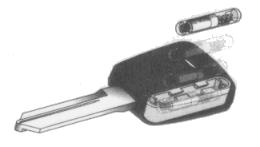
When you attempt to start a PATS equipped vic, the onboard computer sends out a wireless electronic signal that is received by the transponder in the key. The transponder then returns a unique electronic signal to the vics PATS module which in turn tells the PCM its acceptable to let the car run. This all happens in a small fraction of a second and there are over a quadrillion possible electronic codes, this security is in addition to the mechanical security provided by the cuts on the ignition key and the wafers in the ignition lock.
Some pictures of PATS keys, note the transponder module embedded in the plastic head of the key.
Many alarms do not have a dedicated pats bypass module output pin, so you'll need to find an output that is only live when the car has been remote started to attach a pats bypass module. Don't be afraid to open up your remote start unit and probe around the relay bank for a suitable pulsed ground output. The starter kill output pin might seem good at first but remember that many remote start alarms come with an "anti-grind" feature that disables the starter when the car is remote started. Stops operator from toasting the flywheel and starter by accidentally turning the ignition key too far to the start position instead of the on position when initially getting into the car.
Police interceptors do not have SecuriLock, but late model civilian vics/marquis/town cars do.
AutoToys among other companies sell transponder bypass kits that maintain the integrity of the PATS system when the car is not remote started, but when remote started provide the proper signal to the PATS computer which signals the PCM to allow the car to be started. Kit consists of a box to put a coded transponder key in, a system to selectively engage the bypass module, and an antenna to place around the PATS antenna on the steering column.
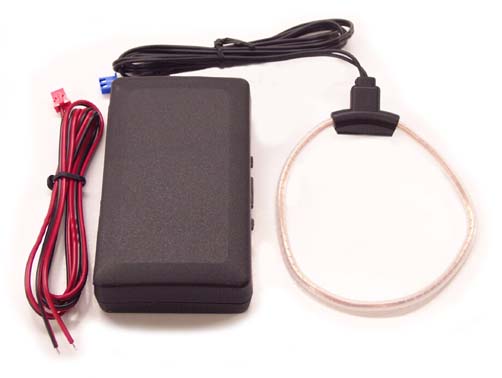
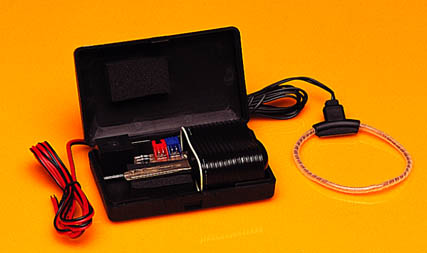
If you like living risky and don't care about the factory antitheft
system or are temporarily testing, remove the lower plastic shroud of the
steering column and tape a securilock coded key onto the column near the
ignition switch. If you choose this method, have some generic $1.29 non-pats
ignition keys made at the local hardware store first, because having two
PATS transponders (one in pats key taped to column, one in ignition key
placed into ignition lock) transmit at the same time can cause problems.
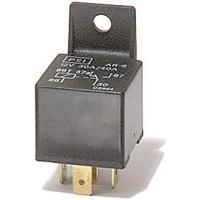
Alarm I purchased had 4 onboard relays, but I still needed 5 external
ones in addition to the onboard ones. Breakdown is 2 for power doorlocks,
1 for starter kill, and 2 for the ticket writing light domelight supervision.
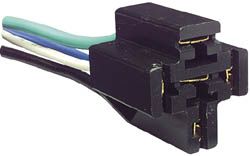
Generic 5 pin 30amp SPDT 12volt coil ones worked well. If you can locate
them, using relay sockets speeds up relay replacement time should a relay
ever fail and makes the install look professional
From a technical standpoint, there are two big working voltages that integrated circuits are designed for. 5Volt logic and 12Volt logic. 12Volt logic may seem like a good choice at first for an automotive alarm system, but if battery is a little discharged, the circuit may not function properly. Therefore, 5V logic becomes the most sensible choice. This is why you will find that alarms tend to have "pulsed ground" outputs instead of pulsed +12V outputs.
To lower installation time, many installers use "Scotch Lock" connectors to connect the remote start wires to the ignition switch.

Install is quick with these crimp connectors, just put the two wires you want to connect inside the connector and squeeze, no stripping the wire or soldering required. Install may appear to function acceptably at first, but the only connection between the two wires is a thin peice of metal touching a couple coductors inside each wire. Contact between the two wires may only be intermittent, and cause some rather bizzare problems. But a more likely issue will be that the resistance of the joint is considerably more than if solder had been used to join the wires together. Remember that some of the ignition harness wires have as much as 50amps flowing through them, even a relatively small resistance at the junction point will cause a significant voltage drop and liberate heat at the junction (there is a possible fire risk if enough heat is generated). Using these connectors risks not only damage to your remote engine starter module, but also damage to the vehicle itself.
Recommended method for tapping into ignition harness for remote start is to use a knife to cut some insulation off the wire, wrap your remote start wire around the now exposed wire and solder the connection together. Liberally wrap the joint with electrical tape.
If you have to cut wires all together like in the case of the starter kill, heatshrink tubing and solder is recommended.
Some of the higher priced remote start setups are now coming with a two way pager/transmitter setup. When your alarm siren sounds, your remote control will start chirping at you and will put neat little graphics on it's LCD screen. Do bear in mind that these pagers are physically bulky to carry around compared to a standard alarm remote, and if you carry the pager in your pocket, you're likely to shatter the LCD screen. As an alternative, you can purchase a standard alarm and add an external one-way pager setup as an add on. When you feel the need, you can carry your pager with you, but when space in your pockets or purse is a concern, you can carry just the compact transmitter. Also, watch out for pager setups that use the vehicle's radio antenna as an alarm pager antenna, 1995+ vics do not have a standard external mast radio antenna. The radio antenna is integrated into the rear windsheild glass.
I'm left with one free button on my remote and associated grounded output on the control unit. Typical use for this button would be to stick a relay on it and wire in the button to engage the power trunk lock solenoid when pressed. Was looking at other uses as well. Some that came to mind include:
Remote start systems:
1L3Z-19G364-CA Remote Start Systems 2001-2002 System 3, Gold Remote
Start, Keyless Entry, & Vehicle Security, For Use With Auto. Trans.
Only, Requires Securilock Kit 1L3Z-19G365-AB
1L3Z-19G364-BA Remote Start Systems 2001-2002 System 2, Silver Remote
Start & Keyless Entry, For Use With Auto. Trans. Only, Requires Securilock
Kit 1L3Z-19G365-AB
1L3Z-19G364-AA Remote Start Systems 2001-2002 System 1, Bronze Remote
Start Only, For Use With Auto. Trans. Only, Requires SecuriLock Kit 1L3Z-19G365-AB
1L3Z-19G365-AB Remote Start Systems 2001-2002
Securilock Kit 1 SecuriLock Interface Kit #1, Required For Remote Start
Systems
Alarm systems:
F7AZ-19A361-AA Vehicle Security Systems 1989-2002 System 6, Universal,
For Vehicles With Factory Power Door Locks
F5AZ-19A361-A Vehicle Security Systems 1995-2002 System 5, Universal,
For Vehicles Without Factory Power Door Locks
F3AZ-19A361-C Vehicle Security Systems 1989-2002 System 4, Universal,
For Vehicles With Factory Keyless Entry
F3AZ-19A361-D Vehicle Security Systems 1989-2002 System 3, Universal,
For Vehicles With Factory Keyless Entry