
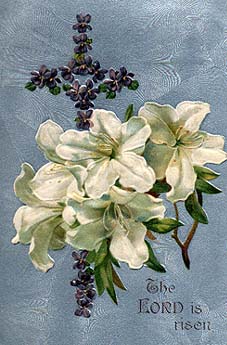
(1909 Postcard)
(1909 Postcard)
In addition to the actual Easter Day celebration there are many othertimehonored traditions associated with this holy season. "Sroda Pajopielocowa",Ash Wednesday begins the 40-day Lenten Season, of "Wielkie Post", the great fast. It is a time of prayer, penance, and special church services.
"Wielki Tydzien", Holy Week, begins with the celebration of "Niedziela Palmowa", Palm Sunday. There are three days of special days of prayer during this week; "Tapienie Judasza", Holy Wednesday, "Wielki Czwaitek", Holy Thursday, and "Wielki Pratek", Good Friday, the most somber and sorrowful day of the year. Throughout the Lenten season beautiful Pysanki eggs are decorated in preparation of the holiday
Traditional Easter foods are ham, kielbasa, pierogi, red horseradish, hardboiled eggs, rye bread, babka, and other desserts and cookies.Often there is a Paschal Lamb or 'Baranek' made of butter or lard.Years ago women sculpted the lamb freehand; today there are moldsthat can be used to fashion a Baranek.
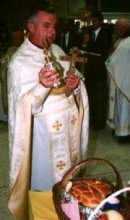 On
Holy Saturday morning, Poles participate in the centuries old custom
of blessing the food that will be eaten on Easter. This ceremony
is known as 'Swieconka.' Easter food and a candle symbolizing
Christ, the Light of the World, are placed in a basket and
covered with a white linen cloth. Usually, the basket is brought
to church and blessed by the parish priest, but sometimes the baskets are
blessed in the parishioners' homes.
Below are links to the Polish American Journal and the Polish AmericanCultural Center pages. They are excellent sites that explain the symboland significance of the foods that comprise a Polish Easter basket.
Easter morning begins with another age old tradition. The head of the house shares a blessed egg with those gathered around the table. Good wishes are exchanged by all.
After celebrating the joyful Easter holiday, young people
look forward to funfilled Dyngus,
Splash
Monday, the day after Easter.

|
|
|
|
|