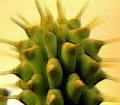
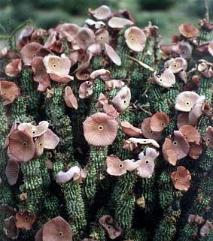
If you haven't heard of Hoodia yet, you soon will because it is being touted as the new miracle supplement for safe, effective weight loss. Hoodia gordonii, (Hoodia) is the botanical name for a cactus like plant that grows in Southern Africa. Scientists have recently isolated several compounds in this amazing plant that are responsible for dramatic weight loss. This all-natural appetite suppressant is also being applauded for containing no dangerous stimulants that caused adverse side effects associated with weight loss products of the last decade. Hoodia (or Hoodia Gordonii) is a South African dwelling plant that the San bushman have used to help endure long hunting expeditiions for generations. Hoodia Gordonii is actually a succulent not to be confused with a cactus. It belongs in the succulent family of Asclepiadaceae along with stapelia, stephanotis and vinca. There are approximately 20 species in the genus of Asclepiadaceae. As it grows it forms stemmed clumps approximately one foot high and bears, pale purple saucer-shaped flowers in shades of red or purple brown. Hoodia Gordonii was discovered and used by the San tribe from the Kalahari, South Africa, since prehistoric times. They chewed the bitter Hoodia plant twice a day to suppress hunger and thirst during long hunting trips. This plant contains the miracle molecule p57 that was recently translated into a obesity cure.
Hoodia enhances your mood therefore you will not become irritable or weak while you are on the program. The San Tribe could go without food for 24 hours after eating Hoodia, and in the same process hunt for food in the harsh Kalahari desert. It is therefore also known to maintain a high energy level. Hoodia helps to curb your appetite, some has reported, suppressing appetite within 20-30 minutes after taking Hoodia, results may vary. Some may need a little more time than this before they begin to notice the effects like: A reduced interest in food and A delay in time after eating before hunger sets in. One of the active ingredients in the herb is a chemical compound called P57, which is thought to be at least partly responsible for the appetite-suppressing effects of hoodia gordonii. But this is probably an oversimplification, since herbs typically work with an assortment of chemical compounds, not just one chemical. For most people, the real weight loss challenge has relatively to do with dieting, exercise, supplements, or how many calories you burn in the gym. The real challenge is controlling their hunger drive. People who are trying to lose weight seem to share the exact same problem. They have trouble getting their appetite under control. Hoodia gordonii, it seems, could make that much easier. Because overcoming your own hunger drive seems almost impossible unless you get some help. To understand how all this works, you have to understand what "hunger" really is in the first place. Hunger is just an illusion. It's a signal in your brain, a chemical message that causes you to feel certain feelings and, ultimately, act on them. The hunger signal is only turned off when your hypothalamus thinks you've eaten enough food. Your hypothalamus -- part of your body's endocrine system -- decides this by sensing the rise of sugar (glucose) in your blood. Eat enough carbohydrates, and your blood sugar rises, which convinces your hypothalamus to tell your brain that you're no longer hungry. Normally, to get your hypothalamus to turn off the hunger switch, you'd have to eat a moderate amount of food. And your hypothalamus isn't very quick on the draw either: it takes around 20 minutes to figure out what you've eaten, and by that time, you've probably eaten another 800 calories. So by the time your hunger signal gets turned off, you've already overeaten yet again. Hoodia, however, contains a chemical that gets picked up by your hypothalamus which thinks it's glucose. And as it turns out, this chemical is reportedly 10,000 times more potent than glucose in triggering the chemical receptors in your hypothalamus, and so it only takes a tiny bit of this chemical to trigger the cancellation of your hunger signals. Eat this chemical, and your hypothalamus thinks you've just wolfed down three plates of food at the local buffet. Your hunger is abruptly cancelled. You just don't feel hungry anymore. Everything else is fine: there are no known side effects. But you simply don't feel like eating. At least that's what the hoodia companies explain you should experience.
After years of careful research, scientists isolated several compounds in this all-natural food that was responsible for dramatic weight loss, P57, which has been widely reported, is but one of several chemical compounds found in the Hoodia succulent. Not only was it proven completely safe, it contains no stimulates that could contribute to the jittery feeling associated with weight loss products of the last decade. Mass global interest has been shown for Hoodia since Pfizer, the international pharmaceutical giant, started to research Hoodia's potential to help people with obesity. Pfizer recently discovered Hoodia and decided to invest millions into researching the plants benefits as a new drug that would help with obesity. The research published by this company has catapulted Hoodia into the international spotlight. Laboratory experiments show animals automatically restrict their food intake when taking hoodia orally. Rats, a species that will eat anything from meat and plants to indigestible fiber, lowered their dietary calorie intake to a degree that made them get thin when fed comparative amounts of hoodia.
Hoodia pills are my life saver. I have a thyroid problem and this causes depression and weight gain. These pills take my hunger away so I can get back into shape and they make me happy, nice "side effect" ;-) Now my Doctor is taking them too! M S (Germany). Hooray for Hoodia! I lost 5 lbs in eleven days. Three family members including myself have learnt a great deal about Hoodia. It appears that the San tribe did not reveal all, especially the benefits for men, if you know what I mean - S.A - (USA)
|


