


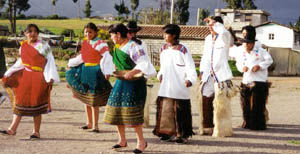
Ecuador has a diverse population composed of people of
European, Native American, and African descent. The majority are
mestizos, individuals of mixed European and Native American ancestry.
Most of the Native Americans live in poverty in the highlands region, where a
small elite of European descent controls most of the land and wealth.
Ecuador was a Spanish colony until 1822, when independence forces won a decisive victory over Spain. Ecuador has had a democratically elected government since 1979, but historically the government has alternated between civilian rule and military dictatorship. Most political conflicts involved squabbles among groups within the upper classes who controlled the nation’s wealth.
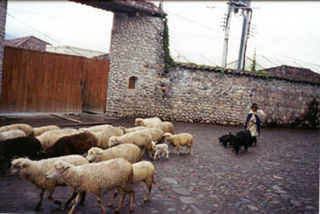
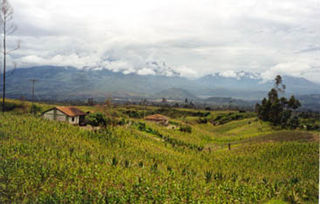
Agriculture dominated the economy of Ecuador until the 1970s, when the discovery of petroleum deposits brought added income to the nation. Although the money generated by the oil industry produced a decade of prosperity, it eventually caused a chaotic dislocation of the economy. The influx of cash resulted in price increases for many goods. In addition, because Ecuador had a limited manufacturing base, people spent the new oil money on consumer products imported from abroad, thus increasing foreign debt.
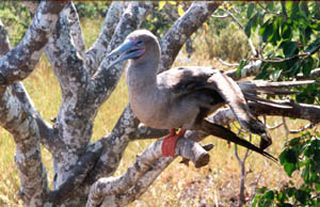
The animal life of Ecuador is varied. Large mammals include
the bear, jaguar, and wildcat, and among the smaller mammals are the weasel,
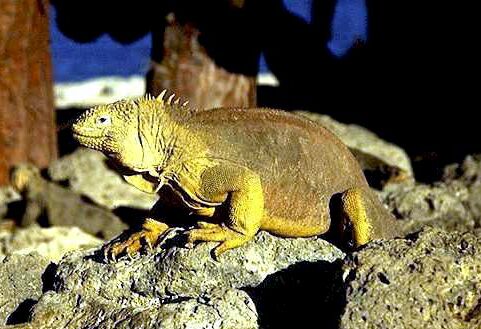
otter, and skunk. Reptiles, including the lizard, snake, and crocodile, thrive
on the slopes of the Andes and along the coastal lowlands. Birds are the most
varied group.
The official and most widely used language in Ecuador is Spanish. Many rural Native Americans speak Quechua, the original language of the Inca people. Most Native Americans in Ecuador became converts to the Roman Catholic faith. Protestant denominations make up less than 1 percent of the population.
Because the inhabited regions vary greatly in their ethnic makeup, Ecuador is a country of contrasting cultural patterns. The Native Americans of the highlands, the descendants of tribes conquered by the Inca, still play traditional Native American songs on ancient-style flutes and panpipes. The Oriente is populated almost entirely by Native Americans whose ancestors escaped both Inca and Spanish rule and whose customs resemble those of Native Americans of the Amazon Basin. Along the coast, descendants of Spanish settlers and black African slaves have intermingled to produce a culture that is a combination of Spanish and African characteristics.
In March 2000 the government changed the basic unit of currency in Ecuador from the sucre to the United States dollar, with the exchange rate set at 25,000 sucres to the dollar.


