New Religions in Global Perspective:
A Study of Religious Change in Modern World (2006)
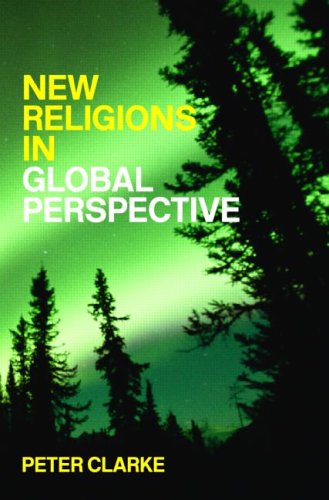

'New Religions in Global Perspective: A Study of Religious Change in Modern World' is a fresh in-depth account of new religious movements (NRMs), and of new forms of spirituality from a global vantage point. Ranging from North America and Europe to Japan, Latin America, South Asia, Africa and the Caribbean, this book provides students with a complete introduction to NRMs such as Falun Gong, Aum Shinrikyo, the Brahma Kumaris Movement, the Ikhwan or Muslim Brotherhood, Sufism, the Engaged Buddhist and Neo-Hindu Movements, Messianic Judaism, and African diaspora movements including Rastafarianism.
Peter B. Clarke explores the innovative character of new religious movements, charting their cultural significance and global impact, and how ravious religious traditions are shaping, rather than displacing, each other's understanding of notions such as transcendence and faith, good and evil, or the meaning purpose and function of religion, and of religious belonging. In addition to exploring the responses of governments, churches, the media and general public to new religious movements, Clarke examines the reactions to older increasingly unfluential religions, such as Buddhism and Islam, in new geographical and cultural context. Taking into account the degree of continuity between old and new religions, each chapter contains not only an account of the rise of the NRMs and new forms of spirituality in a particular region, but also an overview of change in the regions' mainstream religions.
 To see more of this book, click here.
Contents
Acknowledgements xi
Introduction xiii
-
PART I
Global perspective, New Age and society's response 1
-
1 New Religious Movements (NRMs): a global perspective 3
-
Globalization as a new form of religion and/or spirituality 6
-
The growing demand for spirituality 7
-
Identifying 'new' religion globally 9
-
Accounting for NRMs: rapid change or stagnation? 16
-
Conclusion 20
-
References and select bibliography 21
-
2 The New Age Movement (NAM): alternative or mainstream? 25
-
Historical overview 27
-
NAM, the Holistic Health Movement and the Human Potential Movement 31
-
Questioning the personal and social role of the NAM 34
-
Some Buddhist and Christian responses to the NAM 35
-
The NAM and traditional and/or indigenous religions: the Australian case 38
-
Conclusions: the future of the New Age 39
-
References and select bibliography 40
-
3 Accounting for hostility to NRMs 43
-
The history of the ACM 45
-
NRMs and violence 55
-
The brainwashing hypothesis and child abuse allegations 57
-
Conclusions 67
-
References and select bibliography 67
-
PART II
New religions in the West 71
-
4 Europe 73
-
Religious change in modern Europe: some general comments 74
-
A la carte Christianity and the growth of the unchurched but spiritual 76
-
Toward a European Islam 79
-
Islam: new developments and movements 82
-
Buddhism and Europeanization 87
-
New Buddhist communities and movements 90
-
New Hindu and Sikh movements 92
-
Modern 'secular' Yoga 94
-
Neo-Paganism 95
-
Influential thinkers and the new spiritualities: the case of Gurdjieff
-
Conclusions: a changing paradigm 102
-
References and select bibliography 103
-
5 North America 108
-
NRMs (c.1820 - c.1950) 111
-
Native American New Religions 115
-
NRMs c.1950 to the present: anxiety in the midst of prosperity 116
-
Ufology and Occultism 119
-
Reclaiming as politically engaged Wicca/Witchcraft 122
-
NRMs and September 11th 2001 123
-
New Christian and Christian-related movements and the expansion of Western interests 124
-
Americanized' and other 'new' forms of Buddhism 126
-
Islam and new Islam-derived movements 129
-
Judaism and new movements derived from Judaism 133
-
Conclusions 136
-
References and select bibliography 137
-
6 Australia, New Zealand and Melanesia (New Guinea) 141
-
Australia: the ending of the 'white only policy' and a new kind of religious diversity 142
-
New Religions from East and South Asia 145
-
Commodification 148
-
New Zealand 150
-
Maori new religions 154
-
Melanesia and commodity millenarianism 155
-
Conclusions 159
-
References and select bibliography 160
-
PART III
New religions: North Africa and the Middle East, and Africa, south of the Sahara 163
-
7 North Africa and the Middle East 165
-
Modernization and Islamic exceptionalism 167
-
Islamism, the Muslim Brotherhood and the creation of an Islamic state 169
-
The influence of Sayyid Qutb (1906-66) 174
-
The Brotherhood's idea of an Islamic state 176
-
Hizb ut Tahir 179
-
Al-Qaeda 180
-
Gush Emunim (Block of the Faithful) 183
-
Conclusions 184
-
References and select bibliography 184
-
8 Africa, south of the Sahara 186
-
Colonialism and religious innovation 186
-
AI Cs in West Africa (c.1890 to the present) 188
-
AICs of South, Central and East Africa (from c.1890) 195
-
Africa's new Charismatic and Evangelical movements 199
-
Neo-traditional religions 200
-
New Islam-related movements 201
-
NRMs of Asian origin 205
-
Conclusions 206
-
References and select bibliography 207
-
PART IV
NRMs in South and Central America and the Caribbean 209 (28)
-
9 South and Central America and the Caribbean 211
-
Neo-Pentecostal churches 213
-
Spiritist and esoteric NRMs in Brazil and Argentina 215
-
Amerindian-Catholic spirituality and New Religions 218
-
African-derived religions: Brazil 220
-
African-derived religions: the Caribbean 224
-
Japanese NRMs as the route to African roots 230
-
Other Asian NRMs 232
-
Conclusions 233
-
References and select bibliography 233
-
PART V
New religions of South, Southeast and East Asia 237
-
10 South Asia (India, Pakistan and Sri Lanka) 239
-
Neo-Hindu movements 241
-
Islamic new movements in India and Pakistan 256
-
New Sikh-related movements 263
-
New Buddhist movements 264
-
Sri Lanka's 'Protestant Buddhism' 266
-
Conclusions 268
-
References and select bibliography 269
-
11 Southeast Asia (Thailand, Vietnam and Indonesia) 271
-
Thailand's reformed Buddhism 272
-
Vietnam: Engaged Buddhism 278
-
The American/Vietnam War and Engaged Buddhism 280
-
The Cao Dai and Hoa Hao movements 281
-
Indonesia 285
-
The construction of 'theistic' Buddhism, Confucianism and Hinduism 286
-
Varieties of Islam 288
-
Resurgent Sufism and modernist and neo-modernist Islam 290
-
SUBUD 291
-
Conclusions 293
-
References and select bibliography 294
-
12 East Asia (1): Japanese NRMs 296
-
New religion 297
-
Japanese NRMs and the religious past 298
-
Goals of the New Religions 301
-
Accounting for the rise and decline of Japanese NRMs 304
-
Engaged spirituality 306
-
Japan's Christian NRMs 307
-
Japanese NRMs abroad 309
-
Aum Shinrikyo: the path to violence 310
-
Conclusions 316
-
References and select bibliography 316
-
13 East Asia (2): NRMs in China, Taiwan and Korea 319
-
Governments and religion in China 320
-
The religious landscape of China and Taiwan 321
-
New Religions in China and Taiwan: world transformation as self-transformation 326
-
From Yiguandao (Way of Pervading Unity) to Tian Dao (The Way) 327
-
Foguangshan 329
-
Buddhist Compassion Relief (Tzu Chi) 331
-
Falun Gong 332
-
Qigong and Chinese martial arts outside China 336
-
Chinese Christian NRMs 337
-
Korea 337
-
Korea's NRMs 339 Tonghak/Ch'ondogyo 339
-
Unification Church (UC) (T'ongil-gyo) 342
-
Won Buddhism 346
-
Conclusions 348
-
References and select bibliography 349
-
PART VI
Conclusion 351
-
14 Future trends 353
-
The distinguishing features of NRMs and of new forms of spirituality 353
-
The future of NRMs, the new spirituality and/or congregational religion 357
-
References and select bibliography 359
General bibliography 361
 Links to other sites on the Web
Professor Peter B. Clarke - Home Page
Back to PBC's Main Publications List
Peter B. Clarke
Paperback: 385 pages
Religious Studies/Sociology/Cultural Studies
ISBN: 0-415-25748-4
Published by Routledge (www.routledge.com), Oxon & New York (2006)
Also available in hardback (ISBN: 0-415-25747-6).
Peter B. Clarke - Official Website:
http://uk.oocities.com/peterbernardclarke
Copyright © 2006 Peter B. Clarke. All rights reserved.