PROTO-LANGUAGE PHONEMES
in Nostratic
and Nostratic-derived languages
(Nostratic Hypothesis) by Patrick C. Ryan

 (Rev. 7/ 9 /2008)

by Patrick C. Ryan
(Rev. 7/ 9 /2008)
This date is based on the estimates of Cavalli-Sforza for the separation of the peoples who are broadly grouped under the rubric of speakers of Nostratic (The Great Human Diasporas) from the Eurasiatic branch of the people speaking a Proto-Language-derived language.
During this phase of development, the Proto-Language was passing out of the ergative-type morphology into a nominative-type morphology (G. A. Klimov).
An excellent online resource for data pertaining to the earliest language which is at the
TOWER OF BABEL, founded by the late Sergei Anatolyevich Starostin, and now part of the Evolution of Human Languages project at the Santa Fe Institute.
An important new resource for Nostratic studies is the website Nostratica, instituted by Kirill Babaev, the founder of the Cybalist language discussion group at Yahoo! Groups.
At this time, the Proto-Language had developed only a few nominal compounds. The principal types involved the monosyllabic CV roots with PL ¿E, 'voice, -like'; and with PL NA, 'nose, stone, one', which provided a definite singular nuance for roots that could be interpreted collectively; e.g. from PL ME, 'tongue, converse(r)', with ¿E = ME-¿E, 'word(s)'; and with
NA = ME-¿E-NA, 'word', which is
found in Nama mî (min), 'to say', cognate formatively and semantically with PIE *mei-no-,
'opinion, view'.
Nama word order is consistently SOV, in which we see the earliest Proto-Language word order.
Although there has been an understandable negative reaction to linking 'race' and language notably because of the racial doctrines of the former National Socialists, responsible scholars have now begun to re-investigate the connections among genetic profiles of populations and culture and
language, with the result that the basic Monogenetic Hypothesis (and with it, monogenesis) is gaining substantial credibility through the results of research by physical scientists.
The kind of solid data being generated and careful analysis cannot be "quibbled away" by the liberal ideologues who still chase the butterflies of independent language invention and "borrowing frenzy".
In the Table of Correspondence found after the listing of lexical cognates below, the column entitled PROTO-LANGUAGE shows the earliest syllables before vocalic contrasts were replaced by a contrast of glides and no glide (during the Pontic stage).
Similar tables of equivalence can and have been constructed for the Proto-Language, IE and Afrasian, Altaic, Basque, Beng (Southern Mandé), Blackfoot (Algonquian), Dravidian (incomplete), Etruscan, Hurrian-Urartian, Japanese, Mon/Hmong, Nama, Nama, Nostratic (present essay), (Sino-)Tibetan, Sumerian, and Uralic.
It will be seen that the reconstructed roots of the Proto-Language and the attested roots in the individual (proto-)language essays in the headings below display a very regular system of phonemic correspondences with understandable semantic shifting.
TABLE
|
| (:) indicates the vowel was originally long : indicates an attested long vowel |
PROTO-INDO-
EURO- |
The PAA sound inventory has been maintained best in Arabic, for which see the above-reference essay. | NOSTRA- |
|
?E
+ |
HV(1)
+ He: |
Ø / Ø:
+ Ø |
Ø
+ Ø |
|
i
+ î (written i) |
j
+ j |
?i
+ hi |
?i
+ hi |
|
?A
+ |
HV
+ Ha: HA-FHA-FA |
Ø / Ø:
+ Ø / Ø: |
Ø
+ Ø |
. |
a
+ â (written a) |
j
+ j |
?a
+ ha |
?a
+ ha |
|
?O
+ |
HV
+ Ho: |
Ø
+ Ø |
Ø
+ Ø |
. |
u
+ û (written u) |
h
+ h |
?u
+ hu |
?u
+ hu |
|
¿E
+ |
yV
+ He: |
y / i / Ø
+ Ø / Ø: |
y
+ Ø |
. |
yi (written i)
+ î (written i) |
j
+ j |
yi
+ ħi |
¿i
+ ħi |
|
¿A
+ |
yV
¿A-¿E  e / e: + Ha: |
y
+ Ø / Ø: |
y / Ø
+ Ø |
. |
y(a) (written i(a)) / î (written i)
+ â (written a) |
j
+ j |
¿a
+ ħa |
¿a
+ ħa |
|
¿O
+ |
yV
+ Ho: |
y
+ Ø |
y
+ Ø |
. |
yu (ü, written u)
+ û (written |
h
+ h |
¿u
+ ħu |
¿u
+ ħu |
|
P[?]gE(5)
+ |
b(h)V / wV
+ pV |
b / *p
+ b / *p |
v
+ p |
. |
bi
+ bi |
p
+ p |
bi
+ pi |
p?i
+ pi |
|
P[?]gA(5)
+ |
b(h)V / wV
+ pV |
b
+ b / *p |
v
+ p |
. |
ba
+ ba |
p
+ p |
ba
+ pa |
p?a
+ pa |
|
P[?]gO(5)
+ |
b(h)V / wV
+ pV |
b
+ b |
v
+ p |
. |
bu
+ bu |
f
+ f |
ḃu (O&S: bu)
+ fu |
p?wu
+ pwu |
|
P[?]FE
+ |
bhV
+ p[h]e: |
p
+ p |
p
+ p |
. |
pi
+ pi |
b
+ b |
bi
+ ḃi (O&S: fi) |
p?wi
+ phi: |
|
P[?]FA
+ |
bhV(2)
+ p[h]a: |
p
+ p |
p
+ p |
. |
pa
+ pa |
b
+ b |
ba
+ ḃa (O&S: fa) |
p?wa
+ pha: |
|
P[?]FO
+ |
bhV
+ p[h]o: |
p
+ p |
p
+ p |
. |
pu
+ pu |
b
+ b |
bu
+ ḃu (O&S: fu) |
p?wu
+ phu: |
|
FE
+ |
wV
+ we: |
w
+ w |
v
+ v |
. |
Emesal: mi
Emegi: g[~]2i(6) final: ü (written u) + Emesal: mi
|
w
+ w |
wi
+ wi |
wi
+ wi: |
|
FA
+ |
wV
+ wa: |
w + u / u: |
v
+ v |
. |
u
+ û (written u) |
wa
+ wa |
wa
+ wa |
wa
+ wa: . |
|
FO
+ |
wV
+ wo: |
w
+ w |
v
+ v |
. |
u (written u)
+ û (written u) |
w
+ w |
wu
+ fu |
wu
+ wu: |
|
T[?]E
+ |
dV
+ tV |
d
+ d |
t
+ t |
. |
di
rare: di+wV Ti (retroflex {?})
+ di
|
d
+ d |
ti
+ þi (O&S: |
t?i
+ ti (O&S: či) |
|
T[?]A
+ |
dV
+ tV |
d
+ d / Ø |
t
+ t |
. |
da
rare: da+wV Ta (retroflex {?})
+ da
|
d
+ d |
ta
+ þa (O&S: ča) |
t?a
+ ta |
|
T[?]O
+ |
d(V)
+ tV |
d
+ d / t |
t
+ t |
. |
du
rare: du+wV Tu (retroflex {?})
+ du
|
t
+ t |
ţu (O&S: ču)
+ şu (O&S: çu) |
t?wu
+ twu |
|
T[?]SE
+ |
dhV / d[h]ye(:)NOTE
+ t[h]e: / t[h]ye(:)NOTE |
t
+ t |
dh
+ t |
. |
zi
+ zi |
D
+ D |
di
+ ði (OS: ĉi) |
t?si
+ tsi |
|
T[?]SA + |
dhV(3)
+ t[h]a: |
t / *d
+ t |
dh
+ t |
. |
za
+ za
|
D
+ D |
da
+ ða (O&S: ĉa) |
t?sa
+ tsa |
|
T[?]SO
+ |
dhV/d(h)wVNOTE
+ t[h]/t[h]wo:NOTE |
t
+ t |
dh
+ t |
. |
Emesal: tu
Emegi: tu
+ Emesal: tu
Emegi: tu
|
'
+ ' |
ḑu (O&S: ĉu)
+ żu (O&S: ču) |
t?swu
+ tswu: |
|
SE
+ |
sV
+ se: |
s
+ s |
s
+ s |
. |
ši
+ ši |
z
+ z |
zi (O&S: ʒi)
+ si |
si
+ si: |
|
SA
+ |
sV
+ sa: |
s
+ s |
s
+ s |
. |
sa
sa+wV ša
rare: sa+wV Sa (retroflex {?})
+ sa
|
z
+ z |
za (O&S: ʒa)
+ sa |
sa
+ sa: |
|
SO
+ |
sV
+ so: / swo:NOTE |
s
+ s |
s
+ s |
. |
su
rare: su Su (retroflex {?})
su+wV šu
rare: su+wV Su (retroflex {?})
final: su+î š(i)
+ su
|
s
+ s |
zu (O&S: ʒu)
+ su |
su
+ su: |
|
K[?]E
+ |
g[^]V
+ k[^]V |
g / *j
+ g / *k |
y / *k
+ sh |
. |
gi
+ gi
|
k
+ k |
ki
+ xi |
k?i
+ ki |
|
K[?]A
+ |
gV
gyV g^V
+ kV |
g / *j
+ g / *k |
k
+ k |
. |
ga
+ ga
|
k
k+j H
+ k |
ka
+ xa |
k?a
+ ka |
|
K[?]O
+ |
gV + kV |
g / *c
+ g / *k |
k
+ k |
. |
gu
+ gu
|
T
+ T |
ku
+ xu |
k?wu
+ kwu |
|
K[?]XE
+ |
g[^]hV
+ k[^][h]e: |
k
+ k |
y / *k
+ ch |
. |
ki
ki+wV hi
+ ki |
H
+ H |
gi
+ γi (O&S: ġi) |
k?xi
+ kxi: |
|
K[?]XA
+ |
ghV(4)
+ k[h]a: |
k
+ k |
k
+ k / *ch |
. |
ka
ka+wV ha
+ ka |
H
+ H |
ga
+ γa (O&S: ġa) |
k?xa
+ kxa |
|
K[?]XO
+ |
ghV
+ k[h]o: |
c
+ c |
k
+ k |
. |
ku
ku+wV hu
+ ku
|
x
+ x |
gu
+ γu (O&S: ġu) |
k?xu
+ kxu: |
|
XE
+ |
g[^]wV
g[^]wV + H (?A) g[^]whV
+ k[^]we: |
c / *k
+ c |
sh
+ sh |
. |
š2i
š2i+wV hü (written hu)
+ š2i |
š
+ š |
ši (O&S: ĉi)
+ ši (O&S: ŝi) |
ži
+ çi |
|
XA
+ |
gwV
gwV + H (?A) gwhV
+ kwa: |
c
+ c |
k
+ k |
. |
ha
+ ha |
š
+ š |
ša (O&S: ĉa)
+ ša (O&S: ŝa) |
ža
+ ça |
|
XO
+ |
gwV
g[^]wV + H (?A) gwV
+ kwo:V |
c
+ c |
k
+ k |
. |
hu
+ hu |
X
+ X |
šu (O&S: ĉu)
+ šu (O&S: ŝu) |
žu
+ çu |
|
ME
+ |
mV
+ me: |
m
+ m |
m
+ m |
. |
mi
+ mi |
m
+ m |
mi
+ mi |
mi
+ mi: |
|
MA
+ |
mV
+ ma: |
m
+ m |
m
+ m |
. |
ma
+ ma |
m
+ m |
ma
+ ma |
ma
+ ma: |
|
MO
+ |
mV
+ mo: |
m
+ m |
m
+ m |
. |
mu
+ mu |
m
+ m |
mu
+ mu |
mu
+ mu: |
|
NE
+ |
l[^]V
+ l[^]e: |
ny
+ ny |
ny
+ ny |
. |
li
+ li |
n
+ n |
ni
+ li |
ni
+ li: |
|
NA
+ |
nV
+ la: |
n / *q
+ l / ny |
n
+ l |
. |
na
+ na |
n
+ n |
na
+ la |
na
+ la: |
|
NO
+ |
nV
+ Lo: |
n
+ l |
n
+ l |
. |
nu
+ Lu (written lu) |
n
+ n |
nu
+ lu |
nu
+ lu: |
|
QE
+ |
(n)g[^]V
+ (n)k[^]e: |
g / *q
+ k |
k / ng (intervocalic)
+ k / ng (intervocalic) |
. |
(n)g[~]3i
+ initial: n2i (ñi)
|
q
+ q |
ŋi (O&S: ķi)
+ ķi |
ŋi
+ ķi |
|
QA
+ |
(n)gV
+ (n)ka: |
g / *q
+ k / *q |
k / ng (intervocalic)
+ k / ng (intervocalic) |
. |
(n)g[~]3a
+ Emesal final: n2(a) (ñ(a))
|
q
+ q |
ŋa
+ ķa |
ŋa
+ ķa |
|
QO
+ |
(n)gV / (n)gwV / (n)gwVNOTE + (n)ko: |
g
+ k |
k / ng (intervocalic)
+ k / ng (intervocalic) |
. |
(n)g[~]3u
+ initial: n2u (ñu)
|
g
+ g |
ŋu (O&S: gu)
+ ķu |
ŋu
+ ķu |
|
RE
+ |
rV
+ re: |
r / R
+ L |
r
+ r |
. |
ri
+ Li (written li) |
3
+ 3 |
ri
+ ri |
ri
+ ri: |
|
RA
+ |
rV
+ ra: |
r
+ r |
r
+ r |
. |
ra
+ La (written la) |
3
+ 3 |
ra
+ ra |
ra
+ ra: |
|
RO
+ |
rV
+ Lo: |
r
+ L |
r
+ l |
. |
Lu (written lu)
dialectal: ru + Lu (written lu). |
r
+ r |
ru
+ ru |
ru
+ ru: |

Patrick C. Ryan * 9115 West 34th Street - Little Rock,
AR 72204-4441 * (501)227-9947
PROTO-LANGUAGE@msn.com
e. Since N[H]A-F[H]A-M[H]A also meant 'feather', XE-¿E was prefixed to it in PIE-derived languages to yield XE-¿E-N[H]A-F[H]A-M[H]A, 'quill'. This is PIE (*g^wil[l]-). The doubled -ll- of the PIE forms is due to an assimilation of -m to -l-, yielding PIE *g^will-, 'quill'.
f. Nama utilizes b as a masculine termination, and s as a feminine one, and -i for common gender (neuter). These can be safely ignored when cognates are being proposed.
g. I have come to the conclusion that pre-glottalization, in view of its outcome in voicing, is the likelier actual phonological shape of the stops and affricates I show as post-glottalized (P?); trully [?p]. However, I will continue to notate them as if there were post-glottalized merely to maintain conintuity with what I have wriiten in other essays at this website.
h. The Proto-Language consisted of 90 monosyllables, which are further analyzable into their *C + *V components.
i. (†) This phoneme is realized as a nasalized vowel.
1. In the Proto-Language, there were three vowels: E, A, O.
2. Final Early IE
voiced aspirated stops + a can become unaspirated: -bha
becomes -b(a); -gha becomes -g(a); -dha
becomes -d(a).
NOTES (2)
In Nostratic, there were three vowels: *i, *a, *u.
During the Pontic stage of Nostratic, from which IE and AA developed, there was only one V(owel) [or *A{blautvokal}]:
*a ([a], 'central low' — possibly with a stress-unaccented schwa {ə} allophone), which became *é, *ò, *°, or *Ø in IE according to the Ablautsstufe or accent-grade required by the stress-accent; a palatal (*y), velar *w) or no glide preceded the vowel. These glides disappeared in IE, leaving only dorsals and dorsal nasals palatalized by *y, and a few apicals and dorsal nasals velarized by (*w).
In AA, the glides and no glide + *a became *i, *a, and *u. Subsequently, all vowels were conflated into *a but *i and *u lived on as allophones employed to mark various grammatical forms (vowel patterning); it is possible that some root nouns retained *i, *a, and *u.
During the Pontic-Nostratic stage, Nostratic *i, *a, *u that were lengthened by a preceding or following 'laryngeal' (*H*e:. *a:, *o:) and were not reduced to *A though they were preceded by a glide or no glide. When the glides disappeared (v. supra). the lengthened vowels remained intact.
6. The change of bilabial fricative to g[~]2 before i is similar to and probably connected in some way with the Armenian change of PIE *wei- to gi, as in PIE *woinyom- becomes Armenian gini, ‘wine'.
7. The *y of this syllable has been modified initially to *H in, at least, some PIE words such as *okw-, ‘eye’, and *e:n- (for **a:n  **yan), ‘look!’.


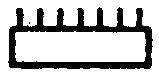 , mn.
These signs are really triliterals, specifying that the medial component is not simply a vowel (*a) but rather a consonant like j (and, provisionally, in a few cases w), which were actually probably realized as diphthongs or lengthened vowels.