Page 3/5
The independent suspension is one relatively new item, having arrived in 1999 when Ford figured out how to bolt a self-contained rear-end module to the platform's original live-axle pickup points. It does a full day's work trying to chauffeur the power to the ground and keep the bulky butt planted in corners and is largely successful. "Altogether better yaw damping than the Vette, and maybe the Viper, too," wrote one test driver.
The novel limited-slip device, a gerotor pump sandwiched between the half-shafts that pushes fluid against clutch plates when one wheel loses grip, pitches in with good effect. But with so much torque to manage, meltdown of this unit would be inevitable without the optional heat exchanger. A conduit snaking into the trunk from a NACA duct in the polycarbonate quarter-window supplies the aluminum cooler with fresh air while a small electric pump circulates the oil. The whole rig looks as though it were fabricated in Junior Johnson's woodshed.
The Recaro seats grab the glutes firmly, but the upright driving position belongs in a postal Jeep. The shifter is in another ZIP Code altogether. The long reach to the Tremec T56 six-speed with its B&M Ripper shift kit makes changing gears a laborious chore, and the widely offset pedals make heel-and-toe maneuvers best accomplished with swim fins. Squeaks, rattles, and wind whistles were constant companions out on the road, where our Cobra R's front tires followed every rut and valley in the pavement like a chain-gang bloodhound.The Cobra R fulfills its mission: to prove that the Mustang can still run with Detroit's best and provide a genuine race-car experience. But ultimately, it isn't that fulfilling.
SECOND PLACE
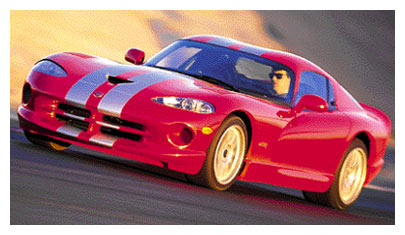
Best of all, underneath the indecently exaggerated bodywork and between the absurdly thick tires is a genuine performance car. A stock Viper on a track, especially one equipped with the optional ACR package, is a fearsome weapon that is safest in the hands of professionals or people with a healthy fear of embarrassment. So much torque corkscrews past your right thigh that in any gear the car accelerates like Yeager's X-1. Flat-out turns are inhaled at triple-digit speeds, accompanied by tingling in the part of the brain containing the self-preservation instinct.
Besides the racing belts, which really just elevate the safety of the Viper's seats to the level of the car's performance, the ACR stamp puts K & N filters in the airstream said to be worth 10 horsepower and 10 pound-feet of torque. Alloy monotube shock absorbers from Dynamic Suspensions carry over from last year's Viper GTS-R, supported by Hyperco springs almost three times again as stiff as those in the standard GTS (500 pounds per inch in front and 1100 in the rear vs. 200 and 400, respectively, in the GTS). In the ACR, the Viper's normal 35-series front, 30-series rear Michelin Pilots are laminated over 18-inch one-piece BBS forged aluminum wheels. As a bonus, the suspension mods reduce unsprung weight about 14 pounds.