| continued... |
|
The law was changed as a result in 1979 and it is no longer sub judice to publish material if a writ is issued against a media organisation. The editor at the time, Harold Evans said the judgement appealed "not so much on the right of the press to publish as the right of an individual to information which may affect his life, liberty and happiness". The Freedom of Information Act allows the public to gain this sort of information, which is why campaigners were fighting for the right to access government reports such as the BSE crisis and the Stephen Lawrence case, as a matter under the public interest. In America freedom of expression is written in the constitution, but Britain is lagging behind in comparison to many of its European counterparts who already enjoy freedom of information to some degree. Across the English Channel, France has two laws providing a right to access government records. All records are available except those involving internal government deliberations, state security, commercial secrets, personal information which is protected by the data protection legislation and other documents protected by a law. The law does not apply to documents held by the Conseil d'Etat (the French Parliament) or the courts. They have the Commission d'Access aux Documents Administratifs which enforces the acts. In France, they also have a law protecting a person's right to privacy. As on the other side to freedom of expression lies a person’s right to privacy, as stipulated in Article 8 of the European Convention on Human Rights, where "everyone has the right to respect for his private and family life". As Jack Straw said a balance is needed, "the public must be able to obtain information but personal and other confidential material must be protected". The differing laws in Britain and France can be illustrated by the Duchess of York’s case. She made a complaint against the British media for using cameras with telephoto lenses which invaded her privacy, in the "toe sucking" scandal. However the publication of the photos in France led to a procedure in the criminal courts where damages were awarded.
|
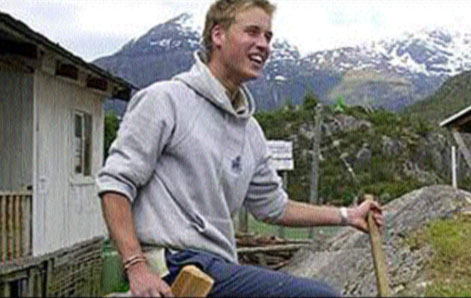 In Britain last year, the use of telephoto lens to photograph Prince William in his gap year was banned by the Press Complaints Commission with agreement from the British media. Yet OK! magazine published photos of Prince William hiking and crossing a river during his 10 week expedition with Raleigh International in Chile. The magazine was found guilty of "harassment" and "breach of privacy", and has apologised but no damages were awarded.
 |
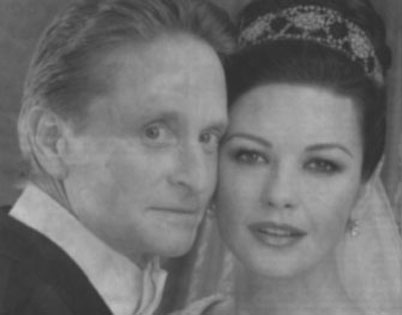 The PCC does not have the power to fine the media if they break the code of conduct, but this along with the recent case between Michael Douglas, Catherine Zeta-Jones and OK! magazine, against Hello! Magazine, sets case examples for the laws on privacy. Michael Douglas and Catherine Zeta Jones had an exclusive agreement with OK! magazine to cover their wedding. However a guest sneaked a camera past the security and the pictures were printed in Hello! magazine. The married couple then sued Hello! magazine for breach of privacy.
|
|
Britain’s proposed Freedom of Information Bill is going to make the individual who requested the information give a reason. But Jack Straw, at the House of Lords in November last year, presented a radical change. "Members of the public would not have to prove there as any valid reason to gain access to documents." The State will have the obligation to prove why the information should be withheld from the individual, rather than the requestor having to prove to the government organisations that the information is in the public interest Every organisation under the Freedom of Information Act will have to appoint an officer. Each officer will have the responsibility to draw up lists of all the relevant internal documents that the public may have access to. Should the organisation feel that the requested information would cause "prejudice", the information may be with held. But the requestor may then appeal to the National Freedom of Information Commissioner. Access may be permitted to government documents about accidents, disasters and factual background material used by ministers and officials in reaching policy decisions if in the public interest. Campaigners had warned the government that greater openness would be needed after the Phillips report on the BSE crisis, and that changes to the bill would be more difficult to resist. The Phillips inquiry identified "a culture of secrecy and sluggish bureaucracy" that stopped the public from receiving information about the risk of mad cow disease. Under the new concessions, more scientific information will be made available automatically. Until the Freedom of Information Act is implemented, under US law, UK residents may apply for information held by the US government on British products, companies and government organisations.
|
| Home | My CV | My work | Fave pics | Hot links |