 |
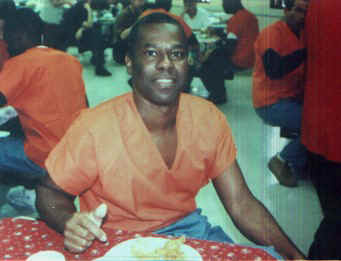
| Summary of Rudolph's case. |
| SUMMARY OF RUDOLPH HOLTON'S CASE On the evening of June 22, 1986, Katrina Graddy and her friend Pamela Woods went to Nebraska Avenue in order to buy drugs and turn tricks. At around midnight, Katrina entered the car of a black male. Pam did not see Katrina again that night. In the early morning hours of June 23, 1986, Katrina Graddy's body was found in an abandoned house on Scott Street. Katrina had been sexually assaulted and her attacker had set the house on fire. In June, 1986, Rudolph Holton was a drug addict who stole in order to support his habit. His record included several convictions for burglary and drug possession and his only conviction for violence occurred when he fought with another individual over some change in a dice game. Within twenty-four hours of the time the police found Katrina's body, Rudolph Holton was arrested and charged with first-degree murder and related charges. The police took statements from Carrie Nelson and Johnny Newsome. Both of these individuals told the police that they had seen Mr. Holton near the crime scene on the night of the murder. Mr. Newsome also said that he saw Mr. Holton with Ms. Graddy. Also, on the morning that Katrina's body was found, Carl Schenck, a white man who travelled to Tampa with a black hitchhiker he picked up the night before in St. Petersburg, was asleep in his car across the street from the vacant house. Mr. Schenck told the police that Mr. Holton resembled the individual he dropped off in the area; he did not identify Mr. Holton. He would only state that Mr. Holton looks like the guy because he had "shaving bumps" and "frizzy hair". Mr. Schenck further indicated that he had ingested large amounts of alcohol and other drugs and he stated in reference to his driving "I don't know how I made it, how I was even able to drive." At trial, Mr. Holton was represented by Mina Morgan and presented an alibi defense. Solodon Clemmons testified that on the night of June 22, 1986, Mr. Holton arrived at his rooming house around 10:00 p.m. and went to bed. Mr. Clemmons told the jury that Mr. Holton did not leave during the night and was in bed at 6:00 a.m. the next morning. The jury never heard from an individual, Dan Simmons, who was with Ms. Nelson on the night of the murder. This witness told the police that Ms. Nelson was lying because she was angry with Mr. Holton. According to this uncalled witness, Mr. Holton did not enter the vacant house on the night of the murder. Furthermore, Johnny Newsome could not have seen Mr. Holton on the night of the murder because he was with a female friend, several blocks away, using drugs. The prosecutor, Joe Episcopo, presented physical evidence purportedly linking Mr. Holton to the crime scene. A FBI agent, John Quill, testified that three hairs which were found in the victim's mouth were not microscopically inconsistent with characteristics of Mr. Holton's hair and therefore Agent Quill testified "I cannot exclude Mr. Holton from being the source of the hairs." The hair evidence which was argued as linking Mr. Holton to the crime was analyzed in November of 2000 using mitochondrial DNA. The hair was determined to be Katrina's. The State also presented evidence that on June 26th, Detective Durkin found at the unsecured crime scene of a Kools cigarette pack with Mr. Holton's fingerprint. Of course, Mr. Holton admitted that he, like many other individuals, entered the vacant house in order to use drugs. Further, the jury never heard Soldon Clemmons sworn testimony that when Detective Durkin search Holton's room on June 25th, a crumbled up cigarette pack, green and white looking pack disappeared. Also, a jailhouse informant, Flemnie Birkins, testified that Mr. Holton had confessed to him. His testimony did not match any of the evidence presented in the case. Additionally, the jailhouse informant testified that he received a deal for the testimony he provided: He faced a three-and-one-half to four-and-one-half year sentence for the crimes for which he was charged, but he was going to be sentenced to three years. Thus, the jury heard that the jailhouse informant was receiving a six month benefit for his testimony. The jury never heard that the jailhouse informant, Flemnie Birkins, in fact faced nine to twelve years in prison on his charges and that the State "erred" when calculating the snitch's sentence. In fact, the judge who sentenced Mr. Birkins two weeks after Mr. Holton's trial said at the sentencing: The defendant's background totally justifies him being sentenced to life imprisonment without the right to parole. *** The fairness [sic] of the defendant was he understood he was pleading to three years when he entered the plea and I feel to some extent that my hands are tied in that regard. In exchange for a three year sentence (ultimately, the State requested that the sentencing judge depart from the recommended guidelines because of the jailhouse informant's cooperation in the Holton case and the snitch was sentenced to five years of probation, the first two years to be served on community control, the first year to be served with specified residence in the Hillsborough County Jail), the jailhouse informant provided untruthful testimony against Mr. Holton. At Mr. Birkins sentencing, Mr. Epsicopo stated "I have to say that his testimony, which was the first thing we presented in the trial and then, of course, corroborated by the other evidence, led to the conviction of [Holton]". Also, Mr. Holton's trial attorney wanted to present the testimony of the victim's friend, Pamela Woods. Even though Pam was properly subpoenaed to testify, she failed to appear at the trial. Mr. Holton's trial attorney requested a continuance so that she could secure Pam's presence, but the trial judge denied the request. The judge allowed the jury to hear part of Pam's deposition -- but only the part about Katrina's departing with a man, who was not Mr. Holton, and never returning. Pam also had knowledge and testified in her deposition about a rape that occurred in the vacant house about a week before the murder that she and Katrina witnessed. Katrina identified "Pine", a drug dealer from the neighborhood, as the rapist. Additionally, over the past few years, Mr. Holton has learned an individual named Pine raped Katrina a week or so before the murder. Pine threatened Katrina and told her not to go to the police. Pine also confessed his involvement in Katrina's murder to his friends. Mr. Holton's compelling case of innocence continues to develop. |
|
 |
 |